
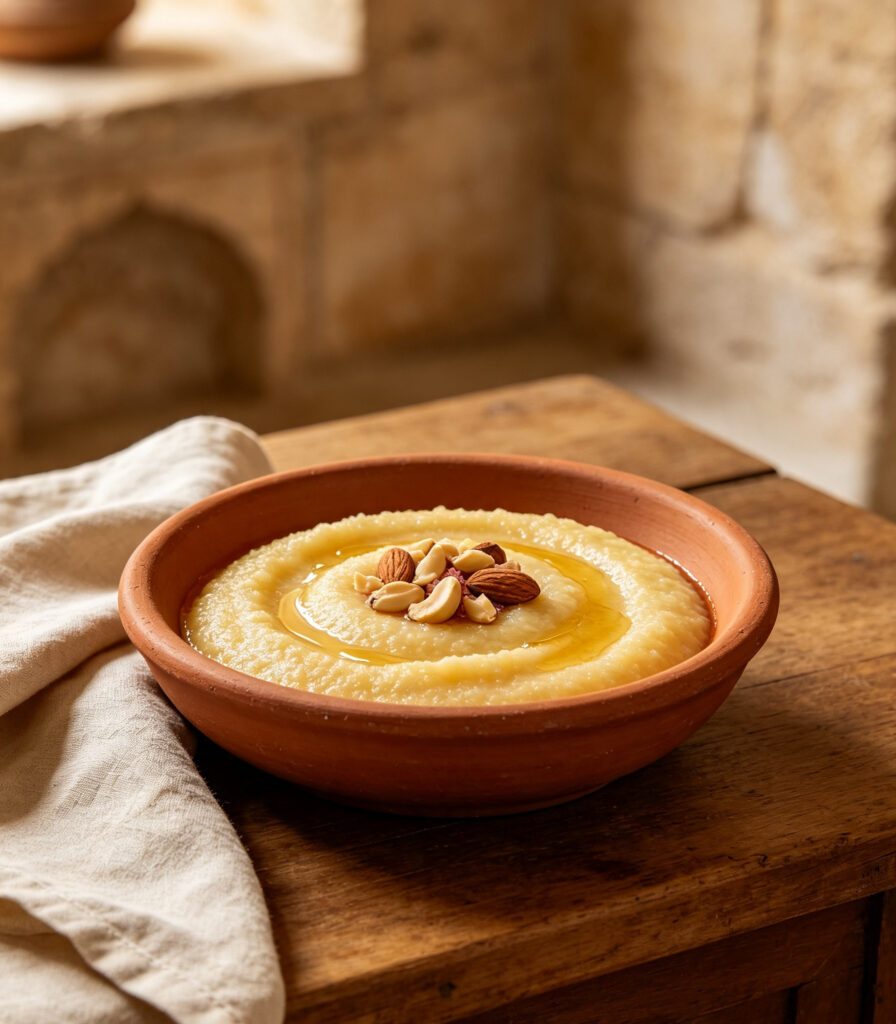
Semolina Pudding with Rosewater (Halva me Rodonero)
The Quirky Foodster Team
Ingredients
- Semolina — 170 g (1 cup)
- Butter or oil — 60 g (1/4 cup)
- Honey — 170 g (1/2 cup)
- Water — 720 ml (3 cups)
- Rosewater — 2 tbsp
- Chopped almonds, to garnish — 35 g (1/4 cup)
Method
- Toast the semolina in the butter or oil in a saucepan over medium heat for 4–5 minutes until lightly golden and fragrant.
- Meanwhile, warm the water and honey together until the honey dissolves.
- Gradually pour the warm honey water into the toasted semolina, stirring constantly to prevent lumps.
- Cook, stirring, for 5–8 minutes until thickened.
- Remove from heat and stir in the rosewater.
- Spoon into serving dishes and garnish with chopped almonds. Serve warm or chilled.
Introduction: A smooth semolina pudding delicately perfumed with rosewater, a treasured Byzantine dessert reflecting the empire’s connections to Eastern luxury ingredients.
Cultural Background: Rosewater and other aromatic waters reached Constantinople through extensive trade networks, and this fragrant semolina pudding reflects the sophisticated, luxury-inflected desserts enjoyed by wealthier Byzantine households.
Tips: Toast the semolina well before adding liquid, as this develops a nuttier, deeper flavour. Stir constantly when adding the liquid to prevent lumps from forming.
Variations: Use orange blossom water in place of rosewater for a different aromatic profile. Serve with a few extra chopped nuts for added texture.
Storage: Store covered in the refrigerator for up to 4 days.
Reheating: Serve warm by gently reheating, or enjoy chilled.
Nutrition: Per serving (approx.): 280 kcal, 4 g protein, 9 g fat, 48 g carbohydrate.
FAQs:
Q: How did rosewater reach Byzantine Constantinople?
A: Through extensive trade networks connecting the city to Persia and the wider East, rosewater and similar aromatic ingredients became available to wealthier households.
Q: Is this dish related to modern halva?
A: Yes, semolina-based sweets like this are considered part of the broader halva family found throughout the eastern Mediterranean and Middle East today.
- Semolina — 170 g (1 cup)
- Butter or oil — 60 g (1/4 cup)
- Honey — 170 g (1/2 cup)
- Water — 720 ml (3 cups)
- Rosewater — 2 tbsp
- Chopped almonds, to garnish — 35 g (1/4 cup)
Please log in to leave a comment.