
Desserts
Semolina Halva
The Quirky Foodster Team
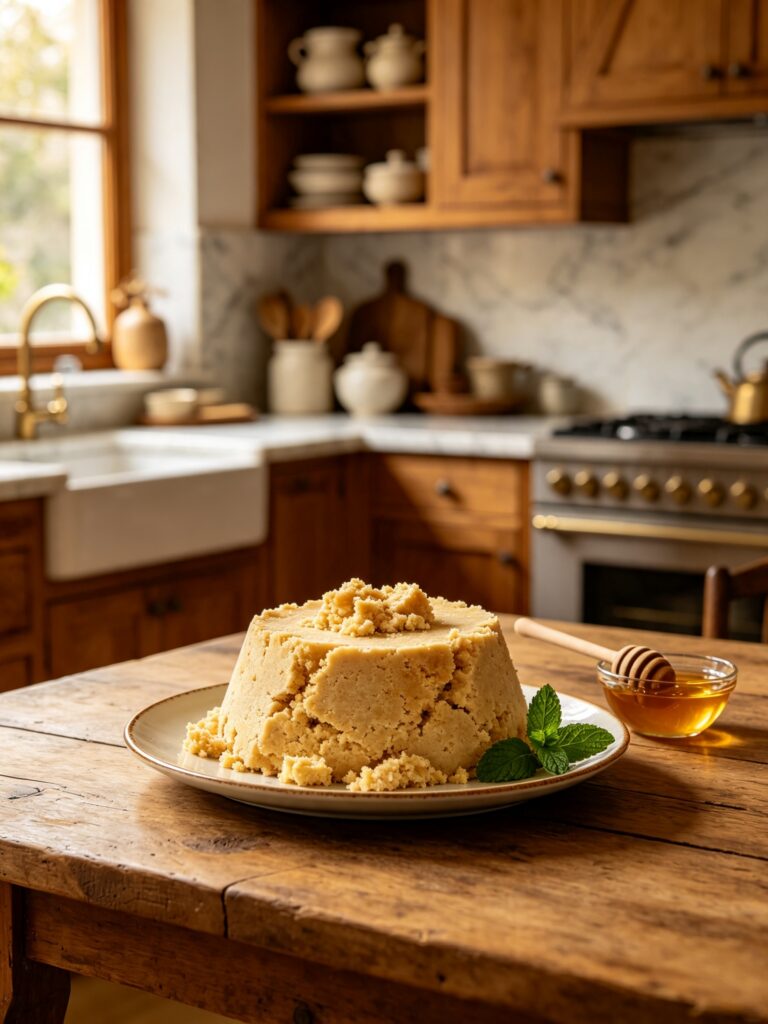
Ingredients
- 1 cup (240 ml) (1 cup) sunflower or light olive oil
- 2 cups (340 g) (2 cups) coarse semolina
- 3 cups (600 g) (3 cups) sugar
- 4 cups (960 ml) (4 cups) water
- 1 cinnamon stick
- 1 strip orange or lemon peel
- 1/2 tsp ground cinnamon, for dusting
- 40 g (1/3 cup) blanched almonds or walnuts, toasted (optional)
Method
- In a saucepan, combine the sugar, water, cinnamon stick, and citrus peel. Bring to a boil, then reduce heat and simmer for 5 minutes to make a light syrup. Keep warm.
- In a large, heavy pot, heat the oil over medium heat and add the semolina.
- Toast the semolina in the oil, stirring constantly, for 8-10 minutes until it turns a deep golden brown and smells nutty and toasted — this step is essential for flavor.
- Carefully and slowly pour the warm syrup into the toasted semolina, stirring constantly (it will bubble and steam vigorously — stand back a little).
- Reduce heat to low and continue stirring for 3-5 minutes until the mixture thickens and pulls away from the sides of the pot.
- Remove the cinnamon stick and citrus peel. Immediately spoon the halva into a lightly oiled bundt pan or mold, pressing down firmly to compact it.
- Let cool for 10-15 minutes, then invert onto a serving plate.
- Dust with ground cinnamon and scatter with toasted nuts before serving warm or at room temperature.
Introduction: Made from just semolina, oil, sugar, and water in a simple 1-2-3-4 ratio, this halva is one of the oldest and most
practical Lenten desserts in Greek cuisine, requiring no dairy, eggs, or butter at all. It is also traditionally served at
memorial services (mnimosyna) in the Greek Orthodox Church, where it is offered to mourners as a symbol of the
resurrection, its simple, humble ingredients carrying deep spiritual meaning.
Cultural Background: Made from just semolina, oil, sugar, and water in a simple 1-2-3-4 ratio, this halva is one of the oldest and most
practical Lenten desserts in Greek cuisine, requiring no dairy, eggs, or butter at all. It is also traditionally served at
memorial services (mnimosyna) in the Greek Orthodox Church, where it is offered to mourners as a symbol of the
resurrection, its simple, humble ingredients carrying deep spiritual meaning.
Tips: Toasting the semolina until truly deep golden brown, not just pale, is what gives this halva its characteristic rich, nutty flavor. Add the syrup carefully, as the mixture will bubble up dramatically when the liquid hits the hot semolina and oil. Packing the halva firmly into the mold while still hot gives the cleanest shape when unmolded.
Variations: Add a handful of raisins or currants to the mixture along with the syrup for extra sweetness and texture. Use fine semolina for a smoother texture, or coarse for a more traditional, slightly grainy bite. Flavor the syrup with a splash of orange blossom water for a Middle Eastern-influenced variation.
Storage: Store covered at room temperature for up to 5 days, or refrigerate for up to 10 days.
Reheating: Best served at room temperature; if desired, warm individual slices briefly in the microwave for a softer texture.
Please log in to leave a comment.