
Appetizers
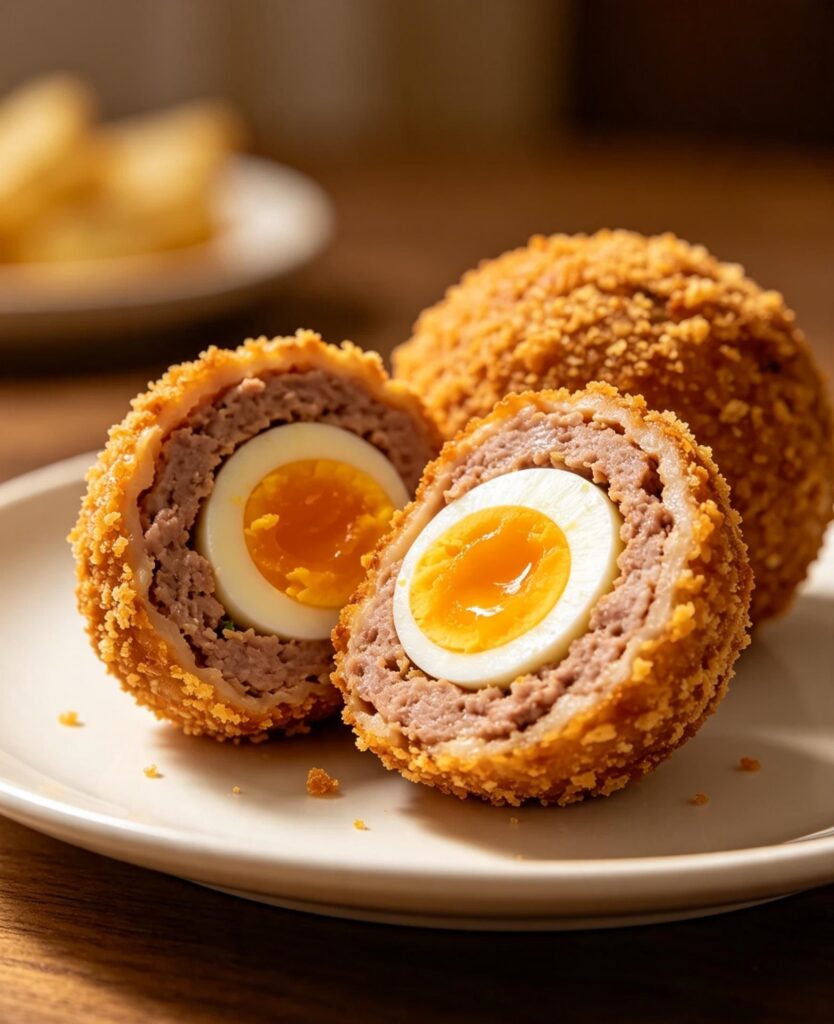
English Scotch Egg
The Quirky Foodster Team
Ingredients
- 5 Eggs
- 400 g (14 oz) Sausage meat
- 50 g (1/3 cup) Plain flour
- 100 g (1 1/3 cups) Breadcrumbs
- 1 tsp English mustard
- 1l (4 1/4 cups) Vegetable oil, for frying
- to taste Salt and pepper
Method
- Boil 4 of the eggs for 6 to 7 minutes for a soft-set yolk, then cool in iced water and peel carefully.
- Mix the sausage meat with the mustard, salt and pepper.
- Divide the sausage meat into four portions and flatten each into a round on a floured surface.
- Place a peeled egg in the centre of each round and wrap the sausage meat around it, sealing evenly with no gaps.
- Beat the remaining egg in a shallow bowl, and place the flour and breadcrumbs in separate shallow bowls.
- Roll each wrapped egg first in flour, then in the beaten egg, then in the breadcrumbs, pressing gently to coat evenly.
- Heat the oil to 170°C (340°F) in a deep-fryer or heavy pot.
- Fry the Scotch eggs for 6 to 8 minutes, turning occasionally, until deep golden brown and the sausage meat is cooked through.
- Drain on paper towels and rest for a few minutes before halving and serving.
Introduction: A hard or soft-boiled egg wrapped in sausage meat, coated in breadcrumbs and fried or baked until golden, the Scotch egg is widely credited to the London department store Fortnum & Mason in the early 18th century as a portable travelling food, and remains a familiar English picnic and pub staple.
Cultural Background: A hard or soft-boiled egg wrapped in sausage meat, coated in breadcrumbs and fried or baked until golden, the Scotch egg is widely credited to the London department store Fortnum & Mason in the early 18th century as a portable travelling food, and remains a familiar English picnic and pub staple.
Storage: Store cooled Scotch eggs in the refrigerator for up to 3 days.
Reheating: Reheat in an oven at 180°C (350°F) for about 12 minutes until warmed through; avoid microwaving, as the coating turns soft.
Tips: Chill the wrapped eggs for 15 minutes before coating and frying, as this helps the sausage meat hold its shape. Fry at a moderate, steady temperature; oil that is too hot will brown the coating before the sausage meat cooks through.
Variations: Some versions bake the Scotch eggs at 200°C (400°F) for about 25 minutes instead of deep-frying. A black pudding layer between the egg and sausage meat is a traditional regional variation. A vegetarian version uses a plant-based sausage meat alternative. For a vegetarian version, use a plant-based sausage meat substitute in place of pork sausage meat, keeping the boiled egg, breading and frying method the same.
Nutrition: Calories: 390 kcal | Protein: 20 g | Carbs: 22 g | Fat: 25 g
FAQs:
Q: How do I get a soft, slightly runny yolk in a Scotch egg?
A: Boil the eggs for only 6 to 7 minutes and cool them immediately in iced water to stop further cooking, then handle them gently while wrapping.
Q: Can Scotch eggs be made ahead for a picnic?
A: Yes, they travel well and are traditionally served at room temperature or cold, making them ideal for picnics and packed lunches.
Please log in to leave a comment.