
Saudi Ma’amoul
The Quirky Foodster Team
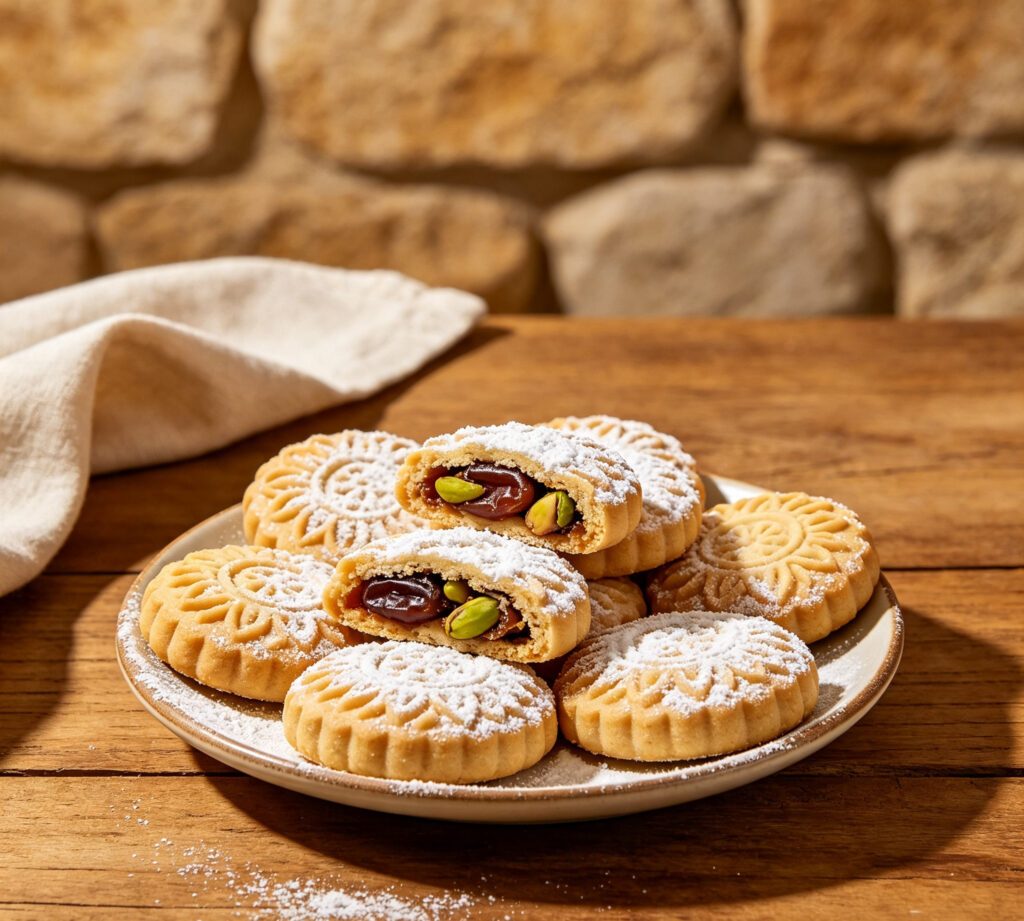
Ingredients
- Fine semolina — 400 g (3 1/4 cups)
- Butter, melted — 150 g (2/3 cup)
- Milk — 60 ml (1/4 cup)
- Sugar — 1 tbsp
- Yeast — 1/2 tsp
- Date paste — 300 g (10.5 oz)
- Ground cinnamon — 1/2 tsp
- Icing sugar, for dusting
Method
- Combine the semolina, melted butter and sugar in a bowl; mix well and rest for 2 hours.
- Dissolve the yeast in the warm milk and let sit 5 minutes until foamy.
- Add the yeast mixture to the semolina dough, kneading until smooth.
- Mix the date paste with the cinnamon.
- Take a portion of dough, flatten it, and place a small amount of date filling in the centre; fold and seal to enclose.
- Press into a ma'amoul mould to shape and decorate, or shape by hand and pattern with a fork.
- Preheat the oven to 180°C (350°F) and arrange the cookies on a baking tray.
- Bake for 18-20 minutes until pale golden on the bottom but still light on top.
- Cool completely, then dust generously with icing sugar.
Introduction: Delicate shortbread cookies filled with sweet date paste, traditionally made for Eid celebrations.
Cultural Background: Ma'amoul, shared across the Levant and Arabian Peninsula, are beloved cookies filled with dates or nuts, traditionally shaped with intricate wooden moulds and prepared especially for Eid festivities.
Tips: Resting the dough allows the semolina to absorb the butter fully, resulting in a tender, crumbly texture. Don't overbake, as ma'amoul should remain pale, not deeply browned.
Variations: Fill with a mixture of ground walnuts and sugar instead of dates for a nut version; add a pinch of ground cardamom to the dough for extra fragrance.
Storage: Store in an airtight container at room temperature for up to 2 weeks.
Reheating: These cookies are served at room temperature and are not reheated.
Nutrition: Approx. 210 kcal, 3 g protein, 30 g carbohydrate, 9 g fat per cookie.
FAQs:
Q: Do I need a special mould to make ma'amoul?
A: A traditional wooden mould gives the classic decorative pattern, but a fork can be used to create simple ridges by hand.
Q: Why does the dough need to rest for so long?
A: Resting allows the semolina to fully absorb the butter, which is essential for the cookies' signature tender, crumbly texture.
- Fine semolina — 400 g (3 1/4 cups)
- Butter, melted — 150 g (2/3 cup)
- Milk — 60 ml (1/4 cup)
- Sugar — 1 tbsp
- Yeast — 1/2 tsp
- Date paste — 300 g (10.5 oz)
- Ground cinnamon — 1/2 tsp
- Icing sugar, for dusting
Please log in to leave a comment.