
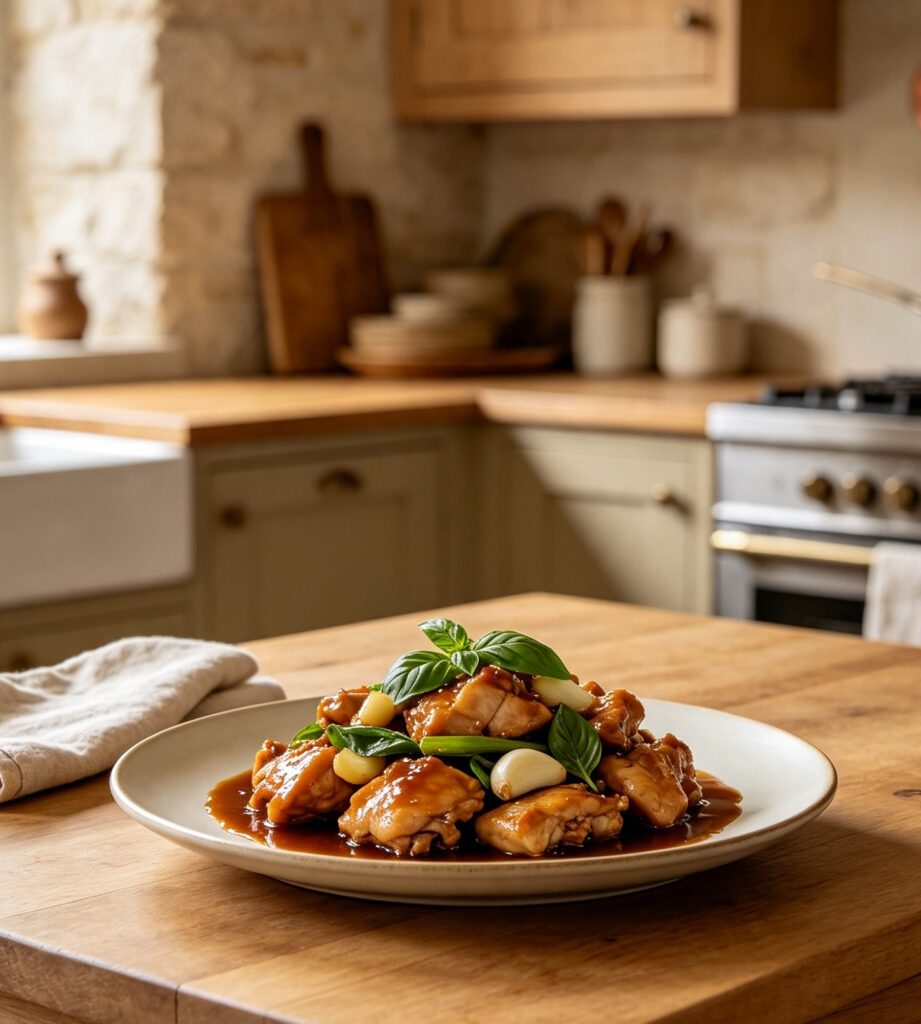
San Bei Ji (Three Cup Chicken)
The Quirky Foodster Team
Ingredients
- Chicken, cut into bone-in pieces — 1.2 kg (2.6 lb)
- Sesame oil (toasted) — 90 ml (6 tbsp)
- Fresh ginger, sliced — 40 g (¼ cup)
- Garlic cloves, whole — 10
- Soy sauce — 90 ml (6 tbsp)
- Shaoxing wine or rice wine — 90 ml (6 tbsp)
- Rock sugar — 20 g (4 tsp)
- Dried chili peppers (optional) — 2–4
- Large handful Fresh Thai basil leaves — 1
Method
- Heat sesame oil in a wok over medium heat. Add sliced ginger and whole garlic cloves, frying for 4–5 minutes until fragrant and the ginger edges begin to brown.
- Add the chicken pieces and stir-fry for 6–8 minutes until browned on all sides.
- Add soy sauce, Shaoxing wine, rock sugar, and dried chili peppers if using, stirring to coat the chicken evenly.
- Bring to a simmer, then reduce heat, cover, and cook for 20–25 minutes, stirring occasionally, until the chicken is tender and cooked through (internal temperature at least 74°C/165°F).
- Remove the lid and increase heat slightly to reduce the sauce further, cooking uncovered for 5–8 minutes until it becomes thick and glossy, coating the chicken well.
- Turn off the heat and stir in the fresh basil leaves, allowing them to wilt slightly in the residual heat.
- Serve immediately, hot, alongside steamed rice.
Introduction: San bei ji, “three cup chicken,” takes its name from the traditional equal parts of sesame oil, soy sauce, and rice wine used to braise the chicken, though many modern versions temper the ratio to taste.
Cultural Background: San bei ji, “three cup chicken,” takes its name from the traditional equal parts of sesame oil, soy sauce, and rice wine used to braise the chicken, though many modern versions temper the ratio to taste. Cooked with fresh basil and a generous amount of garlic and ginger, it’s one of Taiwan’s most beloved homestyle and restaurant dishes.
Tips: Reducing the sauce uncovered at the end, after the chicken is fully cooked, is key to achieving the thick, glossy coating characteristic of a well-made san bei ji.
Variations: Squid, tofu, or mushrooms can be prepared using the same “three cup” method for a different protein or vegetarian version.
Storage: Refrigerate in an airtight container for up to 3 days; the basil may darken slightly on storage but the flavour remains good.
Reheating: Reheat gently on the stovetop over low heat, adding a splash of water if the sauce has thickened too much.
FAQs:
Q: Why is it called “three cup” chicken if the ratios aren’t always equal?
A: The name refers to the traditional base of sesame oil, soy sauce, and rice wine, though the exact proportions are often adjusted to taste rather than strictly measured in equal cups.
Q: Can I use regular basil instead of Thai basil?
A: Thai basil’s more pronounced, slightly anise-like flavour is traditional, but regular basil can be used as a substitute if unavailable.
Q: Is san bei ji naturally gluten-free?
A: No, due to the soy sauce; a gluten-free soy sauce or tamari can be substituted.
- Chicken, cut into bone-in pieces — 1.2 kg (2.6 lb)
- Sesame oil (toasted) — 90 ml (6 tbsp)
- Fresh ginger, sliced — 40 g (¼ cup)
- Garlic cloves, whole — 10
- Soy sauce — 90 ml (6 tbsp)
- Shaoxing wine or rice wine — 90 ml (6 tbsp)
- Rock sugar — 20 g (4 tsp)
- Dried chili peppers (optional) — 2–4
- Large handful Fresh Thai basil leaves — 1
Please log in to leave a comment.