
Breakfast
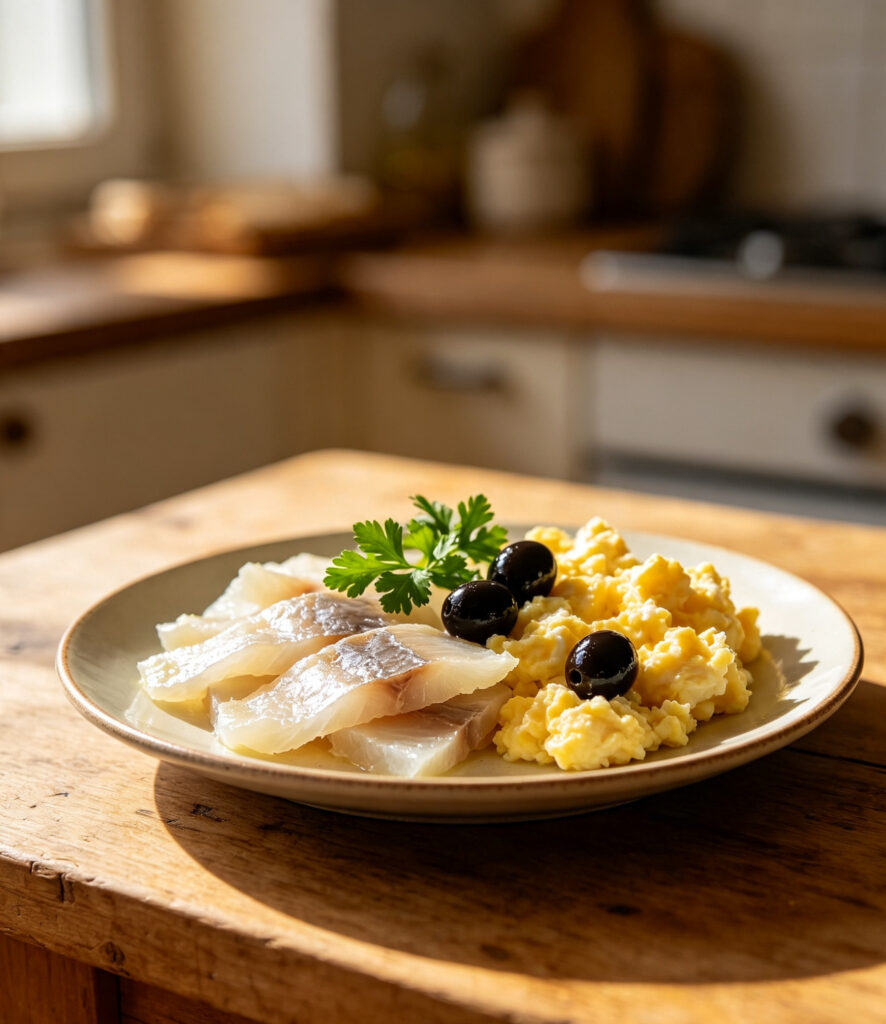
Salt Cod and Egg Breakfast (Bacalhau com Ovos)
sjfegan
Ingredients
- 300g Salt cod, soaked and desalted according to package instructions, then shredded
- 6 eggs, beaten
- 1 onion, chopped
- 2 tbsp olive oil
- Salt and pepper to taste
- Chopped parsley, to garnish
Method
- Heat the olive oil in a frying pan and sauté the onion until softened.
- Add the shredded salt cod and cook for 3–4 minutes until heated through.
- Pour in the beaten eggs and cook, stirring gently, until softly scrambled.
- Season with salt and pepper, and garnish with parsley before serving hot.
Introduction: Shredded salt cod scrambled with eggs, a substantial breakfast reflecting the Iberian salt fish trade that provisioned the great voyages of exploration.
Cultural Background: Salt cod became an essential preserved protein for Portuguese and Spanish sailors and settlers, its long shelf life making it invaluable for extended voyages, while also feeding households across Iberia during this era of expanding maritime ambition.
Tips: Ensure the salt cod is properly soaked and desalted beforehand, following package instructions. Cook the eggs gently for the softest, creamiest texture.
Variations: Add a little chopped garlic alongside the onion for extra flavour. Serve with bread for a complete breakfast.
Storage: Best eaten fresh; leftovers can be refrigerated for up to 1 day.
Reheating: Reheat gently in a pan over low heat, stirring, to avoid overcooking the egg.
Nutrition: Per serving (approx.): 280 kcal, 26 g protein, 16 g fat, 6 g carbohydrate.
FAQs:
Q: Why was salt cod so important to this era’s exploration?
A: Its exceptional shelf life made it one of the most valuable preserved proteins for long sea voyages, and Portuguese fishing fleets travelled as far as the Grand Banks in search of cod during this period.
Q: Was this dish eaten on ships or on land?
A: Salt cod formed a staple in both settings, feeding sailors on long voyages and households across Iberia and its expanding colonial territories.
Please log in to leave a comment.