
Salat Alivye (Belarusian New Year Potato Salad)
The Quirky Foodster Team
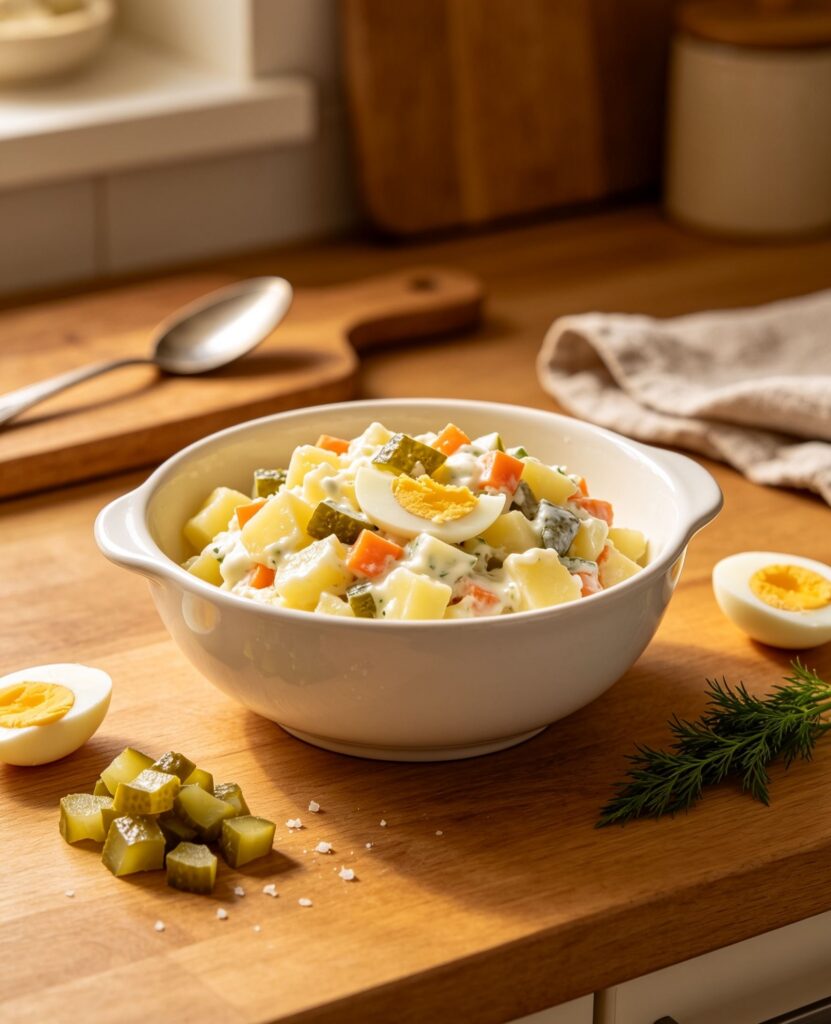
Ingredients
- Medium Potatoes, boiled and diced — 4
- Medium Carrot, boiled and diced — 1
- Cooked chicken breast or ham, diced — 250 g (8.8 oz)
- Whole Hard-boiled eggs, diced — 3
- Whole Dill pickles, diced — 3
- Canned green peas, drained — 150 g (5.3 oz)
- Mayonnaise — 150 g (5.3 oz)
- Salt and pepper, to taste — pinch
Method
- Combine the diced potato, carrot, chicken or ham, eggs and pickles in a large bowl.
- Stir in the drained peas.
- Add the mayonnaise and fold gently until every ingredient is evenly coated.
- Season to taste with salt and pepper.
- Chill for at least 1 hour before serving to let the flavours settle.
Introduction: Known elsewhere as Olivier salad, this potato, egg and pickle salad bound in mayonnaise became a fixture of the Belarusian New Year table during the Soviet era and has remained one of the most beloved festive dishes in the country ever since.
Cultural Background: Known elsewhere as Olivier salad, this potato, egg and pickle salad bound in mayonnaise became a fixture of the Belarusian New Year table during the Soviet era and has remained one of the most beloved festive dishes in the country ever since. Nearly every Belarusian family has its own version, though diced boiled potato, carrot, egg, peas, pickles and chicken or sausage bound in mayonnaise form the enduring core of the dish.
Tips: Dice all ingredients to a uniform small size for the classic texture. Prepare a day ahead for gatherings — the flavour improves after resting overnight.
Variations: Replace the chicken with cooked sausage for a smokier, budget-friendly version. For a vegetarian version, omit the meat and add extra egg and diced cheese; a vegan version can use a plant-based mayonnaise and firm tofu in place of meat and egg.
Storage: Refrigerate in a covered container for up to 2 days.
Reheating: This is a cold salad and is not reheated.
Nutrition: Approx. per serving: 290 kcal · Protein 12g · Carbs 16g · Fat 19g
FAQs:
Q: Why is it called Alivye if it’s a Belarusian dish?
A: The name traces back to a 19th-century Belgian chef working in Moscow, but the salad was adapted and embraced as an essential New Year dish across Belarus.
- Medium Potatoes, boiled and diced — 4
- Medium Carrot, boiled and diced — 1
- Cooked chicken breast or ham, diced — 250 g (8.8 oz)
- Whole Hard-boiled eggs, diced — 3
- Whole Dill pickles, diced — 3
- Canned green peas, drained — 150 g (5.3 oz)
- Mayonnaise — 150 g (5.3 oz)
- Salt and pepper, to taste — pinch
Please log in to leave a comment.