
Desserts
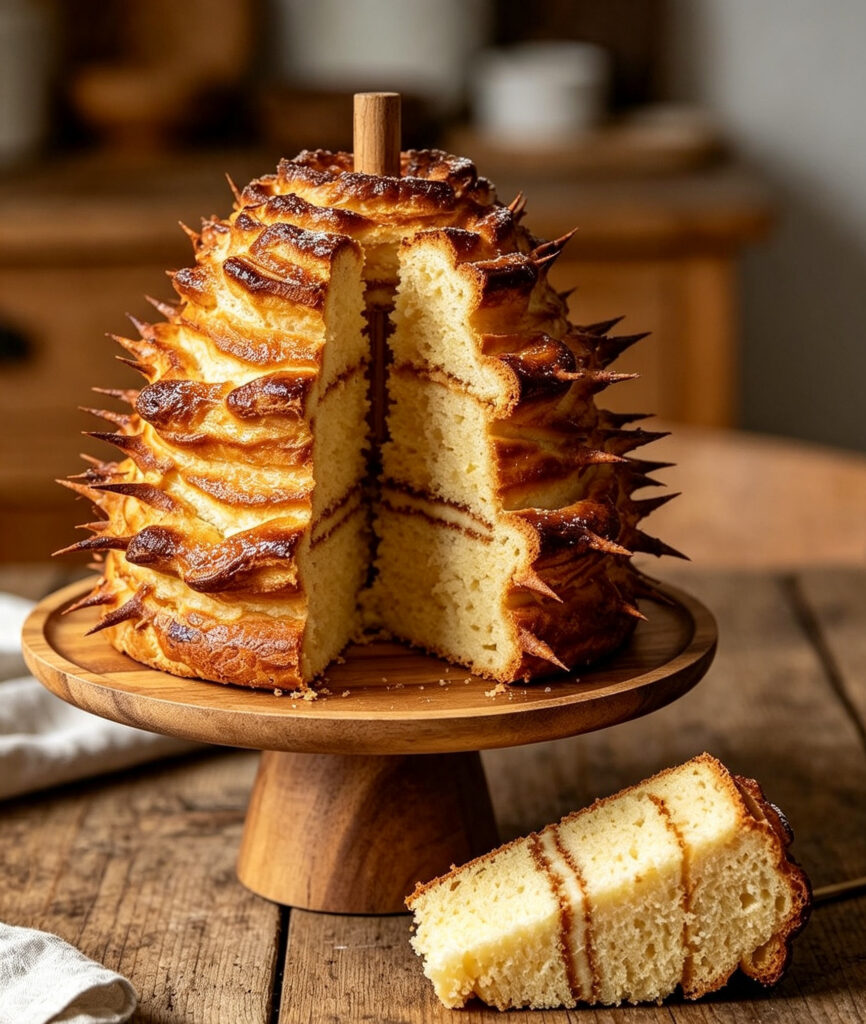
Šakotis
Ingredients
- 10 Eggs, separated
- 300g (1 1/2 cups) Sugar
- 300g (1 1/4 cups) Butter, softened
- 400g (3 1/4 cups) Flour
- 1 tsp (4g) Vanilla sugar
- Pinch of salt
Method
- Beat the egg whites with a pinch of salt to stiff peaks and set aside.
- Cream the butter and sugar together until pale, then beat in the egg yolks and vanilla sugar.
- Fold in the flour to form a smooth, thick batter, then gently fold in the whipped egg whites.
- Mount the spit under a grill or rotisserie set-up and ladle a thin layer of batter over it, rotating constantly.
- Grill each layer until golden before adding the next thin layer of batter, building up the ridged, tree-like shape over many rounds.
- Once the cake has reached the desired size, cool completely on the spit before carefully sliding it off.
Introduction: Šakotis, meaning 'branched', is Lithuania's most spectacular traditional cake, baked in ridged layers on a rotating spit until it resembles a tree trunk.
Cultural Background: Šakotis, meaning 'branched', is Lithuania's most spectacular traditional cake, baked in ridged layers on a rotating spit until it resembles a tree trunk. It holds a central place at weddings and other major celebrations and has even been granted EU Traditional Speciality Guaranteed status.
Tips: This is a genuinely advanced bake that requires a rotating spit set-up — most home cooks in Lithuania either use a purpose-built rotisserie or order šakotis from a specialist baker for special occasions.
Variations: A version studded with almonds along the ridges is popular for weddings; some bakers add a touch of rum to the batter.
Nutrition: Approx. 340 kcal, 6g protein, 20g fat, 33g carbohydrates per serving.
FAQs:
Q: Do I need special equipment to make this at home?
A: Yes — a rotating spit is essential to build the distinctive branch-like ridges; without one, this cake genuinely cannot be made in its traditional form.
Q: Why is it served at weddings?
A: Its tall, tree-like shape and rich, celebratory ingredients have made it a traditional centrepiece at Lithuanian weddings and christenings for generations.
Please log in to leave a comment.