
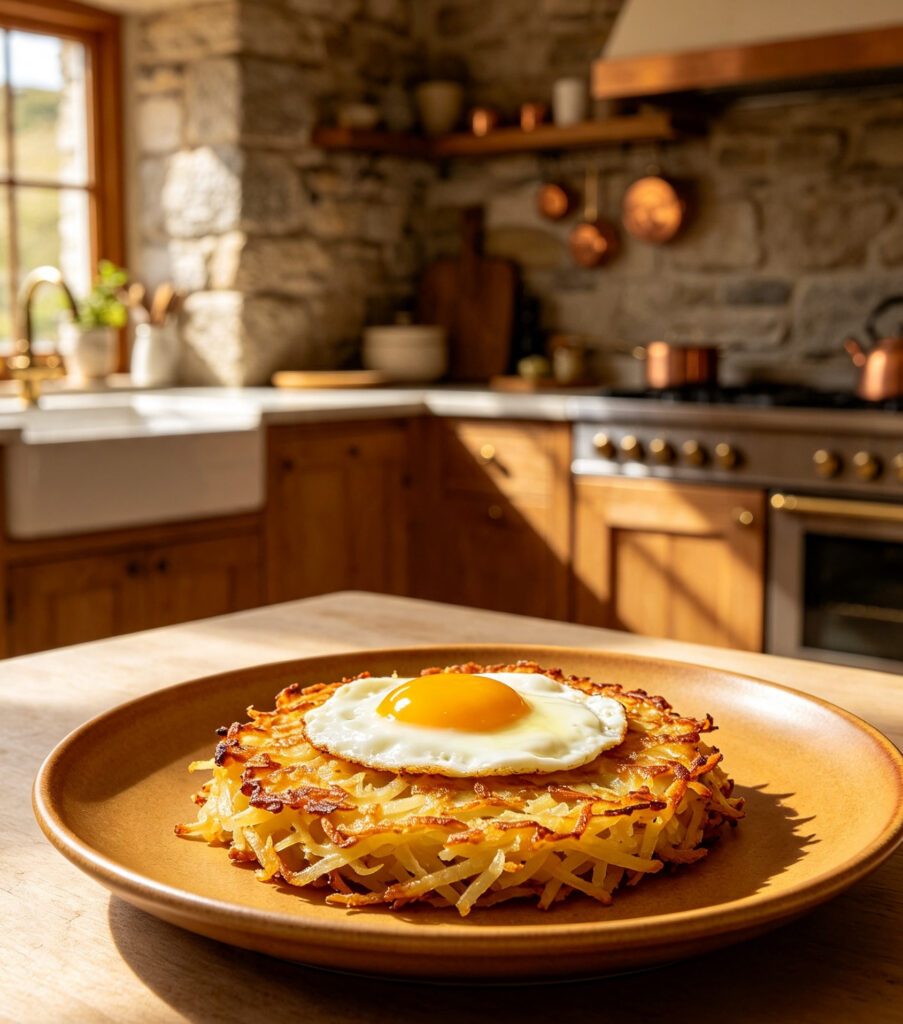
Rösti mit Spiegelei (Rösti with Fried Egg)
The Quirky Foodster Team
Ingredients
- Potatoes, boiled the day before and cooled — 800 g (1.75 lb)
- Butter — 45 ml (3 tbsp)
- Salt — 1 tsp
- Black pepper — 1/4 tsp
- Eggs — 4
- Chopped chives, to garnish
Method
- Grate the cold, cooked potatoes coarsely into a bowl and season with salt and pepper.
- Melt half the butter in a large frying pan over medium heat and add the grated potato, pressing into an even flat cake.
- Cook for 8-10 minutes until deeply golden underneath, then slide onto a plate, flip back into the pan, and cook the other side for 8-10 minutes.
- Meanwhile, fry the eggs in the remaining butter in a separate pan to your liking.
- Cut the rösti into wedges, top each with a fried egg, and scatter with chives.
Introduction: Originally a farmer’s breakfast from the canton of Bern, rösti has become a national symbol of Switzerland — so much so that the language divide between French- and German-speaking regions is jokingly called the ‘Röstigraben’.
Cultural Background: Originally a farmer’s breakfast from the canton of Bern, rösti has become a national symbol of Switzerland — so much so that the language divide between French- and German-speaking regions is jokingly called the ‘Röstigraben’. Topped with a fried egg, it makes a hearty morning start.
Tips: Using potatoes boiled and cooled the day before gives the crispiest rösti, as they hold together better. Resist stirring the potato once pressed into the pan — this is what creates the golden crust.
Variations: Add grated cheese to the potato mixture for a richer version. Stir in crisp bacon bits before pressing into the pan.
Storage: Refrigerate leftover rösti (without egg) for up to 2 days.
Reheating: Reheat in a dry pan over medium heat to restore crispness.
FAQs:
Q: Why use potatoes cooked the day before?
A: Freshly boiled potatoes are too moist and starchy, causing the rösti to fall apart rather than form a crisp cake.
Q: What does ‘Röstigraben’ mean?
A: It’s a playful term for the cultural boundary between German- and French-speaking Switzerland, named after this dish.
- Potatoes, boiled the day before and cooled — 800 g (1.75 lb)
- Butter — 45 ml (3 tbsp)
- Salt — 1 tsp
- Black pepper — 1/4 tsp
- Eggs — 4
- Chopped chives, to garnish
Please log in to leave a comment.