
Mains
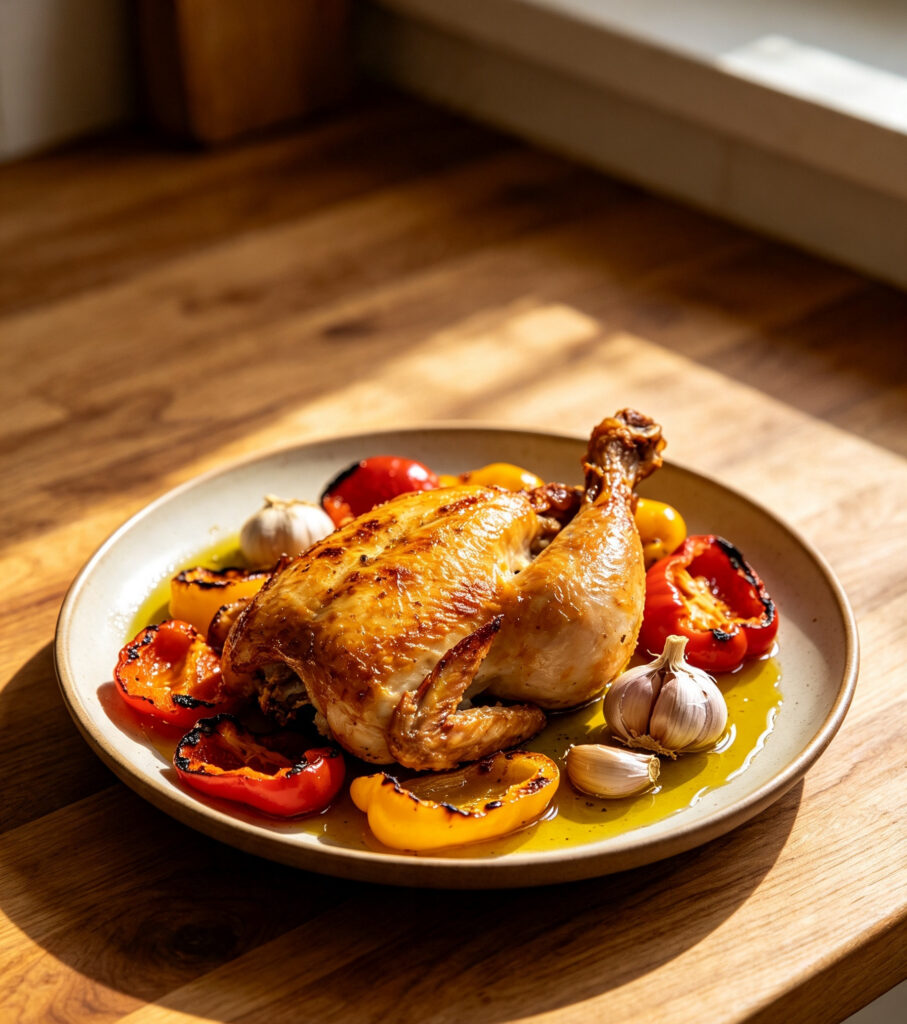
Roast Chicken with New World Peppers (Frango Assado com Pimentos)
sjfegan
Ingredients
- 1 whole chicken (about 1.5 kg / 3.3 lb)
- 2 bell peppers, sliced
- 1 onion, sliced
- 60ml (1/4 cup) Olive oil
- 4 cloves garlic, crushed
- 1 tsp paprika
- Salt to taste
Method
- Preheat the oven to 190°C (375°F).
- Rub the chicken all over with olive oil, crushed garlic, paprika and salt.
- Scatter the sliced peppers and onion in a roasting pan and place the chicken on top.
- Roast for 1.25–1.5 hours until the chicken is cooked through and the skin is golden.
- Let rest for 10 minutes before carving and serving with the roasted peppers and onion.
Introduction: Roast chicken seasoned with newly introduced peppers, a main dish reflecting the gradual incorporation of New World ingredients into Iberian kitchens.
Cultural Background: Peppers, brought to Europe from the Americas during this very era, represented one of the most consequential culinary introductions of the Age of Exploration, and this roast chicken shows an early adoption of the ingredient into traditional cooking.
Tips: Baste the chicken occasionally with the pan juices for the best flavour and moisture. Let the chicken rest before carving for the most tender result.
Variations: Add a few chopped tomatoes to the roasting pan, another New World ingredient of the era. Adjust the paprika quantity to taste.
Storage: Refrigerate leftovers in an airtight container for up to 3 days.
Reheating: Reheat gently, covered, in an oven at 160°C (325°F) until warmed through.
Nutrition: Per serving (approx.): 380 kcal, 32 g protein, 22 g fat, 10 g carbohydrate.
FAQs:
Q: When did peppers first reach Europe?
A: Christopher Columbus brought peppers back from the Americas in the late 15th century, and they gradually spread through European cooking over the following decades.
Q: How quickly were New World ingredients adopted into Iberian cooking?
A: Adoption varied considerably by ingredient and region, with some, like peppers and tomatoes, taking generations to become fully integrated into everyday cuisine.
Please log in to leave a comment.