
Ranfanote
The Quirky Foodster Team
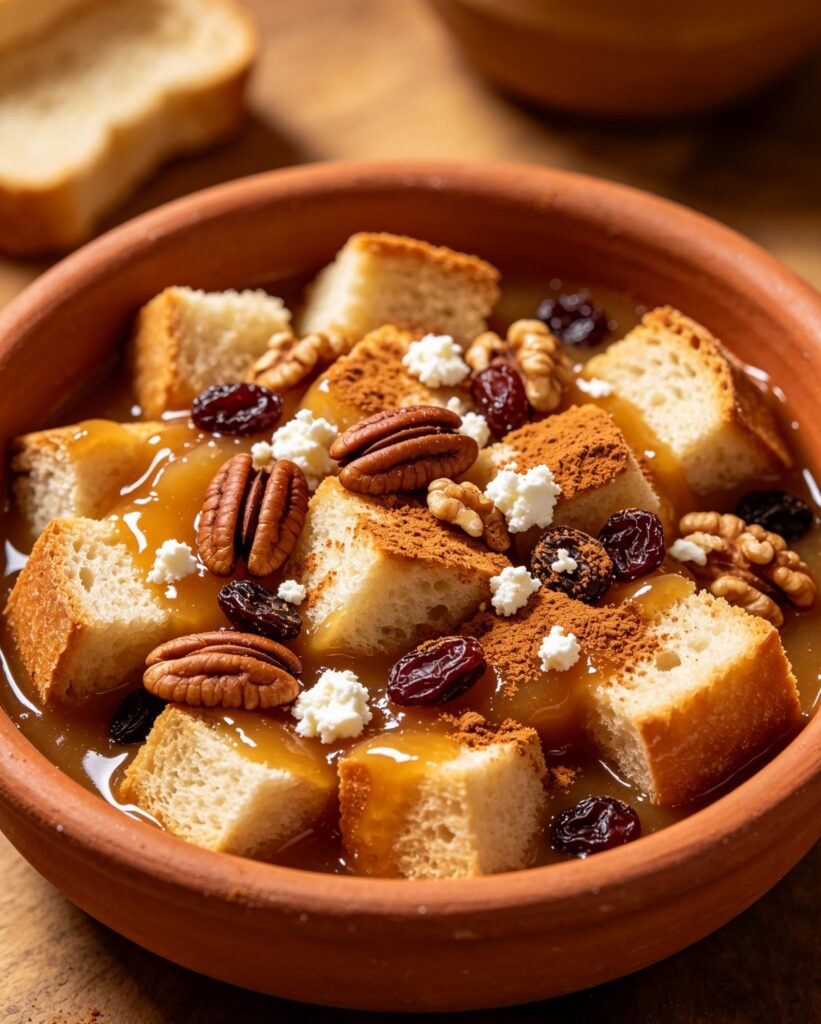
Ingredients
- Stale bread, cut into cubes — 300 g (10 oz)
- Grated raw cane sugar (or dark brown sugar) — 300 g (1 1/2 cups)
- Water — 500 ml (2 cups)
- Cinnamon stick — 1
- Cloves — 3
- Queso fresco, cubed — 100 g (3/4 cup)
- Raisins — 50 g (1/3 cup)
- Chopped walnuts or peanuts — 50 g (1/3 cup)
- Butter — 2 tbsp
Method
- In a saucepan, combine the sugar, water, cinnamon and cloves and simmer for 10 minutes to form a fragrant syrup.
- Melt the butter in a separate pan and lightly toast the bread cubes until golden.
- Add the toasted bread cubes to the syrup along with the raisins, and simmer gently for 10-15 minutes until the bread absorbs most of the liquid and softens.
- Stir in the cubed cheese and chopped nuts in the last few minutes of cooking, just enough to soften the cheese slightly without fully melting it.
- Remove the cinnamon stick and cloves, and serve warm in small bowls.
Introduction: Ranfañote is a rustic colonial-era dessert from the Bolivian valleys, particularly associated with Cochabamba and Chuquisaca, made by simmering stale bread in a spiced syrup with cheese and dried fruit.
Cultural Background: Ranfañote is a rustic colonial-era dessert from the Bolivian valleys, particularly associated with Cochabamba and Chuquisaca, made by simmering stale bread in a spiced syrup with cheese and dried fruit. It is a practical, resourceful sweet born from using up leftover bread, still made for festive occasions today.
Tips: Use genuinely stale, dry bread — fresh bread turns to mush rather than holding its shape in the syrup.
Variations: Some versions include a splash of singani (Bolivian grape brandy) stirred in at the end. Vegetarian / Vegan Note Naturally vegetarian as written.
Storage: Refrigerate for up to 2 days.
Reheating: Gently warm in a saucepan over low heat with a splash of water, stirring carefully.
Nutrition: Per serving (approx.): 340 kcal, 8g protein, 12g fat, 52g carbohydrate.
FAQs:
Q: What kind of bread works best?
A: A dense, plain white bread or French-style roll that has dried out for a day or two works best.
- Stale bread, cut into cubes — 300 g (10 oz)
- Grated raw cane sugar (or dark brown sugar) — 300 g (1 1/2 cups)
- Water — 500 ml (2 cups)
- Cinnamon stick — 1
- Cloves — 3
- Queso fresco, cubed — 100 g (3/4 cup)
- Raisins — 50 g (1/3 cup)
- Chopped walnuts or peanuts — 50 g (1/3 cup)
- Butter — 2 tbsp
Please log in to leave a comment.