
Drinks
Rakia
The Quirky Foodster Team
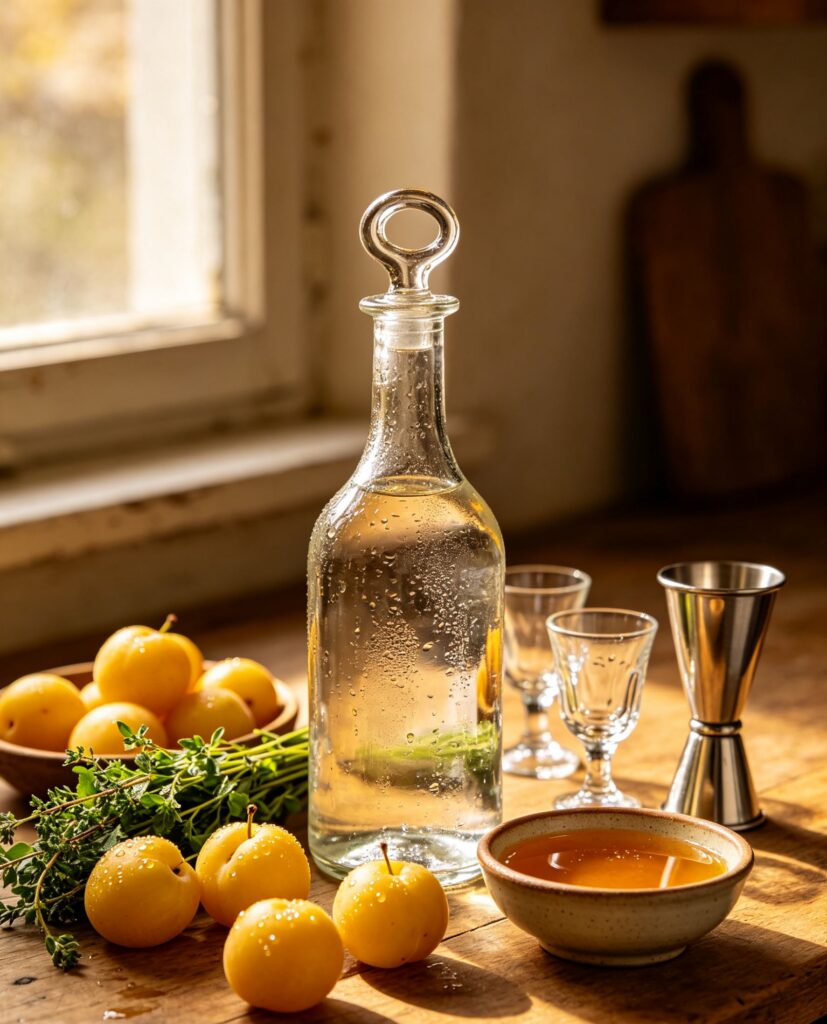
Ingredients
- 3 kg (6.6 lb) ripe plums or grapes, pitted if plums
- Water, as needed for fermentation
- A small amount of active yeast (optional, for reliable fermentation)
Method
- Crush the fruit and place in a fermentation vessel with a little water if needed.
- Cover loosely and let ferment at room temperature for 2-3 weeks until bubbling stops and the mash smells alcoholic.
- Strain the fermented mash into a still.
- Distill slowly, discarding the initial 'heads' portion, and collecting the clear middle 'heart' spirit.
- Dilute the collected spirit with water to the desired strength (typically 40-50% ABV) and rest in glass bottles for at least a few weeks before drinking.
Introduction: Rakia is Bulgaria's national spirit, a strong fruit brandy most commonly distilled from grapes or plums, produced by families in rural areas each autumn and served as an aperitif before meals, especially alongside Shopska salad.
Cultural Background: Rakia is Bulgaria's national spirit, a strong fruit brandy most commonly distilled from grapes or plums, produced by families in rural areas each autumn and served as an aperitif before meals, especially alongside Shopska salad.
Tips: Home distillation is subject to local laws in many countries; check regulations before attempting. Plum rakia (slivova) and grape rakia (grozdova) are the two most common types, each with a distinct character.
Variations: Apricot or pear rakia are less common regional variations. Some rakia is infused afterward with honey, walnuts or herbs. Naturally vegan as written.
Storage: Store sealed at room temperature indefinitely; flavor mellows with age.
Reheating: Not applicable; served neat, at room temperature or slightly chilled.
Nutrition: Approx. 85 kcal per 30ml (1 fl oz) serving; contains no carbs or fat, only alcohol.
FAQs:
Q: Is rakia the same as brandy?
A: Rakia is a type of fruit brandy specific to the Balkans, typically stronger and less aged than commercial brandies.
Q: Is home distillation legal?
A: This varies by country; always check local regulations, as home distillation is restricted or illegal in many places.
Please log in to leave a comment.