
Qidreh
The Quirky Foodster Team
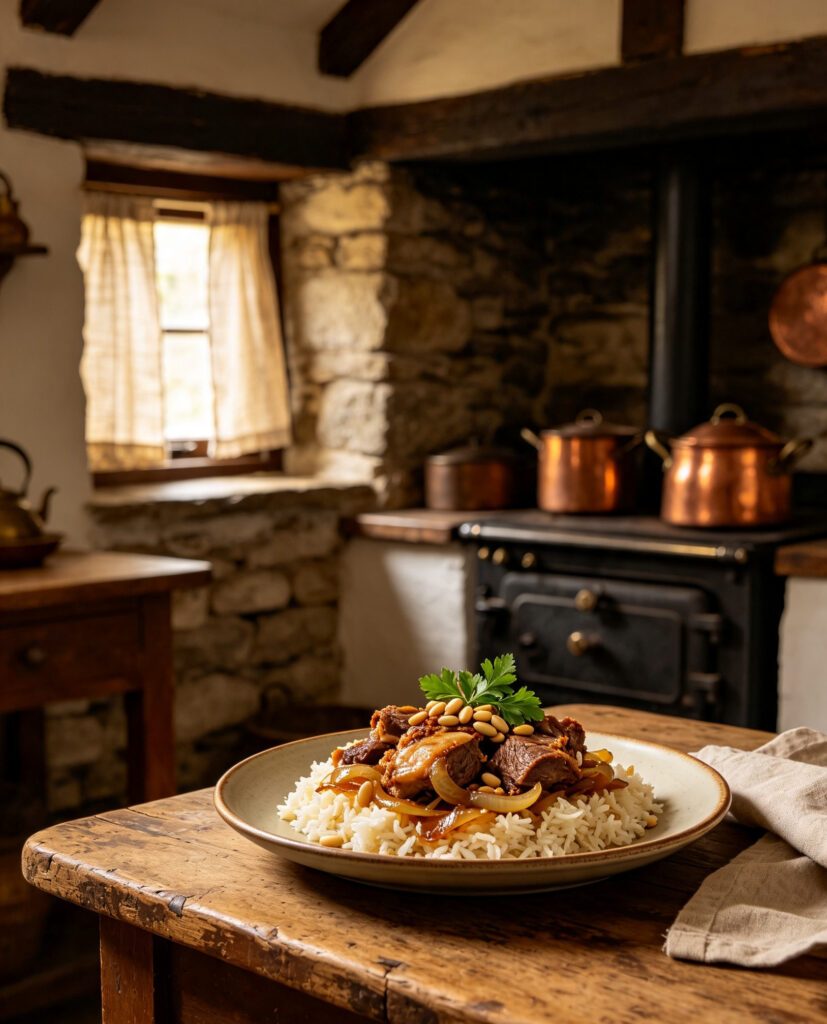
Ingredients
- Rice, soaked for 30 minutes — 550 g (1.2 lb)
- Lamb, bone-in, cut into pieces — 1 kg (2.2 lb)
- Whole head garlic, cloves separated and peeled — 1
- Ground cumin — 2 tsp
- Ground cardamom — 1 tsp
- Cinnamon — 1 tsp
- Oil — 120 ml (4 fl oz)
- Water or stock — 960 ml (32 fl oz)
- Salt and pepper — to taste
Method
- Heat the oil in a large pot and brown the lamb pieces on all sides.
- Add the whole garlic cloves, cumin, cardamom, cinnamon, salt and pepper, stirring to coat.
- Add the water or stock and bring to a boil, then reduce to a simmer and cook, covered, for 45 minutes until the lamb is nearly tender.
- Add the soaked, drained rice, ensuring it's just covered by the cooking liquid.
- Cover tightly and cook over low heat for 20–25 minutes until the rice is tender and has absorbed the meat's flavour.
- Let rest for 5 minutes before serving.
Introduction: Rice and lamb slow-cooked together with whole garlic and warm spices in a single pot, a beloved Palestinian dish especially associated with Hebron.
Cultural Background: Qidreh, named after the clay or metal pot it's traditionally cooked in, is closely associated with the city of Hebron, historically baked in communal ovens, its rice deeply infused with the flavour of the meat and spices cooked together.
Tips: Using whole garlic cloves rather than minced garlic is traditional and gives a milder, sweeter garlic flavour throughout the dish as they soften. Keep the pot tightly covered during the rice-cooking stage to trap steam and cook everything through evenly.
Variations: Add a few chickpeas along with the rice for extra texture. Serve with a simple yoghurt sauce on the side.
Storage: Refrigerate in an airtight container for up to 3 days.
Reheating: Reheat in a covered pan over low heat with a splash of water, or in a microwave, until hot throughout.
FAQs:
Q: Why is qidreh associated with Hebron?
A: It's a specialty of the city, historically prepared in large batches and baked in communal ovens, a tradition still celebrated today.
Q: Why are whole garlic cloves used?
A: They soften and mellow during the long cooking, infusing the dish with a sweet, gentle garlic flavour rather than a sharp one.
- Rice, soaked for 30 minutes — 550 g (1.2 lb)
- Lamb, bone-in, cut into pieces — 1 kg (2.2 lb)
- Whole head garlic, cloves separated and peeled — 1
- Ground cumin — 2 tsp
- Ground cardamom — 1 tsp
- Cinnamon — 1 tsp
- Oil — 120 ml (4 fl oz)
- Water or stock — 960 ml (32 fl oz)
- Salt and pepper — to taste
Please log in to leave a comment.