
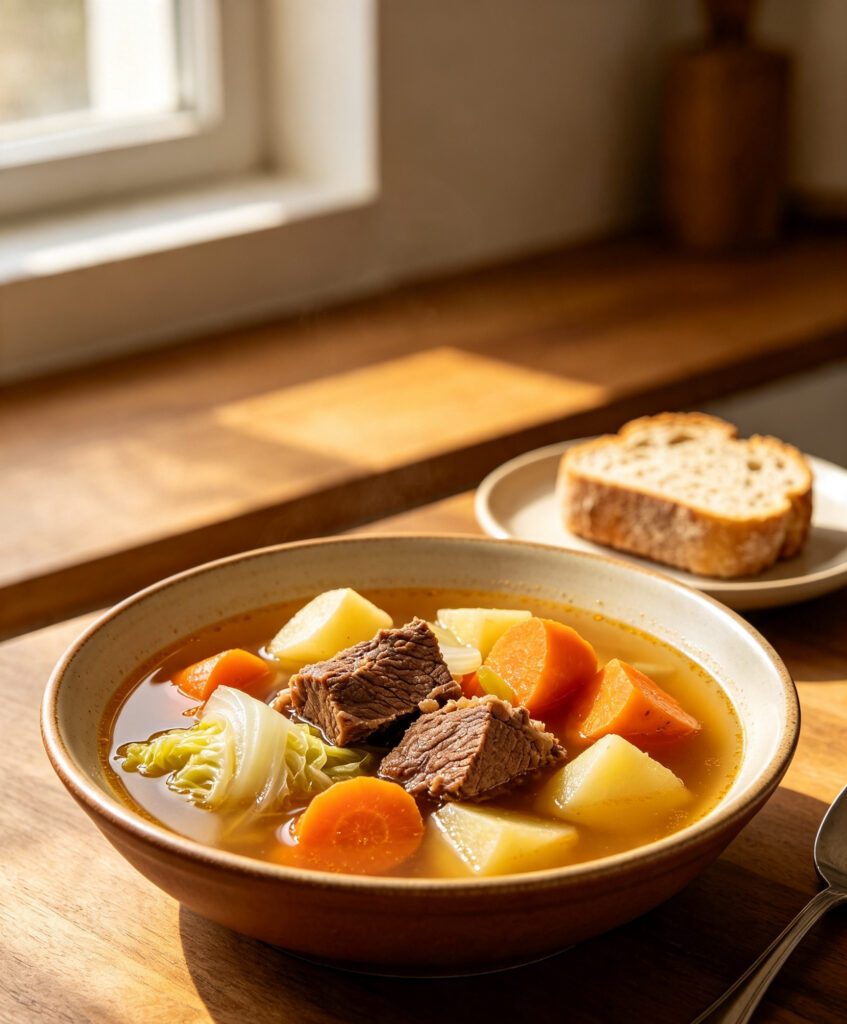
Puchero (Uruguayan Meat And Vegetable Stew Soup)
The Quirky Foodster Team
Ingredients
- Beef short ribs or brisket, cut into large pieces — 800 g (1.75 lb)
- Chorizo or morcilla sausage, whole — 200 g (7 oz)
- Water — 2.5 L (10 cups)
- Medium onions, halved — 2
- Medium carrots, halved — 3
- Medium potatoes, halved — 2
- Small cabbage, quartered — 1
- Pumpkin or squash, cut into chunks — 200 g (1 cup)
- Rice or small pasta (optional, for the broth) — 100 g (1/2 cup)
- Salt and black pepper, — to taste
- Fresh parsley, chopped, for garnish
Method
- Place the beef in a large pot and cover with the water. Bring to a boil, skimming off any foam that rises to the surface.
- Reduce heat, add the onions, and simmer, partially covered, for 1.5 hours until the beef begins to soften.
- Add the sausage, carrots, and potatoes, and simmer for a further 30 minutes.
- Add the cabbage and pumpkin, and continue simmering for 20–25 minutes until all the vegetables and meat are tender.
- Season the broth with salt and pepper. If serving the broth with rice or pasta, ladle out a portion of the broth into a separate pot, add the rice or pasta, and cook until tender.
- To serve, ladle the seasoned broth (with rice or pasta, if using) into bowls as a first course, garnished with parsley.
- For the second course, arrange the beef, sausage, and vegetables on a large serving platter and serve alongside the broth.
Introduction: Puchero is a hearty, slow-simmered soup of beef, sausage, and root vegetables, brought to Uruguay by Spanish settlers and adapted with local ingredients over generations.
Cultural Background: Puchero is a hearty, slow-simmered soup of beef, sausage, and root vegetables, brought to Uruguay by Spanish settlers and adapted with local ingredients over generations. Traditionally served as a two-course meal — the rich broth first, followed by the meat and vegetables — puchero remains a beloved winter dish, valued for its warmth and the way it stretches humble ingredients into a filling, nourishing meal.
Tips: Skimming the foam during the initial simmer results in a clearer, more appealing broth. Cook the vegetables in stages according to their cooking times, so nothing turns to mush. Traditionally, puchero is served as two separate courses; don't skip this presentation if authenticity matters to you.
Variations: Add corn on the cob, cut into rounds, for a traditional regional touch. Some versions include chickpeas for added heartiness. Vegetarian version: omit the meat and sausage, use a rich vegetable stock, and add extra root vegetables and chickpeas for protein.
Storage: Store the broth, meat, and vegetables in airtight containers in the refrigerator for up to 4 days, or freeze for up to 3 months.
Reheating: Reheat the broth and the meat and vegetables separately in a pot over medium heat until piping hot, about 8–10 minutes.
FAQs:
Q: Why is puchero served in two courses?
A: This traditional presentation allows the rich broth to be enjoyed as a starter, followed by the hearty meat and vegetables as the main course.
Q: Can I make puchero in a slow cooker?
A: Yes, brown the meat if desired, then transfer everything except the cabbage and pumpkin to a slow cooker and cook on low for 6 hours, adding the remaining vegetables in the last hour.
Q: What's the difference between puchero and shurpa-style soups elsewhere?
A: While both are meat and vegetable soups, puchero is distinctly Spanish-South American in its ingredients and two-course serving tradition.
- Beef short ribs or brisket, cut into large pieces — 800 g (1.75 lb)
- Chorizo or morcilla sausage, whole — 200 g (7 oz)
- Water — 2.5 L (10 cups)
- Medium onions, halved — 2
- Medium carrots, halved — 3
- Medium potatoes, halved — 2
- Small cabbage, quartered — 1
- Pumpkin or squash, cut into chunks — 200 g (1 cup)
- Rice or small pasta (optional, for the broth) — 100 g (1/2 cup)
- Salt and black pepper, — to taste
- Fresh parsley, chopped, for garnish
Please log in to leave a comment.