
Pinda Soep
The Quirky Foodster Team
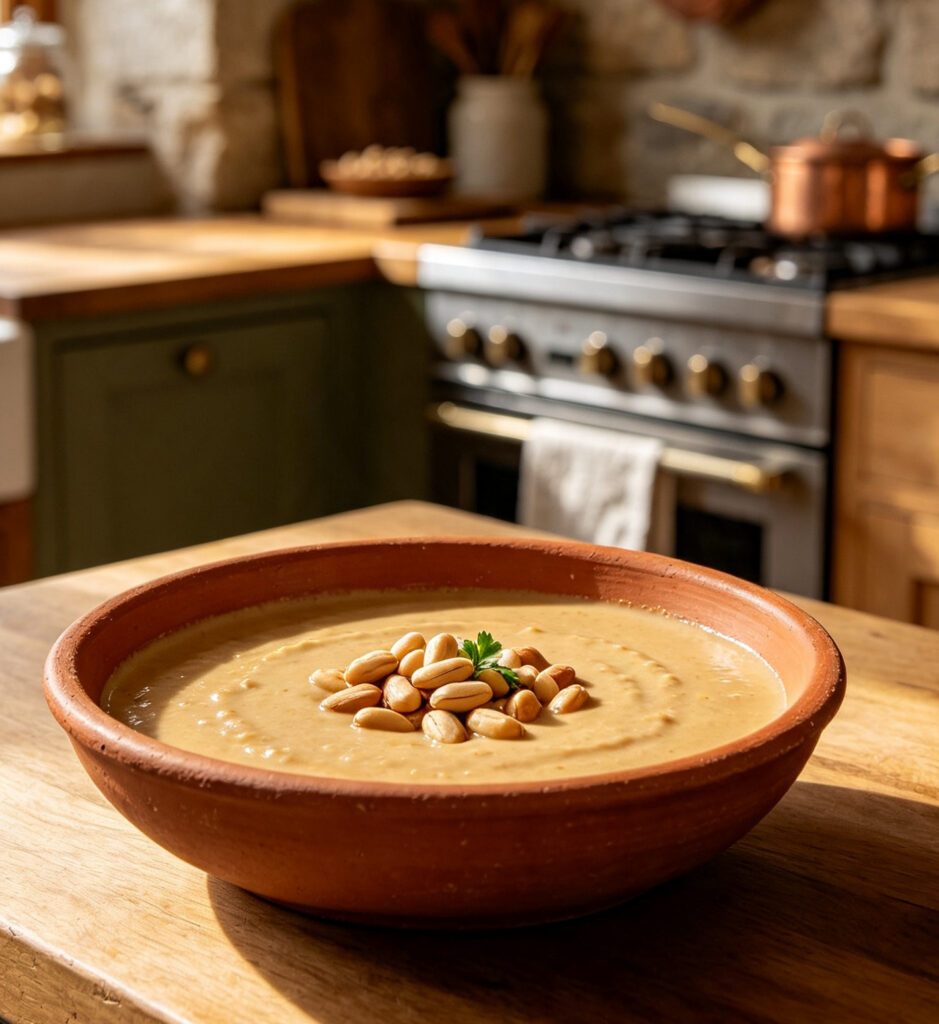
Ingredients
- Chicken thighs or beef stew meat, cut into pieces — 700 g (1.5 lb)
- Smooth unsweetened peanut butter — 300 g (1 1/4 cups)
- Water or stock — 1.5 L (6 cups)
- Large Onion, chopped — 1
- Garlic, minced — 3 cloves
- Medium Tomato, chopped — 2
- Scotch bonnet chilli, whole (pierced) — 1
- Cassava flour, for dumplings (tom-tom) — 150 g (1 1/4 cups)
- Water, for dumplings — 100 ml (1/3 cup)
- Salt — to taste
- Vegetable oil — 2 tbsp
Method
- Heat the oil in a large pot and brown the meat on all sides, 6-8 minutes.
- Add the onion and garlic and cook until softened, then add the tomato and cook 3 minutes more.
- Whisk the peanut butter with a ladle of warm water until smooth, then stir into the pot along with the remaining water or stock and the whole chilli.
- Bring to a gentle simmer, cover partially, and cook 45-60 minutes, stirring occasionally to prevent sticking, until the meat is tender and the soup has thickened.
- Meanwhile, make the dumplings by mixing the cassava flour with enough water to form a stiff dough; roll into small balls or ovals.
- Add the dumplings to the pot for the final 15 minutes of cooking. Remove the whole chilli before serving, season with salt, and ladle hot into bowls.
Introduction: Pinda soep, a rich peanut soup thickened with roasted peanuts and often studded with cassava dumplings, reflects the West African culinary heritage carried to Suriname through the transatlantic slave trade, where groundnut stews are found across the region.
Cultural Background: Pinda soep, a rich peanut soup thickened with roasted peanuts and often studded with cassava dumplings, reflects the West African culinary heritage carried to Suriname through the transatlantic slave trade, where groundnut stews are found across the region. In Suriname it became a hearty Creole one-pot meal, traditionally cooked slowly with chicken or beef and eaten with rice or the dumplings themselves.
Tips: Stir the soup regularly once the peanut butter is added, as it can catch and scorch on the bottom of the pot. Leave the chilli whole and remove it once the heat level is right, rather than chopping it in, to control spiciness. The soup should be thick enough to coat a spoon; thin with a little water if needed.
Variations: Add chunks of pumpkin or sweet potato in the last 20 minutes for extra body. Serve over rice instead of, or alongside, the cassava dumplings. Replace the meat with a mix of pumpkin, okra and extra cassava dumplings, and use vegetable stock; simmer until the vegetables are tender, about 30 minutes.
Storage: Store in an airtight container in the refrigerator for up to 3 days, or freeze for up to 2 months.
Reheating: Reheat gently on the stovetop over low heat, stirring often and adding a splash of water if it has thickened too much.
FAQs:
Q: Can I use natural peanut butter?
A: Yes, choose an unsweetened, unsalted variety without added palm oil for the closest result to traditional ground peanuts.
Q: What are the dumplings made of?
A: They are simple cassava flour (or a cassava-cornmeal blend) dumplings, sometimes called tom-tom, which absorb the peanut broth as they cook.
Q: Is Pinda Soep very spicy?
A: As written it has a gentle background heat from a whole pierced chilli; leave the chilli out entirely for a mild version, or pierce it more or chop a little in for extra heat.
- Chicken thighs or beef stew meat, cut into pieces — 700 g (1.5 lb)
- Smooth unsweetened peanut butter — 300 g (1 1/4 cups)
- Water or stock — 1.5 L (6 cups)
- Large Onion, chopped — 1
- Garlic, minced — 3 cloves
- Medium Tomato, chopped — 2
- Scotch bonnet chilli, whole (pierced) — 1
- Cassava flour, for dumplings (tom-tom) — 150 g (1 1/4 cups)
- Water, for dumplings — 100 ml (1/3 cup)
- Salt — to taste
- Vegetable oil — 2 tbsp
Please log in to leave a comment.