
Phaksha Paa
The Quirky Foodster Team
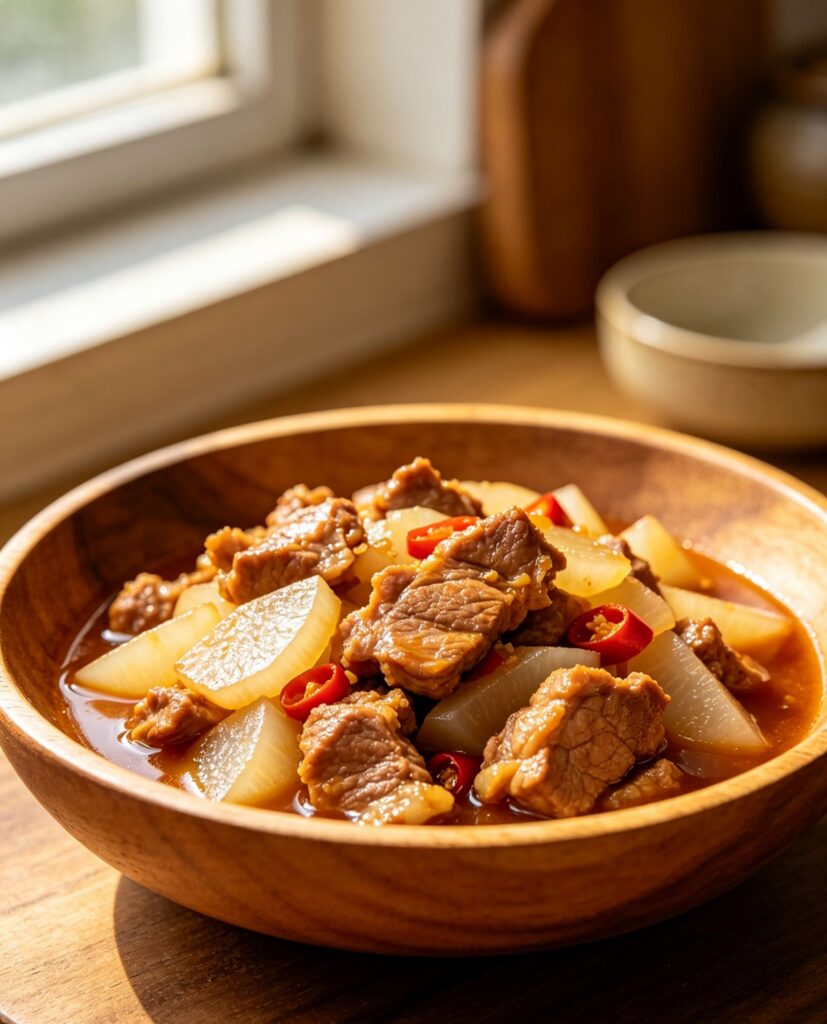
Ingredients
- Pork belly, sliced — 500 g (1.1 lb)
- Whole Dried red chilies, whole — 6
- Medium Radish, sliced — 2
- Whole Garlic cloves, sliced — 3
- Fresh ginger, sliced — 1 tbsp
- Water (1 1/4 cups) — 300 ml (1 1/4 cups)
- Salt (to taste) — 1 tsp
- Vegetable oil — 1 tbsp
Method
- Heat the oil in a pot over medium heat and sear the pork slices for 3–4 minutes until lightly browned.
- Add the garlic and ginger, and cook for 1 minute until fragrant.
- Add the dried chilies and radish, and stir to combine.
- Pour in the water, cover, and simmer for 30–35 minutes until the pork is tender and the radish is soft.
- Uncover and simmer for a further 5 minutes to reduce the sauce slightly.
- Season with salt and serve hot with red rice.
Introduction: Phaksha Paa is a robust pork dish simmered with dried red chilies and radish or spinach, showcasing Bhutan’s fondness for pork fat and heat together.
Cultural Background: Phaksha Paa is a robust pork dish simmered with dried red chilies and radish or spinach, showcasing Bhutan’s fondness for pork fat and heat together. It is commonly served at gatherings and family meals, and the fattier cuts of pork traditionally used reflect a farming culture where nothing from the animal goes to waste.
Tips: Choose pork belly with a good ratio of fat for the most authentic, rich flavour. Toast the dried chilies briefly in the pot before adding liquid to deepen their flavour.
Variations: Substitute spinach or mustard greens for the radish for a different regional version. Add a handful of dried chili powder for extra heat and colour.
Vegetarian/Vegan: No authentic vegetarian version exists; this dish is centred on pork.
Storage: Refrigerate in an airtight container for up to 3 days.
Reheating: Reheat gently on the stovetop over low heat until warmed through, adding a splash of water if needed.
FAQs:
Q: Can I use a leaner cut of pork?
A: Yes, pork shoulder works well, though it will be less rich than traditional belly.
Q: Is this dish very spicy?
A: It has a warm, moderate heat from the dried chilies rather than an intense burn.
- Pork belly, sliced — 500 g (1.1 lb)
- Whole Dried red chilies, whole — 6
- Medium Radish, sliced — 2
- Whole Garlic cloves, sliced — 3
- Fresh ginger, sliced — 1 tbsp
- Water (1 1/4 cups) — 300 ml (1 1/4 cups)
- Salt (to taste) — 1 tsp
- Vegetable oil — 1 tbsp
Please log in to leave a comment.