
Soups
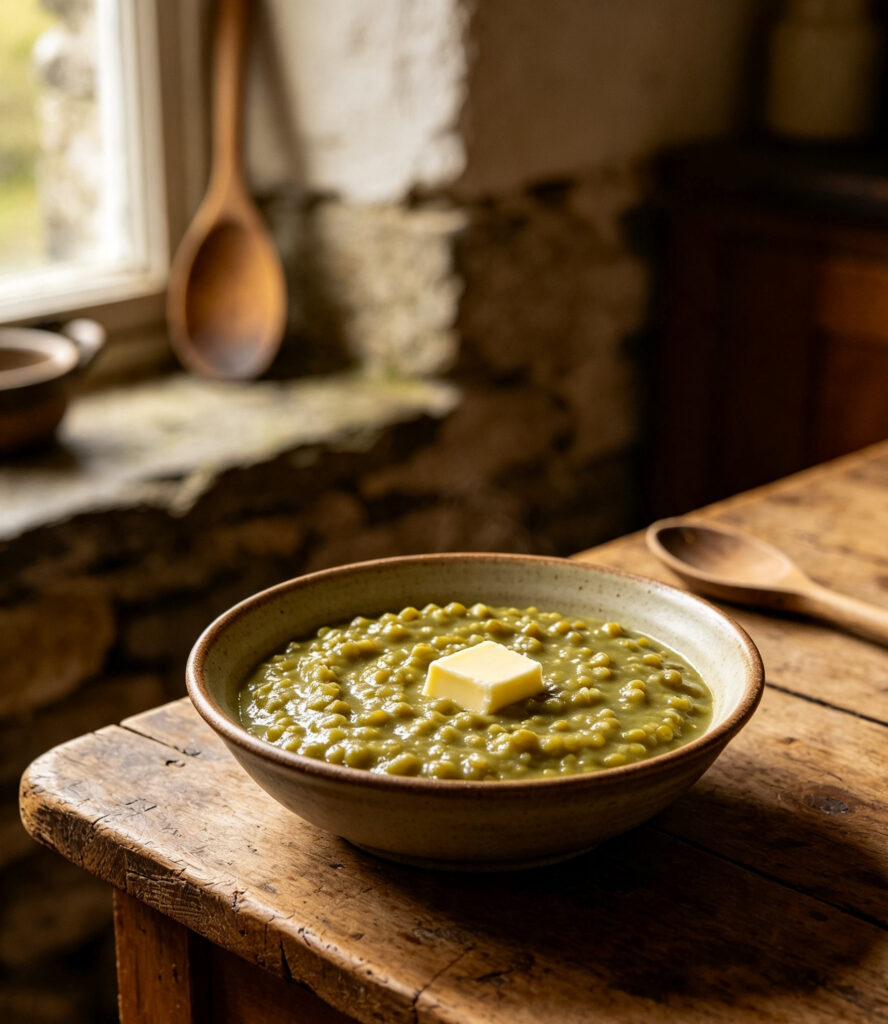
Pease Porridge (Pease Porridge)
sjfegan
Ingredients
- 400g (2 cups) Dried split peas, rinsed
- 100g Salt pork or bacon, diced
- 1 onion, chopped
- 6 cups water (1.4 litres / 48 fl oz)
- Salt and pepper to taste
Method
- Combine the split peas, salt pork or bacon, onion and water in a large pot.
- Bring to a boil, then reduce to a simmer and cook for 45–50 minutes, stirring occasionally, until the peas have broken down into a thick porridge.
- Season with salt and pepper before serving hot.
Introduction: A thick, hearty porridge of dried peas simmered with bacon, a filling and economical colonial staple, immortalised in the well-known nursery rhyme.
Cultural Background: Pease porridge reflects the practical, economical cooking of colonial households, dried split peas being an inexpensive, filling staple that, once made, would traditionally be kept and reheated over several days, as referenced in the famous rhyme ‘nine days old’.
Tips: Stir occasionally toward the end of cooking to prevent the thick porridge from catching on the bottom. This dish traditionally kept well and was reheated over several days, as reflected in its famous rhyme.
Variations: Add a bay leaf while simmering for extra depth. Serve with a piece of cornbread for a complete meal.
Storage: Refrigerate in an airtight container for up to 5 days; historically kept even longer as a preserved staple.
Reheating: Reheat gently on the stovetop with a splash of water, stirring, until warmed through.
Nutrition: Per serving (approx.): 280 kcal, 16 g protein, 10 g fat, 34 g carbohydrate.
FAQs:
Q: What is the connection to the nursery rhyme?
A: ‘Pease porridge hot, pease porridge cold, pease porridge in the pot, nine days old’ reflects the historical practice of making a large pot of this hearty dish and reheating it over many days.
Q: Was this dish considered a poor person’s food?
A: It was an economical, filling staple accessible to households of modest means, though enjoyed broadly across colonial society for its practicality.
Please log in to leave a comment.