
Payasa (Rice and Milk Pudding with Jaggery)
The Quirky Foodster Team
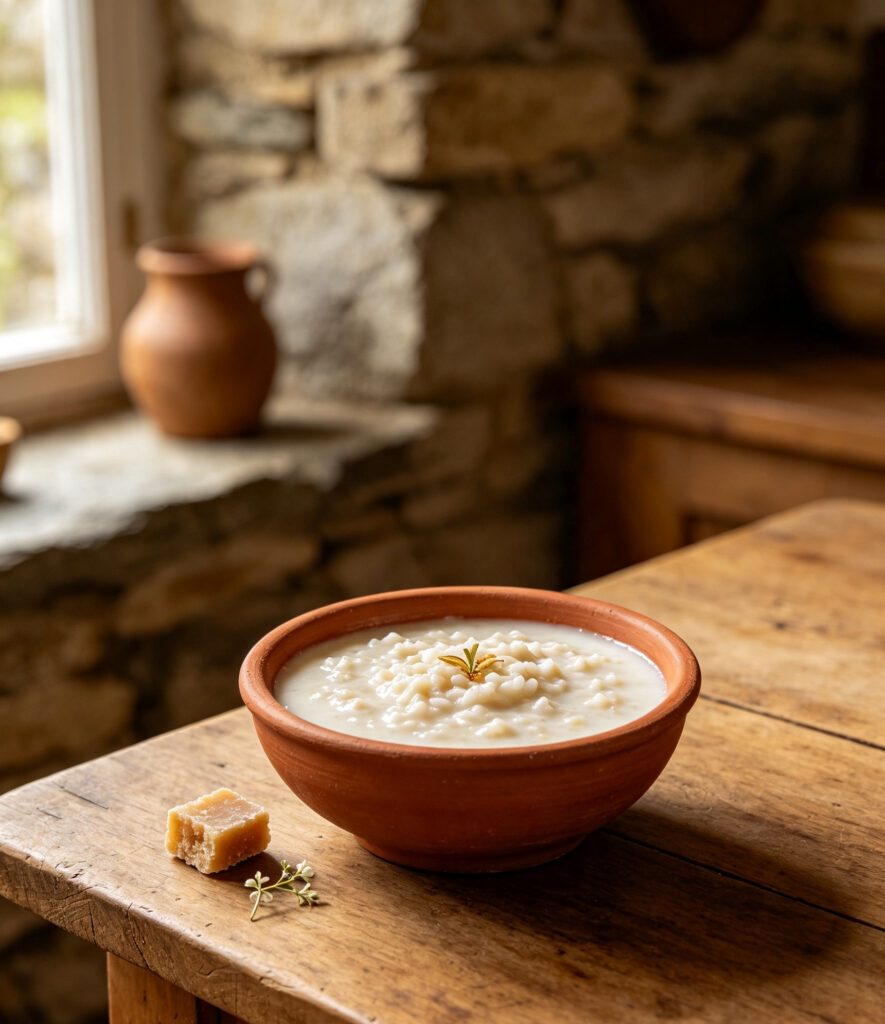
Ingredients
- Rice, rinsed — 75 g (0.33 cup)
- Whole milk — 1 L (4 cups)
- Jaggery, grated — 150 g (0.75 cup)
- Ground cardamom — 1/4 tsp
- Raisins — 1 tbsp
- Cashews or almonds, chopped — 1 tbsp
- Ghee — 1 tbsp
Method
- Combine the rinsed rice and milk in a heavy-bottomed saucepan and bring to a gentle boil, stirring occasionally to prevent sticking.
- Reduce the heat to low and simmer uncovered for 40-45 minutes, stirring frequently, until the rice is fully tender and the milk has reduced and thickened considerably.
- Meanwhile, heat the ghee in a small frying pan over medium heat and lightly fry the raisins and chopped nuts for 1-2 minutes, until the raisins plump and the nuts turn golden. Set aside.
- Once the rice and milk mixture has thickened, remove from the heat and stir in the grated jaggery until fully dissolved, off the heat, to prevent the milk from curdling.
- Stir in the ground cardamom.
- Fold in the fried raisins and nuts, reserving a few for garnish.
- Serve warm or chilled, garnished with the reserved nuts and raisins.
Introduction: Rice simmered slowly in milk and sweetened with jaggery, payasa is one of the oldest and most enduringly popular sweet dishes of the Indian subcontinent, its name and preparation traceable back through the Mauryan period and beyond.
Cultural Background: Payasa, related to the Sanskrit word payas meaning milk, is referenced across a wide span of ancient and classical Indian literature as a festive, celebratory sweet dish, often associated with religious offerings and significant life events. Its combination of rice, milk and jaggery reflects the pastoral and agricultural foundations of the Mauryan economy, in which dairy cattle and grain cultivation were both central concerns of the state, as detailed extensively in the Arthashastra.
Tips: (cid:127) Stir the rice and milk mixture frequently during simmering, as milk-based dishes can easily catch and scorch on the base of the pan. (cid:127) Always add the jaggery off the heat once the milk has already thickened, as adding it too early or to boiling milk can cause the milk to curdle.
Variations: (cid:127) Split moong dal or broken wheat can be used in place of rice for regional variations on the same basic milk pudding technique. (cid:127) A few strands of saffron can be added along with the cardamom for a more festive, richly coloured version.
Storage: Store in an airtight container in the refrigerator for up to 3 days.
Reheating: Reheat gently in a saucepan over low heat, stirring in a little extra milk to loosen, until warmed through; alternatively, serve chilled straight from the refrigerator.
Nutrition: Per serving (approx.): 260 kcal, 7 g protein, 40 g carbohydrate, 9 g fat, 1 g fibre, 60 mg sodium.
FAQs:
Q: Can I use sugar instead of jaggery?
A: Yes, though jaggery gives a deeper, more caramel-like flavour and is the more historically authentic sweetener; use an equivalent amount of sugar if jaggery is unavailable. (cid:127) Q: Why is jaggery added off the heat rather than during cooking? A: Adding jaggery to milk that is still actively boiling can cause the milk to curdle due to the jaggery’s acidity; stirring it in once the heat is removed and the mixture has cooled slightly avoids this issue.
- Rice, rinsed — 75 g (0.33 cup)
- Whole milk — 1 L (4 cups)
- Jaggery, grated — 150 g (0.75 cup)
- Ground cardamom — 1/4 tsp
- Raisins — 1 tbsp
- Cashews or almonds, chopped — 1 tbsp
- Ghee — 1 tbsp
Please log in to leave a comment.