
Pastel de Nata
The Quirky Foodster Team
Ingredients
- Puff pastry — 1 sheet
- Milk — 240 ml (8 fl oz)
- Cinnamon stick — 1
- Strip lemon peel — 1
- Egg yolks — 4
- Sugar — 100 g (3.5 oz)
- Cornstarch — 2 tbsp
- Vanilla extract — 1 tsp
- Ground cinnamon, to garnish
Method
- Roll the puff pastry into a log and cut into rounds, pressing each into a greased muffin tin cup to form a shell.
- Heat the milk with the cinnamon stick and lemon peel until just simmering; remove from heat and strain, discarding the solids.
- Whisk the egg yolks, sugar and cornstarch together, then gradually whisk in the warm milk.
- Return the mixture to the saucepan and cook over low heat, stirring constantly, until slightly thickened; stir in the vanilla.
- Preheat the oven to its highest setting, ideally 250°C (480°F).
- Pour the custard into the pastry shells, filling about three-quarters full.
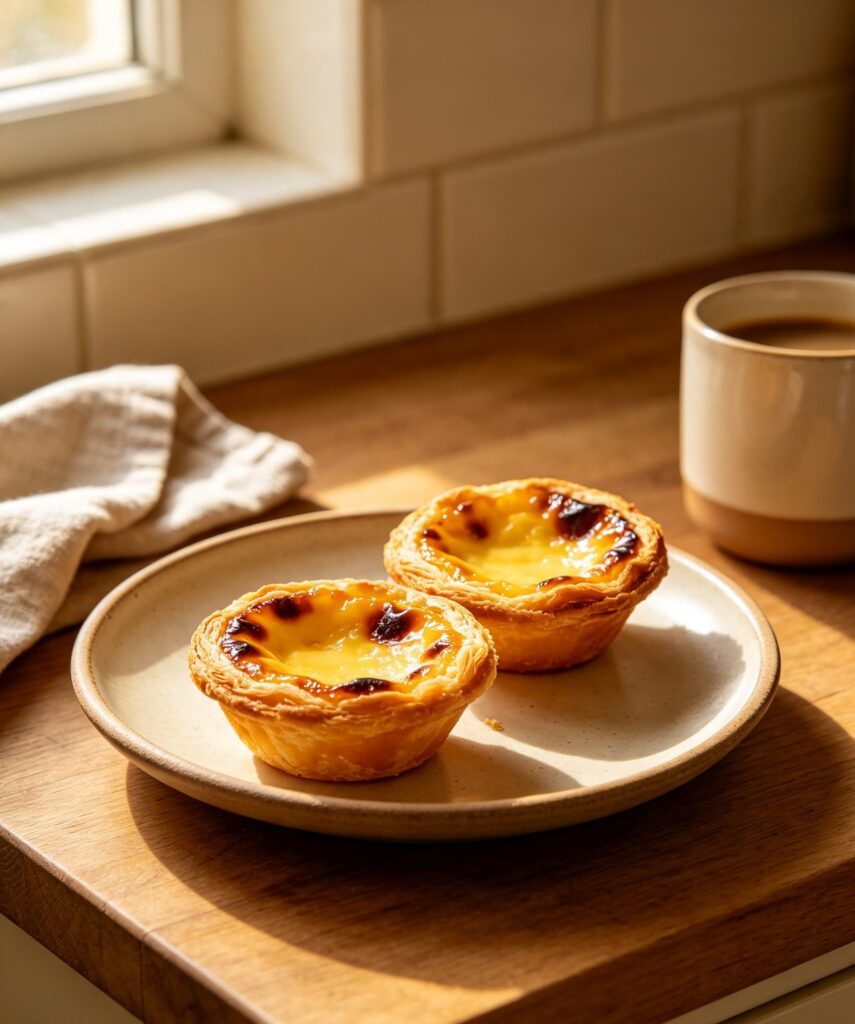
- Bake for 12–15 minutes until the pastry is golden and the custard has developed dark caramelised spots on top.
- Let cool slightly and dust with ground cinnamon before serving.
Introduction: Flaky, custard-filled tarts with a caramelised top, Portugal's most iconic and beloved pastry, enjoyed with a morning coffee.
Cultural Background: Pastéis de nata trace their origin to Lisbon's Belém district, created by monks centuries ago, and they remain an essential part of Portuguese daily life, eaten for breakfast or as a mid-morning treat across the country.
Tips: A very hot oven is essential for achieving the characteristic dark, caramelised spots on top of the custard. Don't overfill the pastry shells, as the custard will puff slightly during baking.
Variations: Serve warm or at room temperature, both traditional. Add a little extra cinnamon to the custard itself for a warmer flavour.
Storage: Store at room temperature for up to 1 day, or refrigerate for 3 days.
Reheating: Warm briefly in an oven at 180°C (350°F) for 5 minutes to refresh the pastry's crispness.
FAQs:
Q: Where did pastel de nata originate?
A: The Belém district of Lisbon, created by monks at the Jerónimos Monastery, with the original recipe still closely guarded by a specific bakery there.
Q: Why is such a high oven temperature needed?
A: The intense heat is what creates the signature dark, caramelised spots on top of the custard in a short baking time, without overcooking the delicate filling.
- Puff pastry — 1 sheet
- Milk — 240 ml (8 fl oz)
- Cinnamon stick — 1
- Strip lemon peel — 1
- Egg yolks — 4
- Sugar — 100 g (3.5 oz)
- Cornstarch — 2 tbsp
- Vanilla extract — 1 tsp
- Ground cinnamon, to garnish
Please log in to leave a comment.