
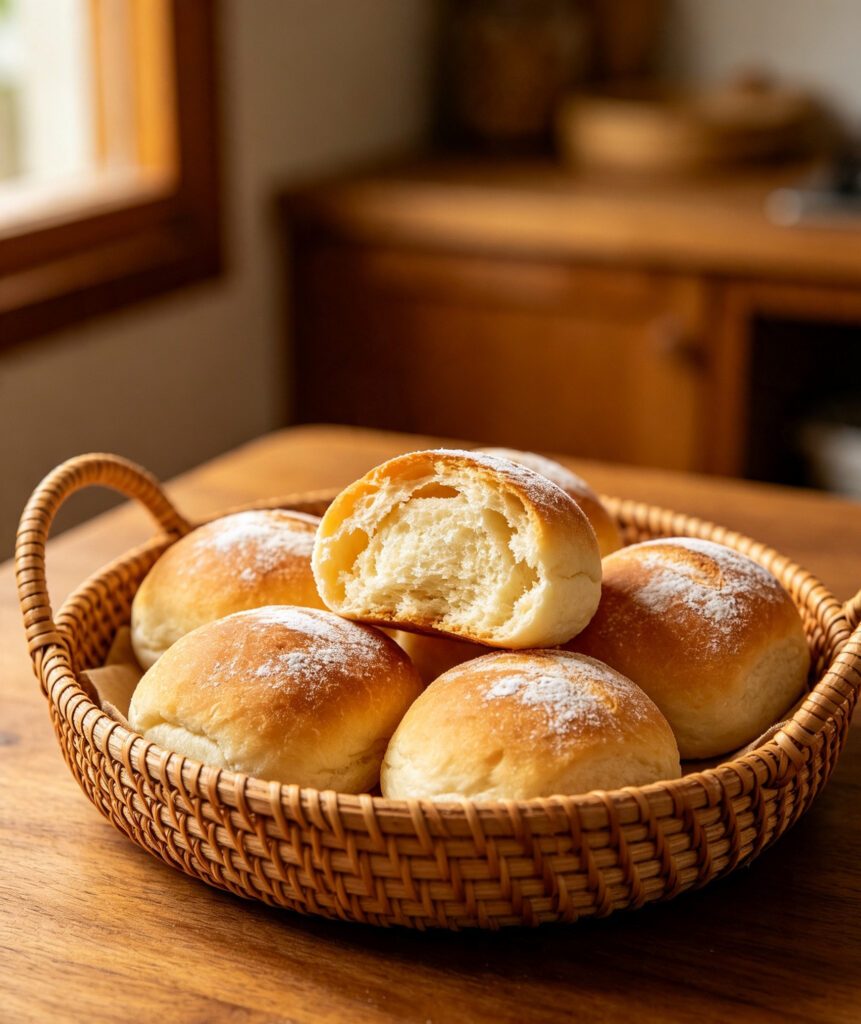
Pandesal
The Quirky Foodster Team
Ingredients
- Bread flour — 500 g (1 lb 2 oz)
- Active dry yeast — 2 tsp
- Sugar — 65 g (2.25 oz)
- Warm milk — 360 ml (12 fl oz)
- Butter, softened — 2 tbsp
- Salt — 1 tsp
- Fine breadcrumbs, for coating — 60 g (2 oz)
Method
- Dissolve the yeast and a little sugar in the warm milk and let sit for 10 minutes until foamy.
- Combine the flour, remaining sugar and salt in a large bowl, then add the yeast mixture and softened butter, kneading for 10 minutes until smooth and elastic.
- Cover and let rise in a warm place for 1 hour, or until doubled.
- Punch down and shape into a long log, then cut into small rolls.
- Roll each roll in breadcrumbs to coat.
- Place on a baking tray and let rise for a further 25 minutes.
- Preheat the oven to 190°C (375°F) and bake for 15–18 minutes until golden.
Introduction: Soft, slightly sweet bread rolls coated in breadcrumbs, the essential Filipino breakfast bread found fresh from bakeries each morning.
Cultural Background: Pandesal is one of the most beloved and widely eaten breads in the Philippines, sold hot each morning from neighbourhood bakeries, traditionally torn open and filled with butter, cheese or a savoury filling.
Tips: Coating the rolls in breadcrumbs before the final rise gives pandesal its characteristic textured crust. Let the dough rise fully for the softest, lightest rolls.
Variations: Fill with a slice of cheese or a savoury filling like corned beef before baking. Serve warm with butter for the classic simple breakfast.
Storage: Store at room temperature wrapped in a bag for up to 1 day; freeze for longer storage.
Reheating: Warm briefly in an oven at 160°C (325°F) for 3–5 minutes to refresh.
FAQs:
Q: Why is pandesal coated in breadcrumbs?
A: This gives the roll its distinctive lightly textured, slightly crisp crust, a hallmark of authentic pandesal.
Q: What is pandesal typically eaten with?
A: Butter, cheese, or a savoury filling, often alongside coffee for breakfast.
- Bread flour — 500 g (1 lb 2 oz)
- Active dry yeast — 2 tsp
- Sugar — 65 g (2.25 oz)
- Warm milk — 360 ml (12 fl oz)
- Butter, softened — 2 tbsp
- Salt — 1 tsp
- Fine breadcrumbs, for coating — 60 g (2 oz)
Please log in to leave a comment.