
Panamanian Tomato Salsa
The Quirky Foodster Team
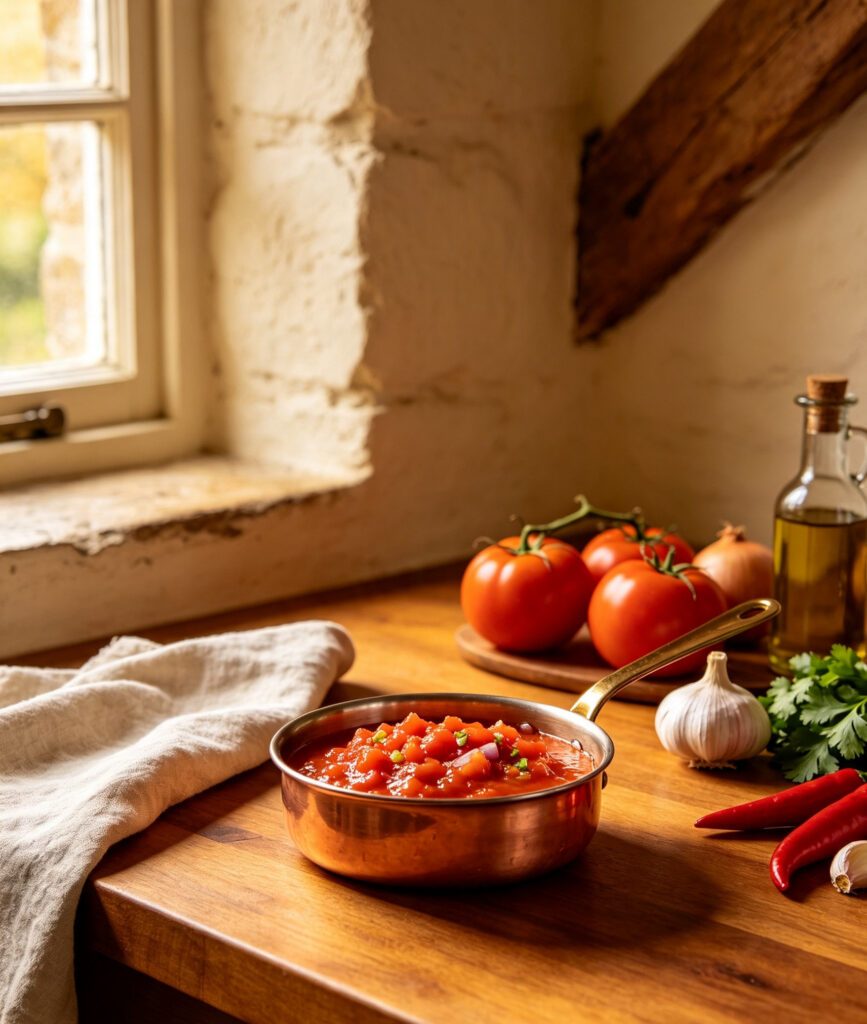
Ingredients
Method
- Heat oil in a saucepan over medium heat; sauté onion and bell pepper until softened, about 6-8 minutes.
- Add garlic, cook 1-2 minutes until fragrant.
- Stir in chopped tomatoes and cumin; simmer 15-20 minutes, stirring occasionally, until thickened and well combined.
- Stir in chopped culantro or coriander near the end of cooking.
- Season with salt and pepper to taste.
Cultural Background: A simply seasoned cooked tomato salsa reflecting Panama's Caribbean and Spanish culinary influences, this sauce forms the base for many Panamanian rice and meat dishes, seasoned with the region's characteristic culantro and sofrito aromatics.
Tips: • Culantro (a broader-leafed relative of coriander common in the Caribbean and Central America) gives a more intense, distinctive flavour than regular coriander if available. • Simmer until the sauce reaches a thick, spoonable consistency suitable for spooning over rice or meat.
Variations: • Add diced ham or chorizo for a heartier version used as a base for rice dishes. • Blend smooth for a finer-textured sauce, if preferred over the traditional chunky texture.
Storage: Refrigerate up to 4 days, or freeze up to 2 months.
Reheating: Reheat gently over low heat, stirring occasionally. Nutrition (per serving) Approx. 40 kcal, 1 g protein, 3 g fat, 4 g carbohydrate per 60 g serving.
FAQs: What is this sauce traditionally used for? As a base for rice dishes, stewed meats, and as a general cooking sauce in Panamanian home cooking. What is culantro? A pungent, broad-leafed herb related to coriander, common in Caribbean and Central American cooking; coriander is a reasonable substitute if unavailable.
- Ripe tomatoes, chopped — 500 g (1.1 lb)
- Onion, diced — 1 medium
- Red bell pepper, diced — 1
- Garlic cloves, minced — 3
- Fresh culantro (or coriander), chopped — 10 g (2 tbsp)
- Vegetable oil — 30 ml (2 tbsp)
- Ground cumin — 2 g (1/2 tsp)
- Salt and pepper — to taste
Please log in to leave a comment.