
Drinks
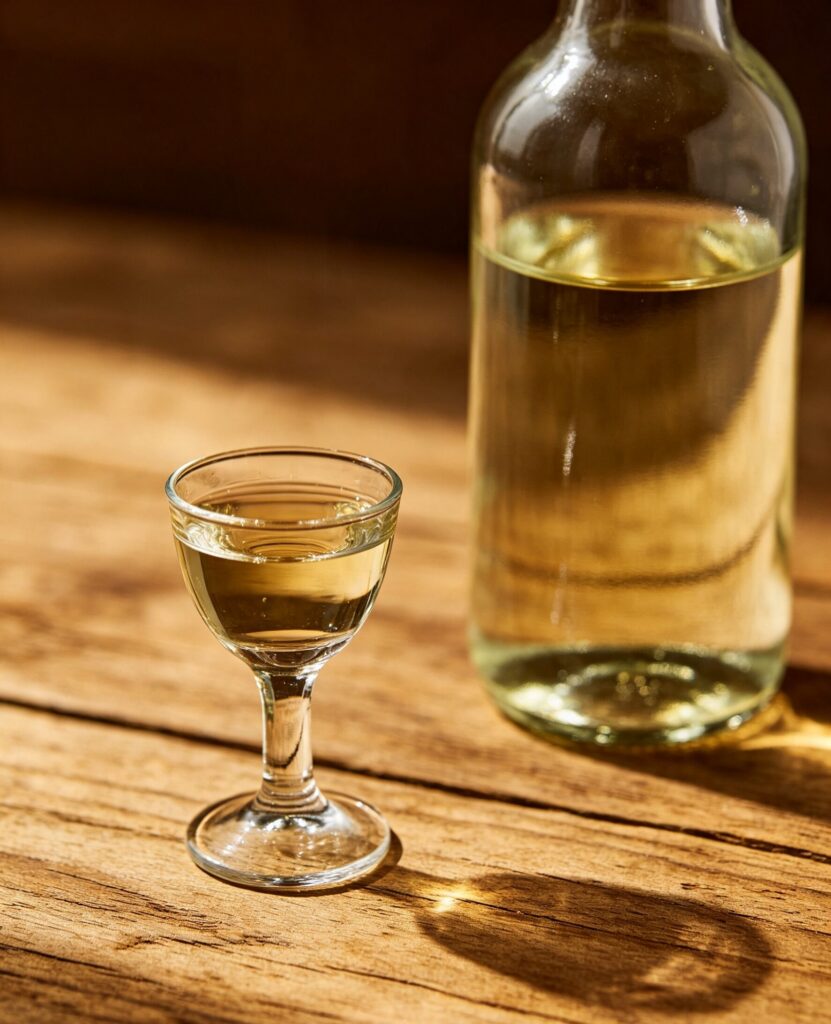
Palinka (Fruit Brandy)
The Quirky Foodster Team
Ingredients
- 3 kg (6.6 lb) ripe plums or apricots, pitted
- Water, as needed for the mash
- Commercial distilling yeast (for home fermentation, where legally permitted)
Method
- Crush the ripe fruit thoroughly, retaining the juice and pulp together in a fermentation vessel.
- Add distilling yeast and allow the mash to ferment 1-2 weeks until sugars are converted to alcohol.
- Strain the fermented mash and transfer to a licensed still.
- Distil twice, discarding the early 'heads' and late 'tails' fractions, keeping only the clean 'heart' of the run.
- Dilute the distillate with water to the desired drinking strength, typically 40-50% ABV.
- Rest the palinka at least a few weeks before serving to mellow.
Introduction: A strong double-distilled fruit brandy protected as a Hungarian geographical indication, palinka is traditionally distilled from plums, apricots or pears and is central to Hungarian hospitality, offered as a welcoming shot before meals and at celebrations.
Cultural Background: A strong double-distilled fruit brandy protected as a Hungarian geographical indication, palinka is traditionally distilled from plums, apricots or pears and is central to Hungarian hospitality, offered as a welcoming shot before meals and at celebrations.
Tips: This is a licensed distillation process in most countries; note the legal requirements in your area before attempting home production, and where home distillation isn't permitted, source palinka commercially instead.
Variations: Different fruits produce distinct styles: szilva palinka (plum), barack palinka (apricot), korte palinka (pear).
Storage: Store in a sealed glass bottle at room temperature indefinitely.
Reheating: Not applicable; served at room temperature or slightly chilled.
Nutrition: Approx. 95 kcal per 30 ml serving; negligible protein, fat or carbohydrate.
FAQs:
Q: Is palinka legal to make at home?
A: Rules vary widely by country; many places require a distilling license, so always check local law before attempting production.
Q: How is palinka traditionally served?
A: Chilled or at room temperature in small glasses, often as a welcome shot before a meal.
Please log in to leave a comment.