
Palestinian Manakish Za’atar
The Quirky Foodster Team
Ingredients
- Bread flour — 375 g (13 oz)
- Warm water — 360 ml (12 fl oz)
- Active dry yeast — 2 tsp
- Sugar — 1 tsp
- Salt — 1.5 tsp
- Olive oil, plus extra for the dough — 2 tbsp
- Za'atar spice blend — 60 g (2 oz)
- Olive oil, for the topping — 60 ml (2 fl oz)
Method
- Dissolve the yeast and sugar in the warm water and let sit for 10 minutes until foamy.
- Combine the flour and salt in a bowl, then add the yeast mixture and 2 tbsp olive oil, kneading for 10 minutes until smooth and elastic.
- Cover and let rise in a warm place for 1 hour, or until doubled.
- Preheat the oven to 220°C (425°F).
- Combine the za'atar with the 1/4 cup olive oil to make a thick paste.
- Divide the dough into rounds and flatten each into a disc about 1 cm (1/2 in) thick.
- Spread the za'atar mixture generously over each disc, right to the edges.
- Bake for 10–12 minutes until the edges are golden and the base is cooked through.
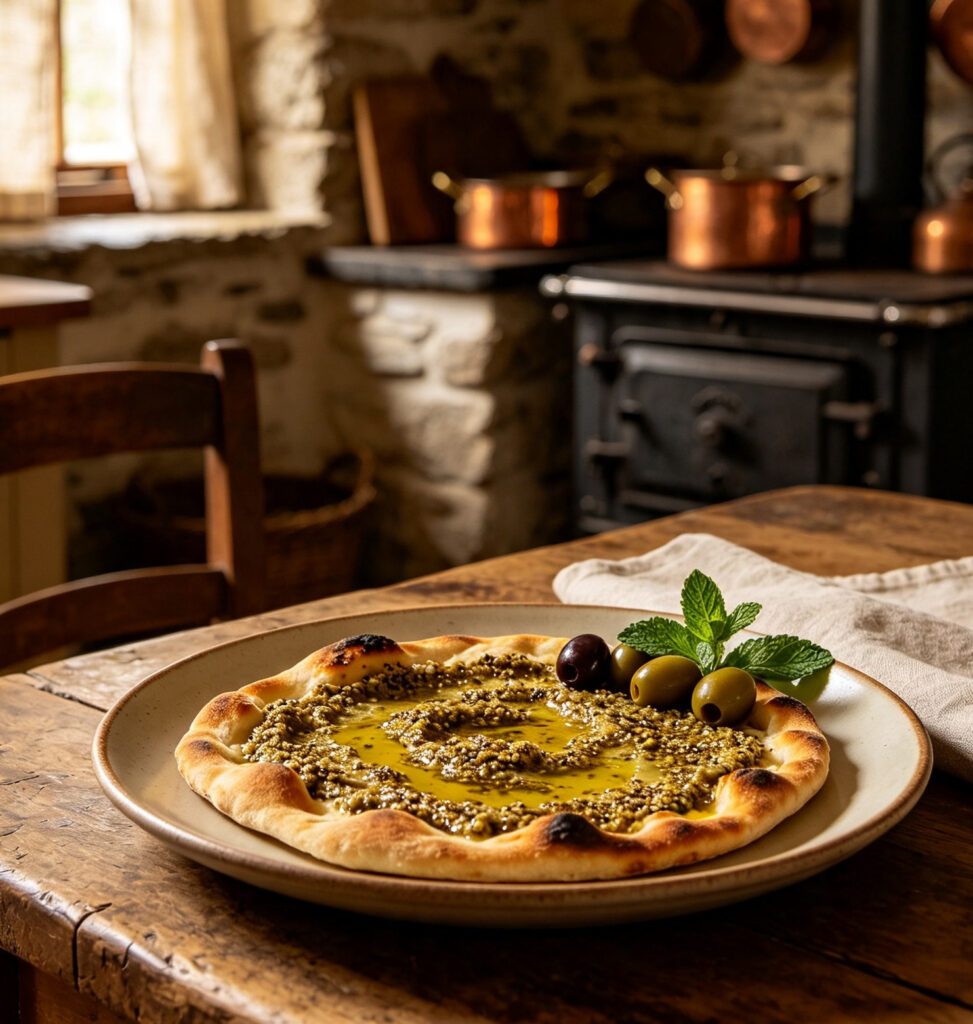
Introduction: A round flatbread topped generously with za'atar and olive oil, baked until golden, one of Palestine's most beloved breakfast breads.
Cultural Background: Manakish is baked fresh each morning at bakeries across Palestine, the dough topped with a thick layer of za'atar mixed with olive oil, its simple, fragrant character making it a beloved everyday breakfast.
Tips: Spread the za'atar mixture generously and right to the edges for the classic, fully covered look. A hot oven helps the manakish bake quickly, keeping the base soft while the edges crisp.
Variations: Top with a mix of za'atar and crumbled cheese for a variation called manakish jibneh za'atar. Fold in half after baking for easier eating on the go.
Storage: Store cooled manakish in an airtight container at room temperature for up to 1 day.
Reheating: Warm briefly in an oven at 180°C (350°F) for 5 minutes to refresh.
FAQs:
Q: Where is manakish typically bought?
A: Fresh from local bakeries each morning, though it's also made at home.
Q: What is manakish typically eaten with?
A: Often on its own, or alongside fresh vegetables and a cup of tea.
- Bread flour — 375 g (13 oz)
- Warm water — 360 ml (12 fl oz)
- Active dry yeast — 2 tsp
- Sugar — 1 tsp
- Salt — 1.5 tsp
- Olive oil, plus extra for the dough — 2 tbsp
- Za'atar spice blend — 60 g (2 oz)
- Olive oil, for the topping — 60 ml (2 fl oz)
Please log in to leave a comment.