
Pajeon (Scallion Pancake)
The Quirky Foodster Team
Ingredients
- Spring onions or thin leeks, trimmed to pan length — 200 g (7 oz)
- Plain flour — 150 g (1 1/4 cups)
- Korean pancake mix or rice flour (for extra crispness) — 50 g (1/3 cup)
- Egg — 1
- Cold water — 250 ml (1 cup)
- Salt — 1/2 tsp (3 g)
- Mixed seafood (small shrimp, squid), optional — 100 g (3.5 oz)
- Vegetable oil, for frying — 3 tbsp (45 ml)
- Soy sauce, 1 tbsp rice vinegar, 1/2 tsp gochugaru, for dipping sauce — 2 tbsp
Method
- Whisk the flour, pancake mix, egg, cold water and salt together into a smooth, fairly thin batter.
- Lay the spring onions flat and close together in the pan area you'll be frying in, to check they'll fit in roughly one layer.
- Heat the oil in a large non-stick pan over medium heat. Arrange the spring onions in the pan in a flat layer, and scatter over the seafood if using.
- Pour the batter evenly over the onions so they are fully coated and held together.
- Fry for 4–5 minutes until the underside is golden and crisp, then carefully flip (using a plate to help if needed) and cook the other side for another 4–5 minutes, pressing gently with the spatula for even crisping.
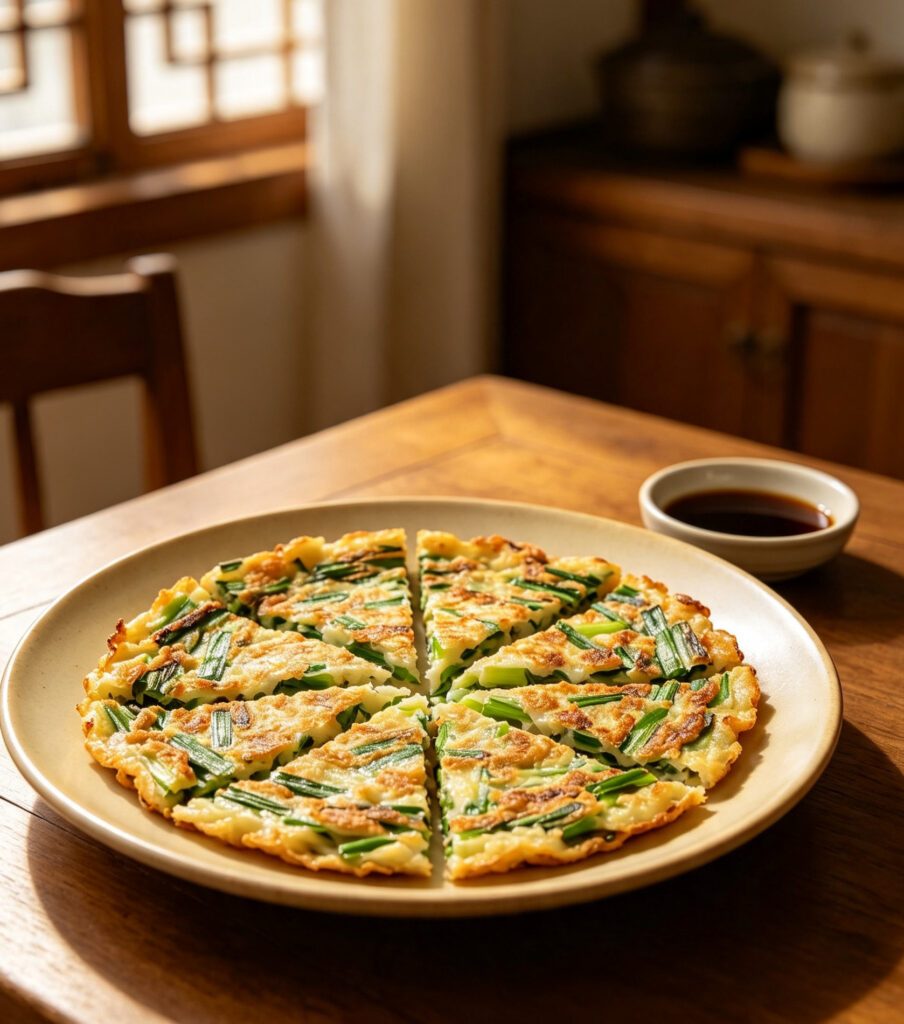
- Slide onto a board, cut into wedges, and serve hot with the soy-vinegar dipping sauce.
Introduction: Pajeon is a savoury pancake built around a generous bed of whole spring onions, traditionally said to be especially popular on rainy days when the sound of sizzling batter is thought to echo falling rain.
Cultural Background: Pajeon is a savoury pancake built around a generous bed of whole spring onions, traditionally said to be especially popular on rainy days when the sound of sizzling batter is thought to echo falling rain. Busan's seafood-studded haemul pajeon, made with the region's abundant catch, is the most famous regional variation.
Tips: Cold batter and a well-heated pan are the secret to a crisp edge — don't let the batter sit too long before frying. Press the pancake gently with a spatula partway through cooking to help it crisp evenly and hold together when sliced.
Variations: Haemul pajeon: increase the seafood generously (shrimp, squid, mussels) for the classic Busan seafood version. Buchu jeon: substitute garlic chives for spring onions for a milder, fragrant alternative. Omit the seafood and use a plant-based egg replacer or simply omit the egg, adjusting batter thickness with a little extra flour.
Storage: Refrigerate leftovers in an airtight container for up to 2 days.
Reheating: Reheat in a dry or lightly oiled pan over medium heat to restore crispness; avoid the microwave, which makes it soggy.
Nutrition: Calories: 260 kcal | Protein: 9 g | Carbs: 28 g | Fat: 12 g | Fibre: 2 g | Sodium: 520 mg Per serving (quarter pancake) with seafood; estimate only.
FAQs:
Q: Why is my pajeon soggy instead of crispy?
A: This is usually from batter that is too thick, a pan that isn't hot enough, or overcrowding — use a thin batter and a well-heated pan, and don't rush the frying.
Q: Can I make pajeon gluten-free?
A: Yes, substitute the plain flour with a gluten-free all-purpose blend or additional rice flour; the texture will be slightly different but still crisp.
Q: What's the best dipping sauce?
A: A simple mix of soy sauce, rice vinegar and a pinch of gochugaru or sesame seeds is the classic, well-balanced accompaniment.
- Spring onions or thin leeks, trimmed to pan length — 200 g (7 oz)
- Plain flour — 150 g (1 1/4 cups)
- Korean pancake mix or rice flour (for extra crispness) — 50 g (1/3 cup)
- Egg — 1
- Cold water — 250 ml (1 cup)
- Salt — 1/2 tsp (3 g)
- Mixed seafood (small shrimp, squid), optional — 100 g (3.5 oz)
- Vegetable oil, for frying — 3 tbsp (45 ml)
- Soy sauce, 1 tbsp rice vinegar, 1/2 tsp gochugaru, for dipping sauce — 2 tbsp
Please log in to leave a comment.