
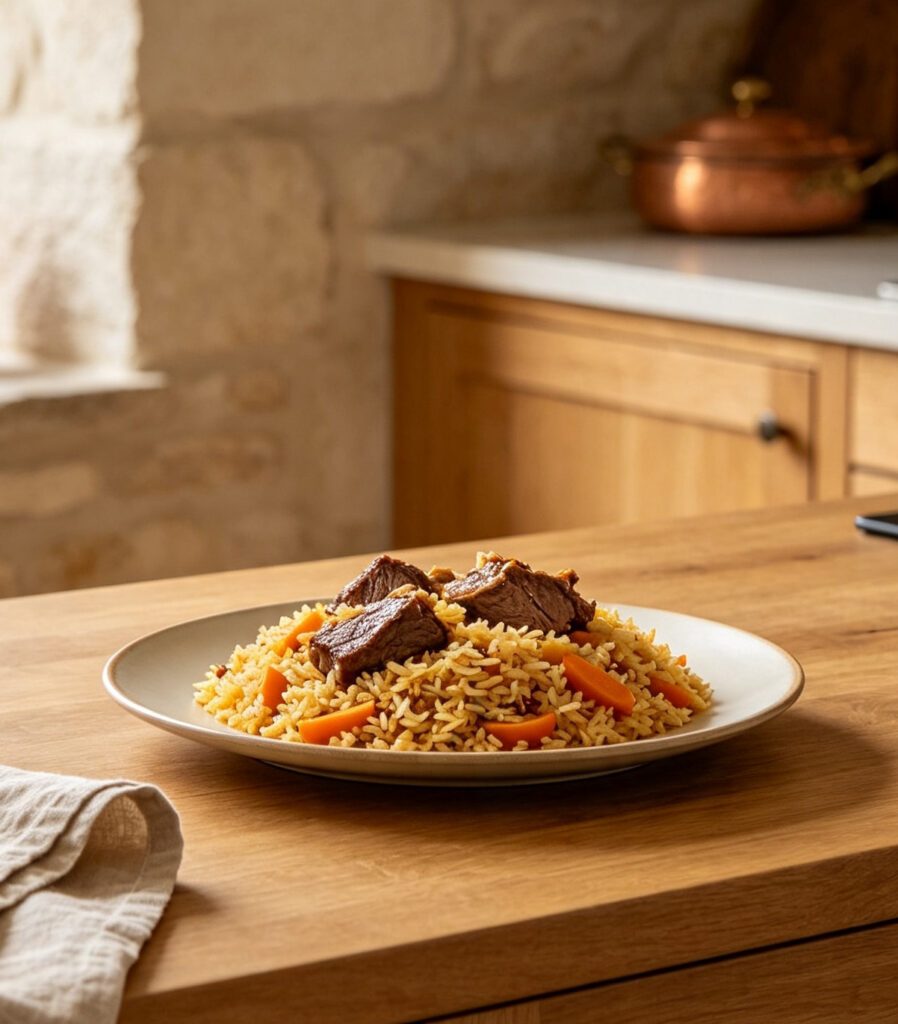
Oshi Palov (Tajik Plov)
The Quirky Foodster Team
Ingredients
- Long-grain rice (such as devzira or basmati), rinsed and soaked 30 minutes — 700 g (3½ cups)
- Lamb or beef, cut into chunks — 700 g (1.5 lb)
- Carrots, julienned — 700 g (1.5 lb)
- Large Onion, sliced — 3
- Vegetable oil — 180 ml (¾ cup)
- Garlic heads, outer papery skin removed but left whole — 2
- Cumin seeds — 8 g (1½ tsp)
- Water — 750 ml (3 cups)
- Salt, — to taste
Method
- Rinse the rice thoroughly in several changes of water until the water runs mostly clear, then soak in warm water for 30 minutes; drain before use.
- Heat oil in a large heavy pot over medium-high heat until shimmering. Add the meat and brown well on all sides, about 8–10 minutes.
- Add sliced onion and cook until deeply golden, about 10 minutes.
- Add julienned carrots and cook, stirring occasionally, for 10–12 minutes until softened and slightly caramelized.
- Add cumin seeds, salt, and water. Nestle the whole garlic heads into the mixture. Bring to a simmer and cook, partially covered, for 40–45 minutes until the meat is tender.
- Remove the garlic heads temporarily. Spread the drained rice evenly over the meat and carrot mixture without stirring, then carefully add just enough hot water to sit about 1–2 cm (½–¾ in) above the rice.
- Bring to a boil, then reduce heat to very low, nestle the garlic heads back on top, cover tightly, and steam for 25–30 minutes undisturbed until the rice is fully tender and the liquid has been absorbed. Gently fold the rice and meat together before serving, and place a whole garlic head on top as a traditional garnish for each portion.
Introduction: Oshi palov, Tajikistan’s version of the regionwide Central Asian rice pilaf, is prepared in a large, heavy pot called a kazan, layering rice, meat, carrots, and onion cooked slowly in oil until deeply infused with flavour.
Cultural Background: Oshi palov, Tajikistan’s version of the regionwide Central Asian rice pilaf, is prepared in a large, heavy pot called a kazan, layering rice, meat, carrots, and onion cooked slowly in oil until deeply infused with flavour. It’s the centrepiece dish at weddings, holidays, and important family gatherings across the country.
Tips: Resist stirring once the rice is added and the pot is covered — this careful layering and steaming, without disturbing the rice, is essential to achieving the correct texture in a proper plov.
Variations: Raisins, dried barberries, or chickpeas are sometimes added along with the carrots for additional flavour and texture, depending on regional and family tradition.
Storage: Refrigerate in an airtight container for up to 4 days; freezes well for up to 2 months.
Reheating: Reheat covered on the stovetop over low heat with a splash of water, or in the microwave, stirring gently to loosen.
FAQs:
Q: Why is my plov mushy?
A: Too much liquid or stirring the rice while it steams are the most common causes — measure the water carefully and leave the pot undisturbed during the final steaming stage.
Q: What kind of rice works best for plov?
A: A firm, long-grain rice such as devzira (a Central Asian variety) or basmati holds its shape best during the long cooking process.
Q: Is oshi palov naturally glutenfree?
A: Yes, as written it contains no gluten ingredients.
- Long-grain rice (such as devzira or basmati), rinsed and soaked 30 minutes — 700 g (3½ cups)
- Lamb or beef, cut into chunks — 700 g (1.5 lb)
- Carrots, julienned — 700 g (1.5 lb)
- Large Onion, sliced — 3
- Vegetable oil — 180 ml (¾ cup)
- Garlic heads, outer papery skin removed but left whole — 2
- Cumin seeds — 8 g (1½ tsp)
- Water — 750 ml (3 cups)
- Salt, — to taste
Please log in to leave a comment.