
Nigerien Fataya
The Quirky Foodster Team
Ingredients
Method
- Make the dough by combining flour, 1 tbsp oil, a pinch of salt and water into a smooth, firm dough; rest for 20 minutes.
- For the filling, cook the minced beef or fish with the onion, garlic, cumin, salt and pepper in a pan over medium heat until cooked through; cool slightly.
- Roll the dough thin and cut into circles about 10 cm (4 in) across.
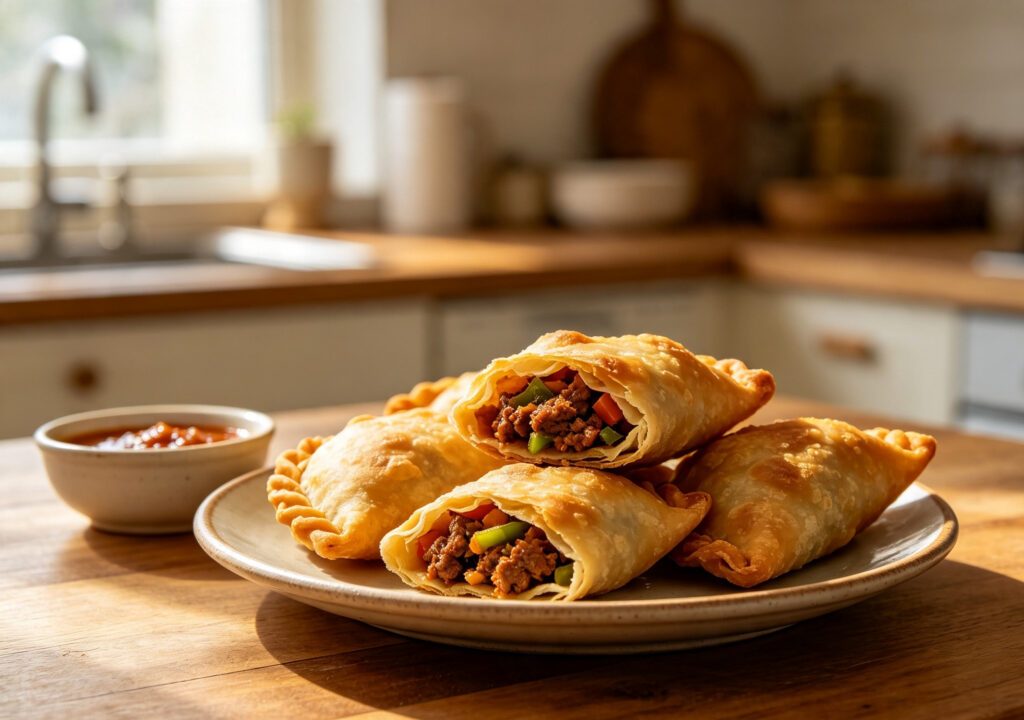
- Place a spoonful of filling on one half of each circle, fold over into a half-moon shape and press the edges firmly to seal.
- Heat oil to 175°C (350°F) and deep-fry the fataya in batches until golden brown, about 3–4 minutes.
- Drain on paper towels before serving.
Introduction: Crisp, folded pastries filled with spiced minced meat or fish, a well-loved starter served at Nigerien gatherings.
Cultural Background: Fataya are enjoyed across much of the wider Sahel, and in Niger they bring together the region's love of pastry-wrapped fillings with the spices commonly used in local home cooking.
Tips: Let the filling cool before assembling so it doesn't soften the dough. Crimp the edges firmly with a fork for a decorative seal that also helps prevent leaking.
Variations: Use shredded cooked chicken as an alternative filling. Add a pinch of chilli powder to the filling for extra warmth.
Storage: Store cooled fataya in an airtight container at room temperature for up to 1 day, or refrigerate for 2 days.
Reheating: Reheat in an oven at 180°C (350°F) for 8–10 minutes, or an air fryer for 5 minutes.
FAQs:
Q: Can fataya be baked instead of fried?
A: Yes, bake at 200°C (400°F) for 20 minutes, turning once, though the texture will be less crisp.
Q: Is fataya the same across West Africa?
A: The core technique is shared regionally, with each country and household bringing its own spice preferences.
- Plain flour — 250 g (9 oz)
- Water — 120 ml (4 fl oz)
- Oil, plus extra for deep frying — 1 tbsp
- Minced beef or flaked fish — 250 g (9 oz)
- Onion, finely chopped — 1
- Garlic, minced — 1 clove
- Ground cumin — 1 tsp
- Salt and pepper — to taste
Please log in to leave a comment.