
Nigerien Fakoye
The Quirky Foodster Team
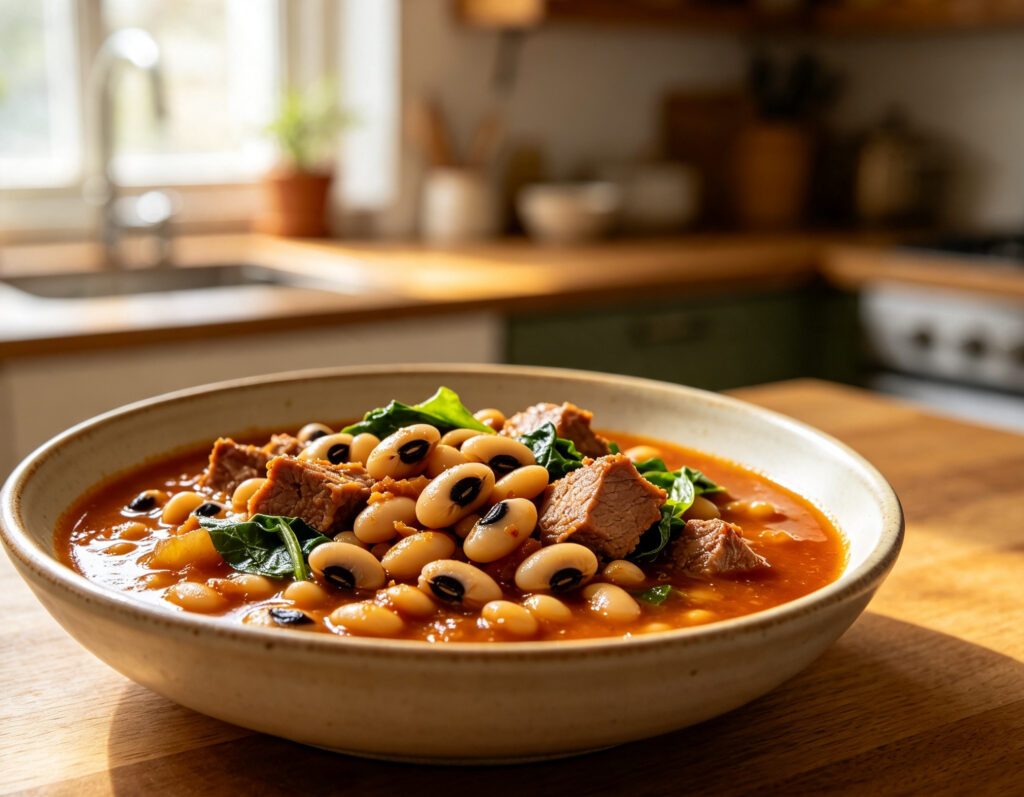
Ingredients
- Fresh (3.5 oz dried) Fresh fakoye (jute mallow) leaves, chopped, or 100 g dried — 14 oz
- Meat (goat, beef or dried fish), cut into pieces — 300 g (10.5 oz)
- Onion, chopped — 1
- Oil — 2 tbsp
- Bouillon cube — 1
- Water — 720 ml (24 fl oz)
- Salt — to taste
Method
- Heat the oil in a pot and sauté the onion until softened.
- Add the meat and brown lightly on all sides.
- Add the water and bouillon cube, then bring to a boil and simmer for 25 minutes until the meat is tender.
- Add the chopped fakoye leaves and continue simmering for 15–20 minutes, stirring occasionally, until the sauce thickens and takes on a silky texture.
- Season with salt and serve hot over tô or rice.
Introduction: A dark green, slightly mucilaginous sauce made from jute mallow leaves, cooked with meat and served over tô or rice.
Cultural Background: Fakoye uses jute mallow leaves, foraged or grown in home gardens across Niger, and is prized for the silky texture it develops during slow cooking, a distinctive leafy sauce found across the Sahel.
Tips: If using dried leaves, soak them in warm water for 20 minutes before adding to soften. Stir occasionally as the leaves release their characteristic slightly sticky texture.
Variations: Use baobab leaf powder in a similar way for a different but related leafy sauce. Add a spoonful of ground dried shrimp for extra savoury depth.
Storage: Refrigerate in an airtight container for up to 2 days.
Reheating: Reheat gently on the stovetop over low heat, stirring, until warmed through.
FAQs:
Q: Where can I find fakoye leaves?
A: Fresh or dried jute mallow leaves are available at West African grocers, sometimes labelled 'jute leaves'.
Q: Is the sauce meant to be a little sticky?
A: Yes, its slightly mucilaginous texture is characteristic and desirable, similar to okra.
- Fresh (3.5 oz dried) Fresh fakoye (jute mallow) leaves, chopped, or 100 g dried — 14 oz
- Meat (goat, beef or dried fish), cut into pieces — 300 g (10.5 oz)
- Onion, chopped — 1
- Oil — 2 tbsp
- Bouillon cube — 1
- Water — 720 ml (24 fl oz)
- Salt — to taste
Please log in to leave a comment.