
Desserts
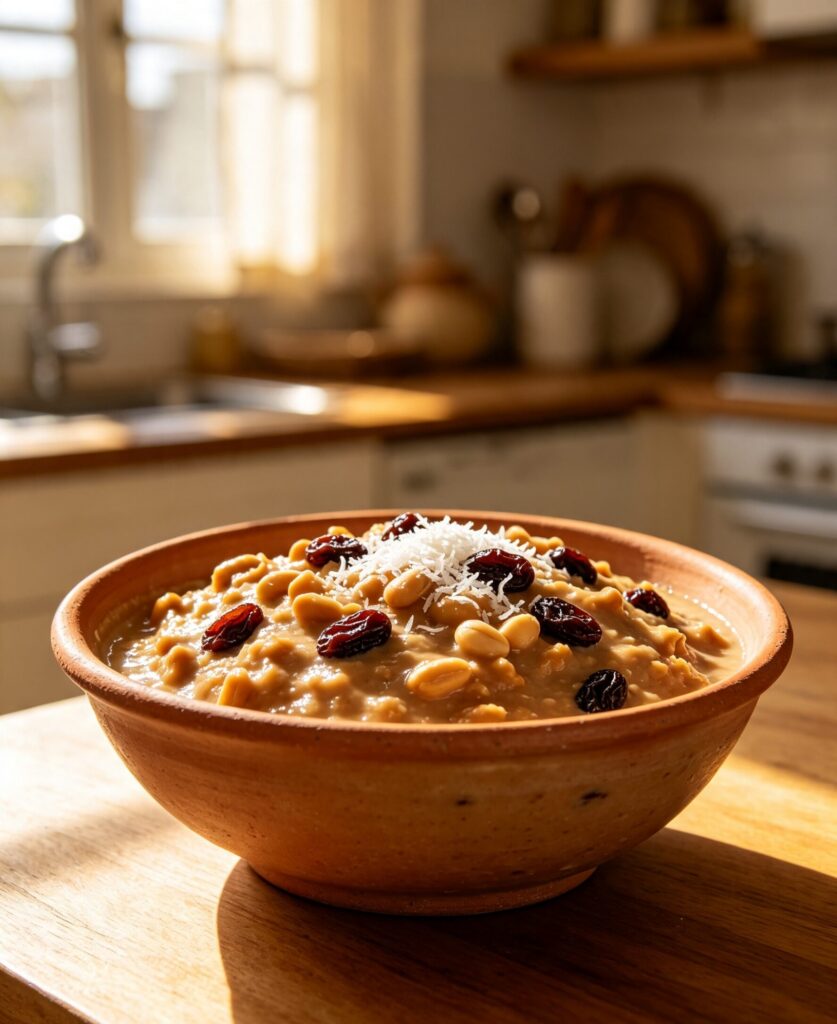
Ngalakh (Baobab and Peanut Butter Pudding)
The Quirky Foodster Team
Ingredients
- 150 g (1 cup) baobab fruit pulp powder
- 500 ml (2 cups) warm water
- 150 g (2/3 cup) smooth peanut butter
- 100 g (1/2 cup) sugar, or to taste
- 200 g (1 1/3 cups) fine steamed millet couscous
- A pinch of salt
Method
- Whisk the baobab powder into the warm water and let stand for 10 minutes, then pass through a fine sieve to remove any fibrous bits.
- Stir the peanut butter, sugar and a pinch of salt into the baobab liquid until fully smooth and combined.
- Steam the millet couscous as in the Chereh method, then fluff and cool slightly.
- Fold the couscous into the baobab-peanut mixture, adjusting sweetness to taste.
- Chill for at least 30 minutes before serving.
Introduction: Ngalakh combines baobab fruit pulp with peanut butter and millet couscous into a creamy, tangy-sweet pudding, traditionally prepared for religious and family celebrations in Gambian and wider Senegambian households.
Cultural Background: Ngalakh combines baobab fruit pulp with peanut butter and millet couscous into a creamy, tangy-sweet pudding, traditionally prepared for religious and family celebrations in Gambian and wider Senegambian households.
Tips: Sieving the baobab liquid ensures a smooth, pleasant texture. Taste and adjust sugar carefully, as baobab pulp is naturally tangy.
Variations: Add a splash of orange blossom water for a fragrant note. Top with a few whole roasted peanuts for crunch.
Storage: Refrigerate in an airtight container for up to 2 days.
Reheating: Not applicable; served chilled.
Nutrition: Approx. 310 kcal, 9g protein, 14g fat, 40g carbohydrate per serving.
FAQs:
Q: What does baobab fruit taste like?
A: It has a tangy, slightly citrusy flavour, similar to a cross between tamarind and grapefruit, which balances the richness of the peanut butter.
Q: When is Ngalakh traditionally eaten?
A: It is especially associated with religious observances and family celebrations, shared communally.
Please log in to leave a comment.