
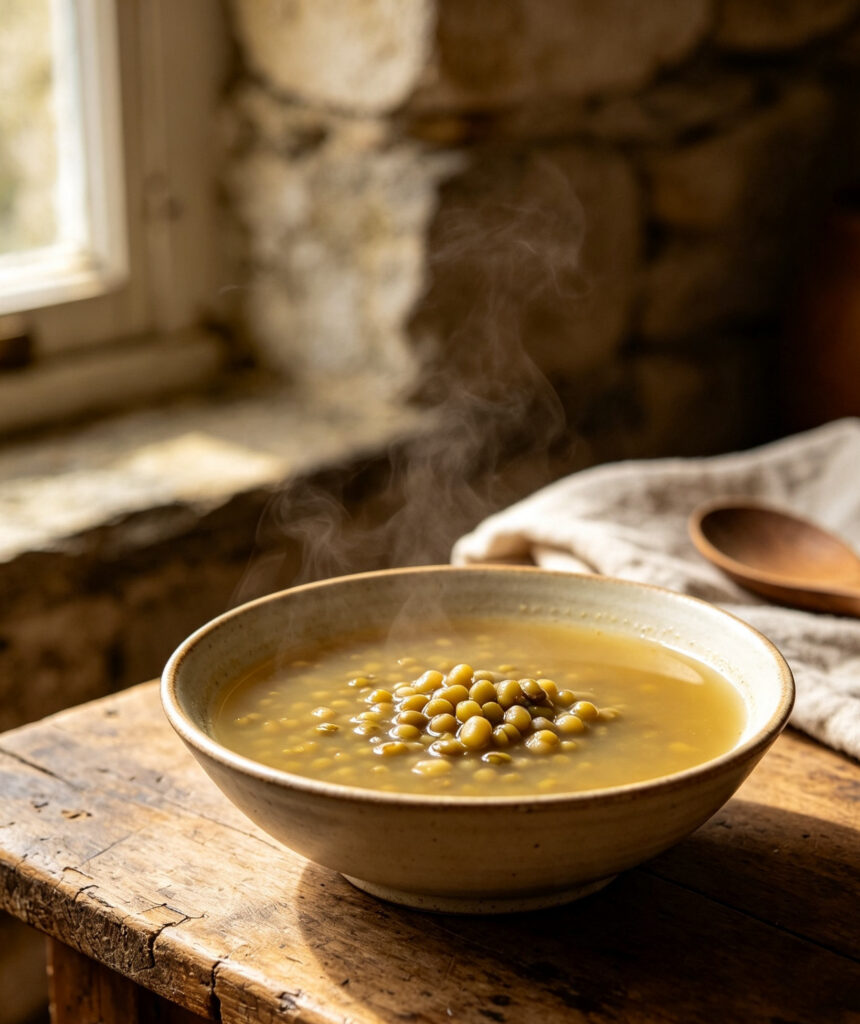
Mung Bean Soup (绿豆汤 (Lǜdòu Tāng))
The Quirky Foodster Team
Ingredients
- Dried mung beans, rinsed — 200 g (1 cup)
- Water (1.4 litres / 48 fl oz) — 6 cups
- Sugar, or to taste — 3 tbsp
Method
- Combine the mung beans and water in a large pot and bring to a boil.
- Skim any foam from the surface.
- Reduce to a simmer and cook for 30–35 minutes until the beans are tender and beginning to break apart.
- Stir in the sugar.
- Serve warm, or chilled for a refreshing summer version.
Introduction: A simple, lightly sweetened soup of mung beans, valued in ancient China for its cooling, nourishing properties, especially in warmer months.
Cultural Background: Mung bean soup reflects the ancient Chinese understanding of food as medicine, the bean believed to have cooling properties well suited to combating summer heat, a belief and practice that continues to this day.
Tips: Skim the foam early in cooking for the cleanest-tasting soup. Simmer until the beans just begin to burst, as this thickens the soup naturally.
Variations: Add a few strips of dried tangerine peel for extra fragrance, a traditional addition. Serve chilled over ice in summer for a cooling treat.
Storage: Refrigerate in an airtight container for up to 3 days.
Reheating: Reheat gently on the stovetop, or serve chilled straight from the refrigerator.
Nutrition: Per serving (approx.): 180 kcal, 10 g protein, 1 g fat, 34 g carbohydrate.
FAQs:
Q: Why was mung bean soup associated with cooling properties?
A: Ancient Chinese food philosophy classified foods by their believed warming or cooling effects on the body, with mung beans considered ideal for combating summer heat.
Q: Is this soup eaten hot or cold?
A: Both — warm in cooler weather, and chilled as a refreshing treat during the heat of summer.
- Dried mung beans, rinsed — 200 g (1 cup)
- Water (1.4 litres / 48 fl oz) — 6 cups
- Sugar, or to taste — 3 tbsp
Please log in to leave a comment.