
Soups
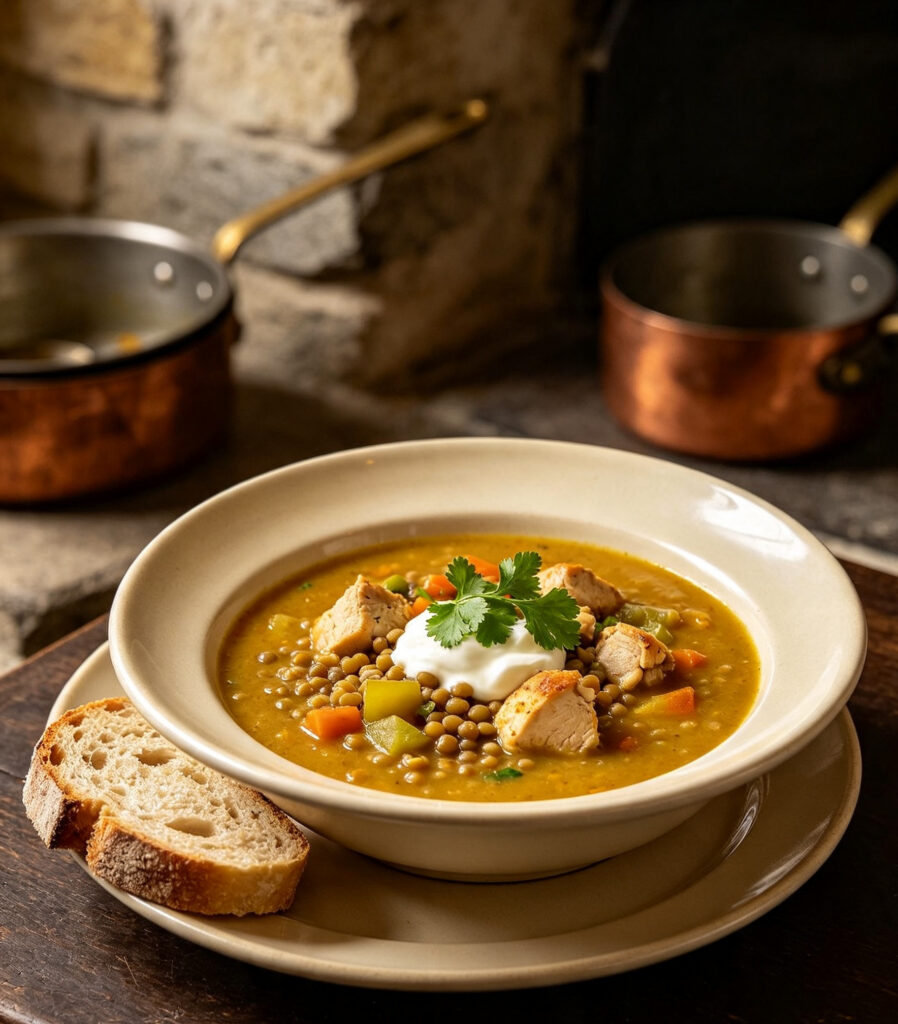
Mulligatawny Soup (Mulligatawny Soup)
sjfegan
Ingredients
- 500g (1 lb 2 oz) Chicken pieces, bone-in
- 200g (1 cup) Red lentils, rinsed
- 1 onion, chopped
- 2 carrots, diced
- 1 apple, chopped
- 2 tbsp curry powder
- 2 tbsp butter
- 6 cups chicken stock (1.4 litres / 48 fl oz)
- 120ml (1/2 cup) Cream
- Salt and pepper to taste
Method
- Melt the butter in a large pot and sauté the onion, carrot and apple until softened.
- Add the curry powder and cook briefly to release its aroma.
- Add the chicken, lentils and stock, and bring to a boil.
- Reduce to a simmer and cook for 35–40 minutes until the chicken and lentils are tender.
- Remove the chicken, shred the meat off the bone, and return it to the pot.
- Stir in the cream, and season with salt and pepper before serving hot.
Introduction: A richly spiced soup of chicken, lentils and curry, a beloved Victorian dish reflecting Britain’s deep colonial ties to India.
Cultural Background: Mulligatawny, its name derived from the Tamil words for ‘pepper water’, entered Victorian British cuisine through colonial connections with India, becoming one of the most popular and enduring dishes to emerge from this culinary exchange.
Tips: Cook the curry powder briefly in the butter before adding liquid, as this develops its flavour more fully. Blend part of the soup for a smoother texture, if preferred, leaving some texture from the lentils and vegetables.
Variations: Add a squeeze of lemon for extra brightness, a common addition. Adjust the curry powder to taste for a milder or more robust spice level.
Storage: Refrigerate in an airtight container for up to 3 days.
Reheating: Reheat gently on the stovetop over low heat, stirring occasionally, until hot throughout.
Nutrition: Per serving (approx.): 340 kcal, 22 g protein, 16 g fat, 28 g carbohydrate.
FAQs:
Q: What does ‘mulligatawny’ mean?
A: It derives from Tamil words meaning ‘pepper water’, reflecting the soup’s South Indian origins before being adapted for British colonial and later Victorian tastes.
Q: Was mulligatawny widely popular in Victorian Britain?
A: Yes, it became one of the most beloved and enduring dishes to emerge from British colonial culinary exchange, appearing in numerous Victorian cookbooks.
Please log in to leave a comment.