
Street Food
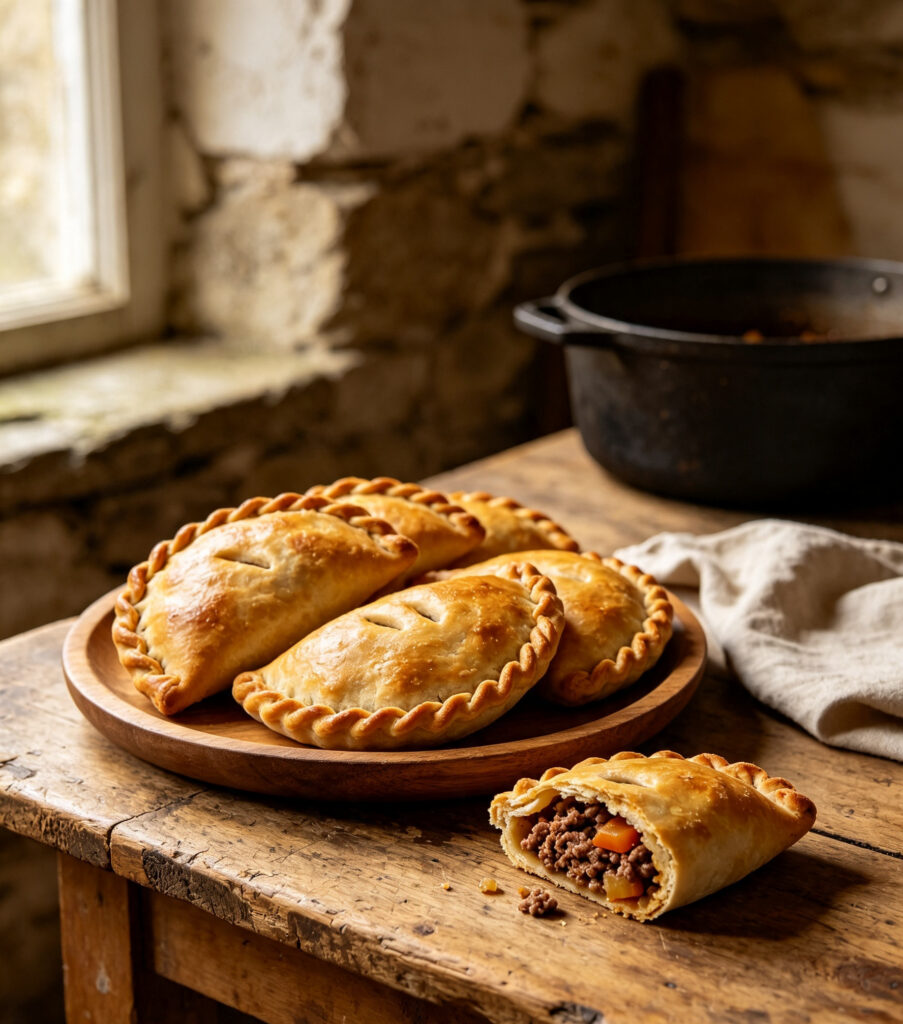
Meat Pasties (Meat Pasties)
sjfegan
Ingredients
- 375g (3 cups) Flour
- 225g (1 cup) Butter or lard, cold and cubed
- 120ml (1/2 cup) Cold water
- 1 tsp salt
- 400g Minced or diced meat (beef or venison)
- 1 onion, chopped
- 1 potato, diced
- Salt and pepper to taste
Method
- Combine the flour and salt, then rub in the cold butter or lard until crumbly.
- Add the cold water gradually, bringing the mixture together into a firm dough; chill for 30 minutes.
- Combine the meat, onion, potato, salt and pepper for the filling.
- Roll the dough out and cut into large rounds.
- Place a portion of filling on one half of each round, fold over, and crimp the edges to seal.
- Preheat the oven to 190°C (375°F).
- Bake for 30–35 minutes until golden and the filling is cooked through.
Introduction: Hand-held pastries filled with seasoned meat and vegetables, a portable and practical food carried by colonial travellers and workers.
Cultural Background: Hand pies and pasties reflect English culinary tradition brought to the colonies, their self-contained, portable nature making them practical food for workers, travellers and anyone needing a meal that could be carried and eaten without utensils.
Tips: Chill the dough well before rolling, as this makes it easier to handle and results in a flakier crust. Crimp the edges firmly to prevent the filling from leaking out during baking.
Variations: Use whatever meat and vegetables were available, as this dish adapted readily to what was on hand. Brush with a little milk or egg before baking for a golden finish.
Storage: Refrigerate cooked pasties in an airtight container for up to 2 days.
Reheating: Reheat in an oven at 180°C (350°F) for 10–12 minutes.
Nutrition: Per serving (approx., 1 pasty): 420 kcal, 16 g protein, 24 g fat, 36 g carbohydrate.
FAQs:
Q: Why were pasties so practical for colonial workers?
A: Their fully enclosed, self-contained form made them easy to carry and eat without utensils, ideal for those working in fields or travelling.
Q: What fillings were most common?
A: Whatever meat and vegetables were available, often beef, venison or other game combined with root vegetables like potato and onion.
Please log in to leave a comment.