
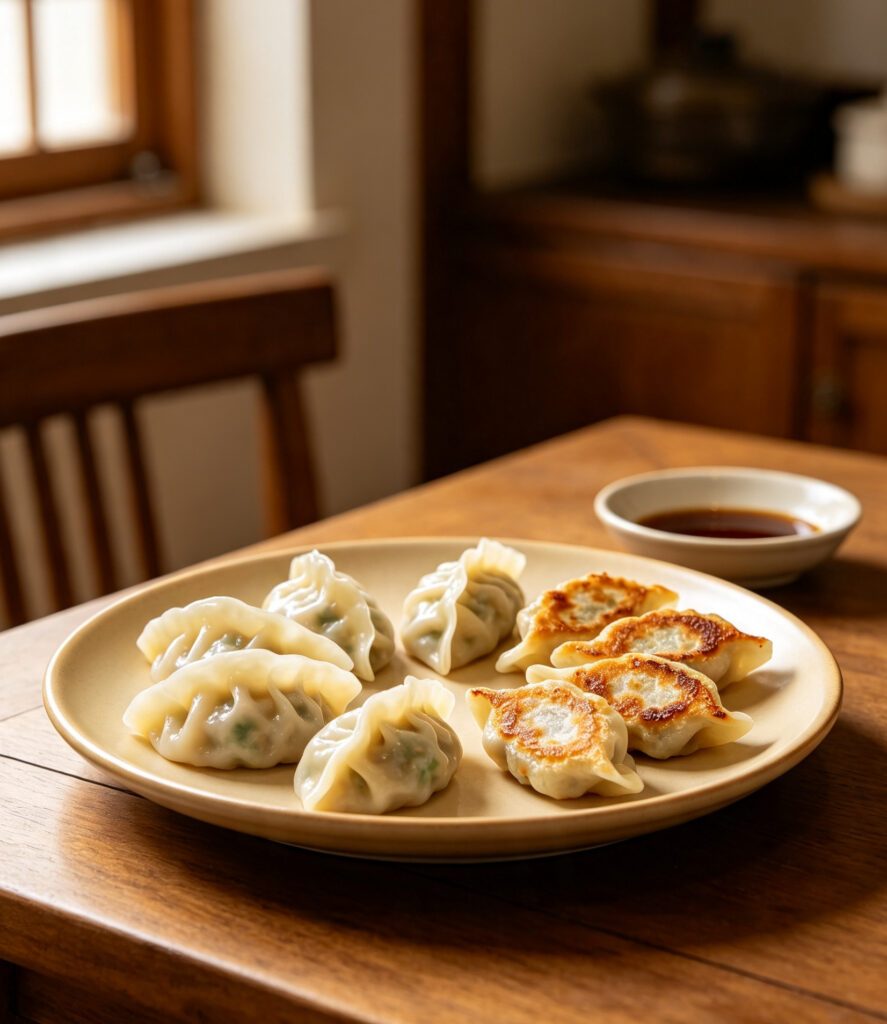
Mandu (Korean Dumplings)
The Quirky Foodster Team
Ingredients
- Round or square dumpling wrappers — 1 packet (about 40)
- Minced pork — 200 g (7 oz)
- Firm tofu, pressed and crumbled — 150 g (5 oz)
- Chinese cabbage (napa), finely chopped and salted to draw out water — 150 g (5 oz)
- Garlic chives (buchu), finely chopped — 100 g (3.5 oz)
- Glass noodles (dangmyeon), cooked and chopped — 50 g (1.75 oz)
- Garlic cloves, minced — 2
- Soy sauce — 1 tbsp (15 ml)
- Sesame oil — 1 tsp (5 ml)
- Black pepper — 1/2 tsp (3 g)
- Egg, for the filling; 1 extra egg, beaten, to seal wrappers — 1
- Vegetable oil, for pan-frying
Method
- Salt the chopped cabbage, leave for 10 minutes, then squeeze out as much liquid as possible in a clean tea towel.
- In a large bowl, combine the pork, tofu, cabbage, garlic chives, glass noodles, garlic, soy sauce, sesame oil, pepper and one egg. Mix thoroughly with your hands until well combined.
- Place a heaped teaspoon of filling in the centre of each wrapper, brush the edges with beaten egg, fold in half and pleat or press to seal firmly, pushing out any air pockets.
- To steam: arrange dumplings in a lined steamer basket without touching, and steam over boiling water for 12–15 minutes until the wrapper is translucent and the filling is cooked through.
- To pan-fry: heat oil in a non-stick pan, fry the dumplings flat-side down until golden, then add a splash of water and cover to steam through for 5 minutes.
- Serve hot with a dipping sauce of soy sauce, vinegar and a little gochugaru.
Introduction: Mandu arrived in Korea via trade routes from Central Asia and China centuries ago and became fully naturalised, especially in the north where hand-folded dumplings are a Lunar New Year tradition eaten in tteokguk.
Cultural Background: Mandu arrived in Korea via trade routes from Central Asia and China centuries ago and became fully naturalised, especially in the north where hand-folded dumplings are a Lunar New Year tradition eaten in tteokguk. Today mandu are enjoyed year-round as an appetizer, side dish or light meal, steamed, boiled, pan-fried or deep-fried.
Tips: Squeezing the cabbage thoroughly dry is essential — excess water makes the filling soggy and can burst the wrappers. Uncooked mandu freeze extremely well; freeze them in a single layer on a tray before bagging so they don't stick together.
Variations: Gun mandu: pan-fry until crisp and golden on both sides for a popular crispy-bottomed version. Mul mandu: simmer gently in a light anchovy broth for a delicate soup-style dumpling. Omit the pork and increase the tofu, mushrooms (finely chopped shiitake work well) and cabbage; use a vegetarian dipping sauce.
Storage: Uncooked dumplings keep frozen for up to 2 months. Cooked dumplings keep refrigerated for up to 2 days.
Reheating: Reheat cooked dumplings by steaming for 5 minutes or pan-frying briefly; cook frozen raw dumplings directly from frozen, adding a few extra minutes.
Nutrition: Calories: 70 kcal | Protein: 4 g | Carbs: 7 g | Fat: 3 g | Fibre: 1 g | Sodium: 140 mg Per dumpling; estimate only.
FAQs:
Q: Can I make the filling ahead of time?
A: Yes, the filling can be made up to a day ahead and kept covered in the fridge; wrap the dumplings just before cooking for the best texture.
Q: Why did my dumplings burst while cooking?
A: This is usually from overfilling, trapped air pockets, or an incomplete seal — press firmly along the edge and avoid overstuffing.
Q: What's the difference between mandu and Chinese jiaozi?
A: They share a common ancestry, but mandu typically include ingredients like Korean glass noodles, garlic chives and gochugaru-based dipping sauce, giving them a distinct Korean character.
- Round or square dumpling wrappers — 1 packet (about 40)
- Minced pork — 200 g (7 oz)
- Firm tofu, pressed and crumbled — 150 g (5 oz)
- Chinese cabbage (napa), finely chopped and salted to draw out water — 150 g (5 oz)
- Garlic chives (buchu), finely chopped — 100 g (3.5 oz)
- Glass noodles (dangmyeon), cooked and chopped — 50 g (1.75 oz)
- Garlic cloves, minced — 2
- Soy sauce — 1 tbsp (15 ml)
- Sesame oil — 1 tsp (5 ml)
- Black pepper — 1/2 tsp (3 g)
- Egg, for the filling; 1 extra egg, beaten, to seal wrappers — 1
- Vegetable oil, for pan-frying
Please log in to leave a comment.