
Mamsa Yusha (Spiced Meat and Barley Broth)
The Quirky Foodster Team
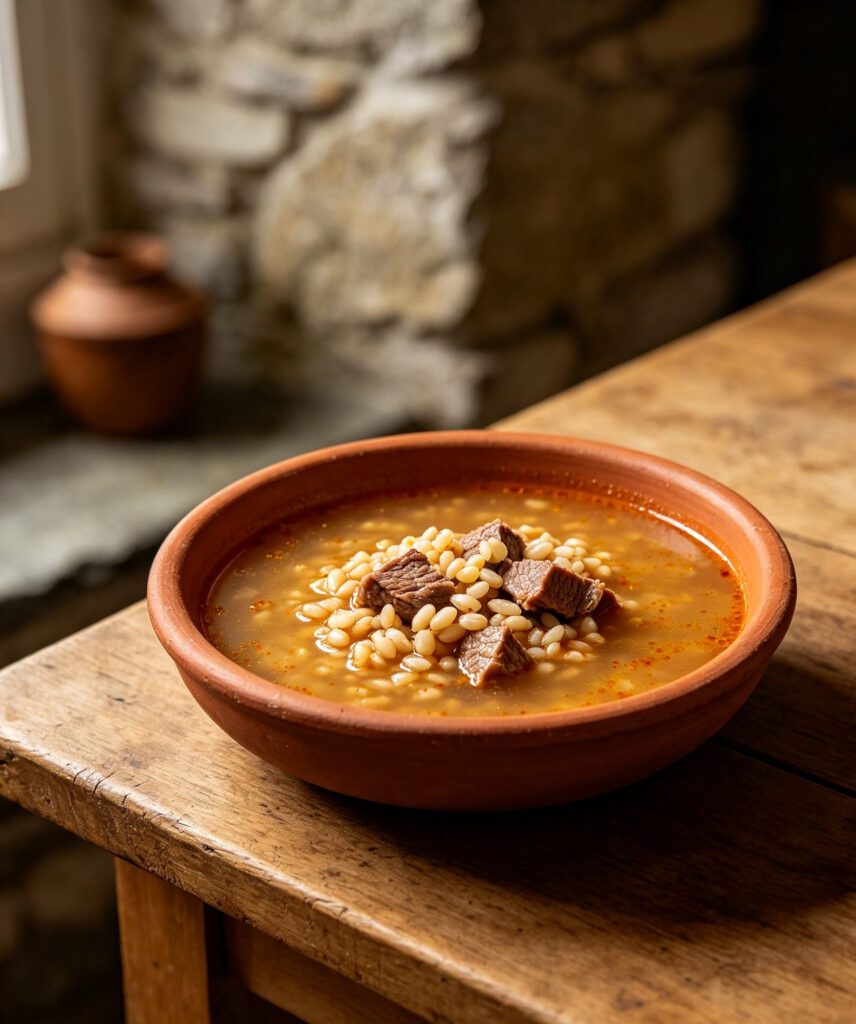
Ingredients
- Goat or mutton, bone-in pieces — 400 g (14 oz)
- Pearl barley, rinsed — 60 g (0.3 cup)
- Water — 1.2 L (5 cups)
- Ground turmeric — 1/2 tsp
- Ground coriander — 1/2 tsp
- Ground black pepper — 1/4 tsp
- Rock salt — 1 tsp
- Ghee — 1 tbsp
- Cumin seeds — 1/2 tsp
- Fresh cilantro, chopped — 2 tbsp
Method
- Place the meat, barley and water in a large heavy pot.
- Bring to the boil, skimming off any foam that rises to the surface.
- Stir in the turmeric, ground coriander and pepper, then reduce to a low simmer and cover.
- Cook for 1.5 to 2 hours, until the meat is very tender and falling from the bone and the barley has softened.
- Remove the meat pieces, discard any bones, shred or chop the meat, and return it to the pot.
- Heat the ghee in a small frying pan over medium heat, add the cumin seeds, and let sizzle for 20-30 seconds.
- Pour this tempering into the broth, stir in the salt, and simmer for a further 10 minutes.
- Scatter with fresh cilantro and serve hot.
Introduction: A warming broth of meat simmered slowly with barley and mild spices, mamsa yusha provided a substantial, restorative soup for those whose diet, unlike strict ascetics, included meat.
Cultural Background: While Mauryan-era India, particularly under Ashoka’s later Buddhist-influenced reign, saw growing restrictions on meat consumption and animal slaughter, meat broths remained part of the diet for many, as reflected in the Arthashastra’s detailed regulations on meat markets and hunting. Combining meat with barley in a long-simmered broth reflects a practical, nourishing style of cooking common wherever meat was eaten across the ancient world.
Tips: (cid:127) Bone-in meat gives the richest, most flavourful broth; do not skip skimming the foam early in cooking, as this keeps the finished broth clear and clean-tasting. (cid:127) This broth benefits from long, slow simmering; resist the urge to increase the heat to speed up cooking, as this can toughen the meat.
Variations: (cid:127) Venison can be used in place of goat or mutton, reflecting the range of game meats permitted under Mauryan-era hunting regulations. (cid:127) A handful of diced root vegetables can be added in the final 30 minutes of cooking for a heartier dish.
Storage: Store in an airtight container in the refrigerator for up to 3 days, or freeze for up to 3 months.
Reheating: Reheat in a saucepan over medium-low heat, stirring occasionally, until piping hot throughout.
Nutrition: Per serving (approx.): 290 kcal, 24 g protein, 20 g carbohydrate, 12 g fat, 3 g fibre, 480 mg sodium.
FAQs:
Q: Can I use a different cut of meat?
A: Bone-in shoulder or shank cuts work particularly well, as their connective tissue breaks down over the long simmer, enriching the broth. (cid:127) Q: Was meat commonly eaten across Mauryan society? A: Meat consumption varied considerably; the Arthashastra regulated meat markets and hunting in detail, while later in the period Ashoka’s edicts promoted increasing restraint around animal slaughter, particularly within the royal court.
- Goat or mutton, bone-in pieces — 400 g (14 oz)
- Pearl barley, rinsed — 60 g (0.3 cup)
- Water — 1.2 L (5 cups)
- Ground turmeric — 1/2 tsp
- Ground coriander — 1/2 tsp
- Ground black pepper — 1/4 tsp
- Rock salt — 1 tsp
- Ghee — 1 tbsp
- Cumin seeds — 1/2 tsp
- Fresh cilantro, chopped — 2 tbsp
Please log in to leave a comment.