
Macedonian Rakija
The Quirky Foodster Team
Ingredients
- Grapes (or plums), crushed — 5 kg (11 lb)
- Water, as needed to aid fermentation
Method
- Crush the grapes (or plums) and place them in a large fermentation vessel, adding a small amount of water if the fruit is very dry.
- Cover loosely and let ferment at room temperature for 2–3 weeks, stirring occasionally, until the mixture is no longer sweet and has developed an alcoholic aroma.
- Transfer the fermented mash to a traditional still.
- Distill slowly over gentle heat, collecting the resulting spirit, discarding the very first and last portions of the distillate, which can contain unwanted compounds.
- Let the collected rakija rest in a sealed container for at least a few weeks before drinking, to mellow the flavour.
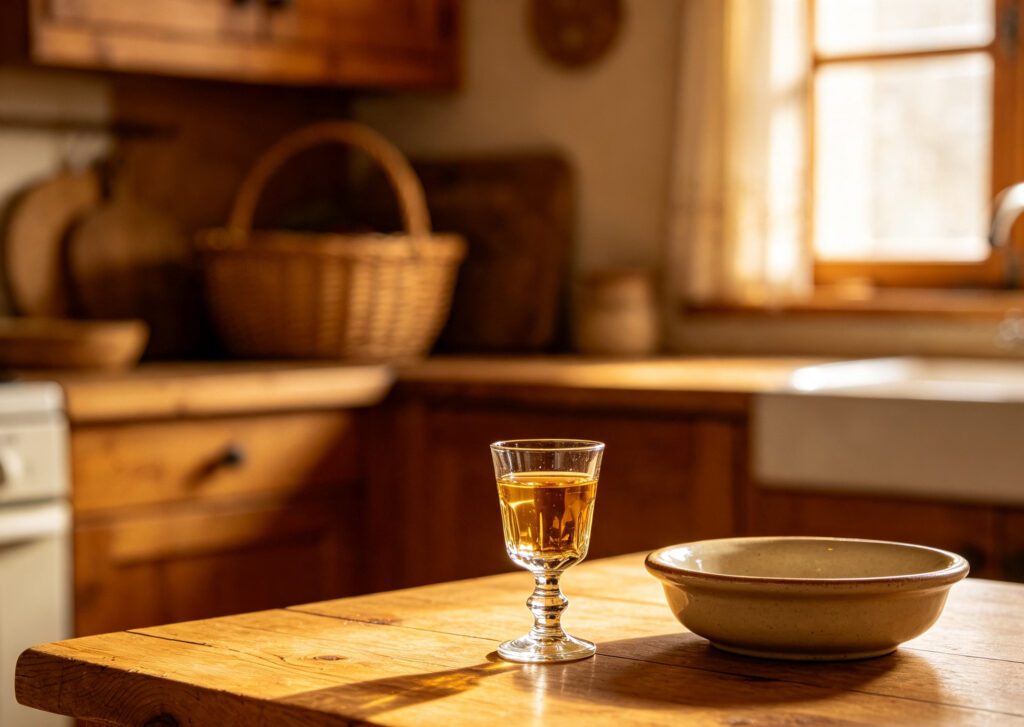
- Serve in small glasses, traditionally as a welcome drink or a toast.
Introduction: A strong, aromatic fruit brandy, most commonly distilled from grapes, served as a traditional welcome drink across North Macedonia.
Cultural Background: Rakija is deeply woven into North Macedonian hospitality and social life, often homemade and offered generously to guests as a warm welcome, especially prominent in the country's wine-growing regions.
Tips: Fermentation time can vary depending on temperature and fruit ripeness — taste periodically to judge readiness. This process requires proper distillation equipment and technique; approach with care and respect for the skill involved.
Variations: Other fruits such as plums or pears are also used to make rakija in different regions. Some households age their rakija in oak barrels for a deeper, more complex flavour.
Storage: Store in a sealed bottle at room temperature indefinitely, as distilled spirits keep very well.
Reheating: Not applicable — served at room temperature.
FAQs:
Q: Is homemade rakija legal to make everywhere?
A: Regulations on home distillation vary significantly by country; always check local laws before attempting this at home.
Q: How strong is rakija typically?
A: It varies, but is generally a strong spirit, often 40% alcohol by volume or higher.
- Grapes (or plums), crushed — 5 kg (11 lb)
- Water, as needed to aid fermentation
Please log in to leave a comment.