
Desserts
Mabuyu
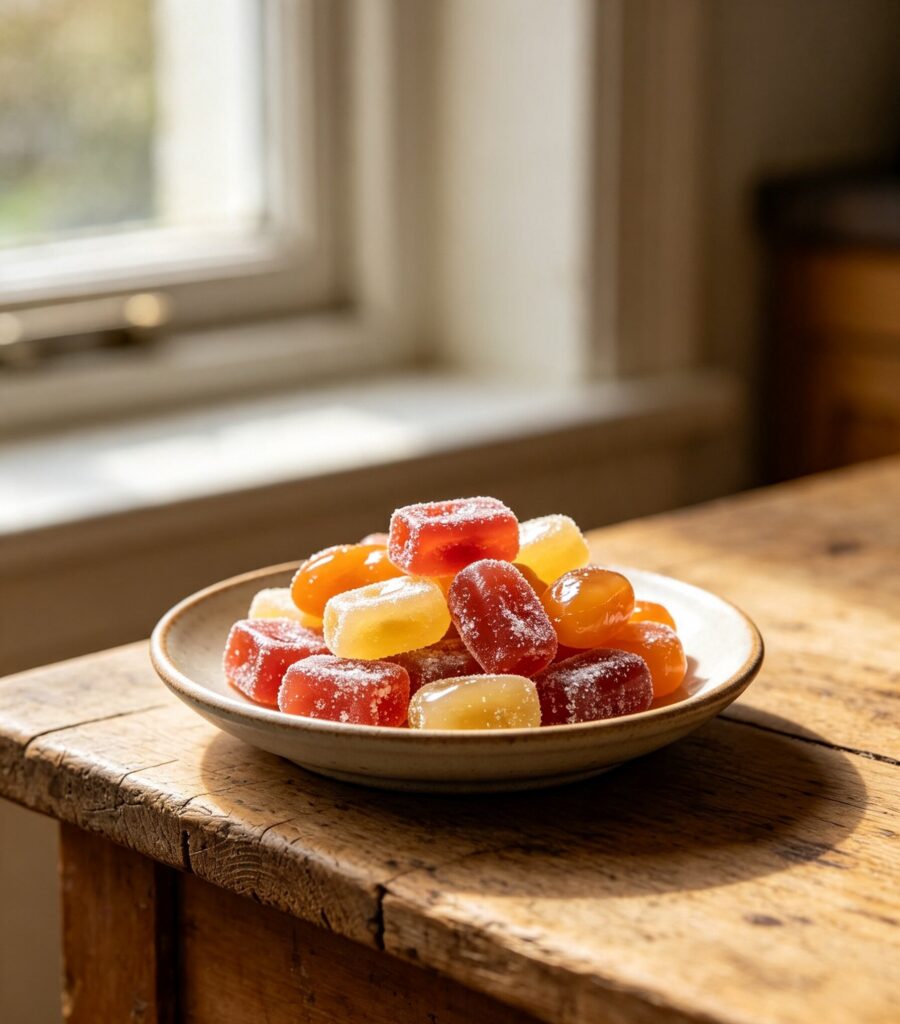
Ingredients
- 200 g (1 1/2 cups) whole baobab seeds (with pulp attached)
- 150 g (3/4 cup) sugar
- 120 ml (1/2 cup) water
- Few drops of red or pink food colouring (optional, traditional)
- 1/4 tsp (1 g) ground ginger or chili powder (optional, for a spiced version)
Method
- In a small saucepan, combine sugar and water. Heat gently, stirring until the sugar dissolves.
- Bring to a simmer and cook for 3-4 minutes until it forms a light syrup, then remove from heat.
- Stir in the food colouring, if using, along with the ginger or chili powder for a spiced version.
- Add the baobab seeds to the syrup and toss thoroughly to coat each seed evenly.
- Spread the coated seeds in a single layer on a parchment-lined tray.
- Let dry and harden at room temperature for several hours, or overnight, tossing occasionally, until the coating is firm.
Introduction: Mabuyu are candied baobab seeds, a colourful, tangy-sweet treat especially popular along Kenya's coast where the iconic baobab tree grows.
Cultural Background: Mabuyu are candied baobab seeds, a colourful, tangy-sweet treat especially popular along Kenya's coast where the iconic baobab tree grows. The tart pulp-coated seeds are coated in a sugar syrup, often tinted pink or red, and sold by street vendors as a nostalgic childhood snack enjoyed for their unique sweet-and-sour flavour.
Tips: Toss the seeds frequently while drying to prevent them from clumping together. A thin, even syrup coating dries best – avoid over-thickening the syrup. Store in a dry place, as humidity can make the sugar coating sticky.
Variations: A spiced version adds chili or tamarind powder for extra tang; some vendors use a mix of colours for visual appeal. Naturally vegan and vegetarian as written.
Storage: Store in an airtight container at room temperature for up to 3-4 weeks.
Reheating: Not applicable – Mabuyu is a dry candied snack eaten at room temperature.
FAQs:
Q: Where can I find baobab seeds?
A: Baobab seeds with pulp can be found at African and specialty grocery stores, or ordered online from suppliers of baobab products.
Q: Why are Mabuyu sometimes pink?
A: The pink or red colouring is a traditional decorative touch often used by street vendors, though it is optional and purely cosmetic.
Please log in to leave a comment.