
Mains
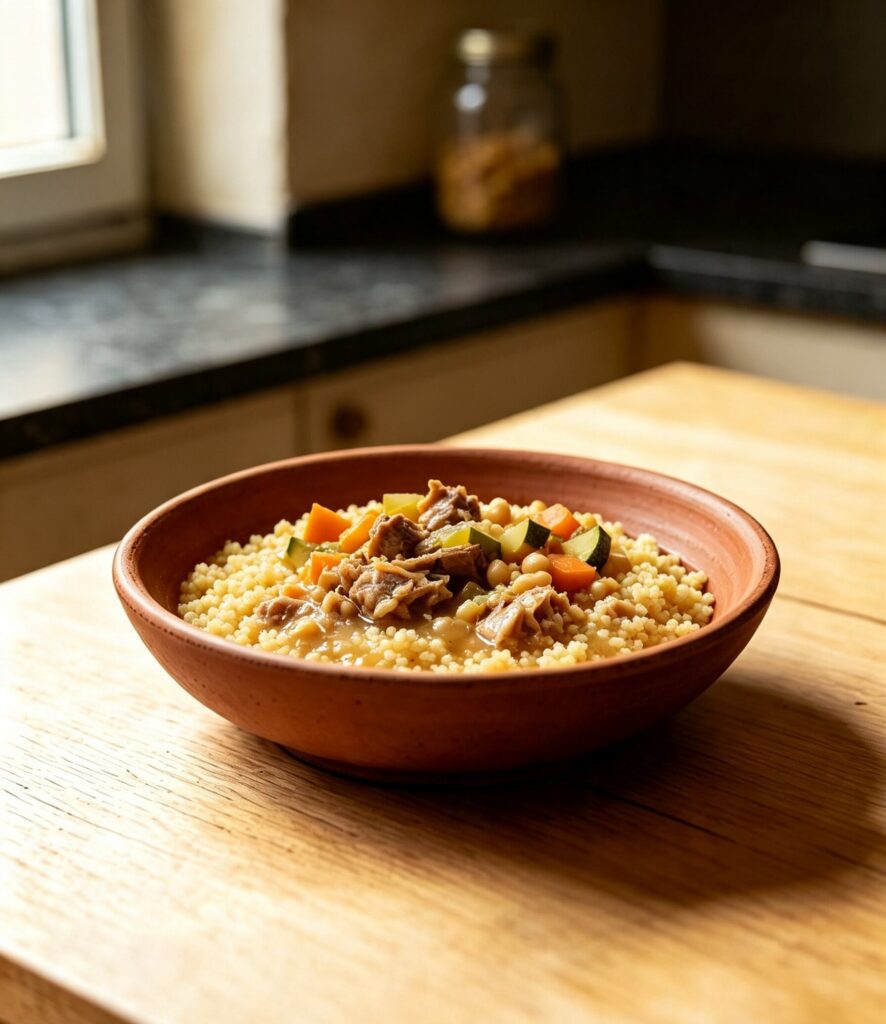
Libyan Couscous with Lamb and Vegetables
Ingredients
- 400 g (2 cups) couscous
- 500 g (1.1 lb) lamb, cut into chunks
- 2 tbsp olive oil
- 1 onion, chopped
- 3 garlic cloves, minced
- 2 carrots, cut into batons
- 1 small pumpkin or squash, cubed
- 2 courgettes, halved lengthwise
- 400 g (14 oz) canned chopped tomatoes
- 1 tsp turmeric
- 1 tsp cinnamon
- 1 tsp ground coriander
- 1 liter (4 cups) water or broth
- 1 tbsp butter or ghee, for the couscous
- Salt and pepper, to taste
Method
- Heat olive oil in the bottom pot of a couscoussier (or a large pot) and brown the lamb chunks for 8 minutes.
- Add the onion and cook until softened, then stir in garlic, turmeric, cinnamon and ground coriander.
- Add the chopped tomatoes and water or broth, bring to a boil, then reduce heat and simmer covered for 30 minutes.
- Add the carrots and pumpkin, and continue simmering for 20 minutes.
- Meanwhile, place dry couscous in the steamer basket set over the simmering stew and steam, uncovered, for 15 minutes to absorb the aromatic steam.
- Tip the couscous into a wide bowl, sprinkle with a little water, and fluff with a fork or your fingers to separate the grains, breaking up any lumps.
- Return the fluffed couscous to the steamer basket, add the courgettes to the stew below, and steam for a further 15 minutes.
- Fluff the couscous once more with butter or ghee and season lightly with salt.
- Mound the couscous on a large platter, make a well in the center, and ladle the lamb and vegetable stew over the top to serve.
Introduction: Couscous holds pride of place in Libyan cuisine, frequently cited alongside bazin as one of the country's two national dishes, and is central to Friday family lunches and wedding feasts.
Cultural Background: Couscous holds pride of place in Libyan cuisine, frequently cited alongside bazin as one of the country's two national dishes, and is central to Friday family lunches and wedding feasts. Steamed semolina grains are served heaped with a fragrant lamb and root vegetable stew, the couscous traditionally steamed in stages over the simmering stew itself to absorb its aroma.
Tips: Double-steaming and fluffing the couscous by hand, rather than simply pouring on boiling water, gives the light, separate-grained texture Libyan couscous is known for. Add delicate vegetables like courgette later in the cooking so they don't turn mushy.
Variations: A version using chicken instead of lamb is common for lighter family meals, and some coastal households make a fish-based couscous instead.
Storage: Refrigerate couscous and stew separately in airtight containers for up to 3 days.
Reheating: Reheat the stew on the stovetop; refresh the couscous by steaming briefly or microwaving with a light sprinkle of water, then fluffing again.
FAQs:
Q: Do I need a couscoussier to make this?
A: A large pot with a fitted steamer basket or metal colander works as a substitute.
Q: Can I use instant couscous?
A: Yes, though the texture will be softer; still fluff it well and, if possible, steam it briefly over the stew for extra flavor.
Please log in to leave a comment.