
Salads
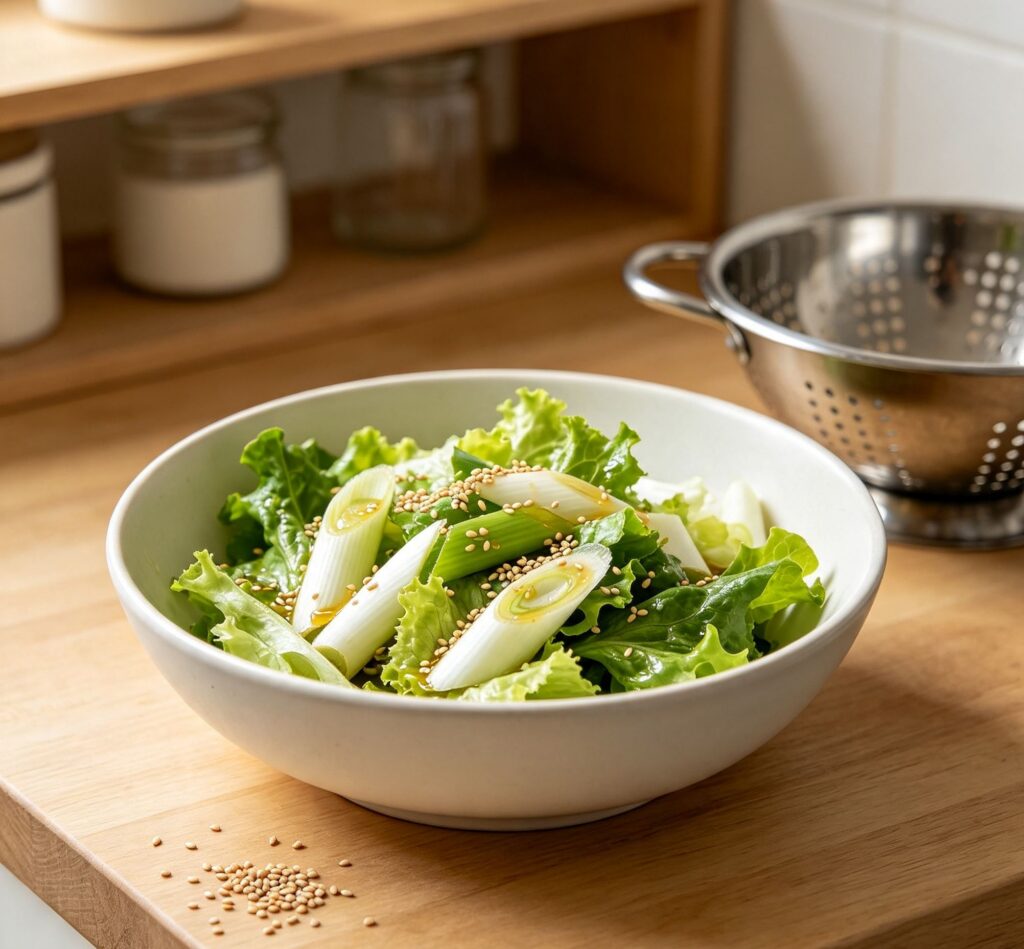
Lettuce and Leek Salad with Sesame Oil
The Quirky Foodster Team
Ingredients
- 2 heads romaine (cos) lettuce, torn
- 1 leek, white part only, very thinly sliced
- 3 tablespoons sesame oil
- 1 tablespoon white wine vinegar
- 1/2 teaspoon salt
- 1 teaspoon toasted sesame seeds, to serve
Method
- Wash and thoroughly dry the lettuce, then tear into bite-sized pieces in a large bowl.
- Add the thinly sliced leek.
- Whisk together the sesame oil, vinegar, and salt in a small bowl.
- Pour the dressing over the lettuce and leek and toss gently to coat.
- Scatter over the sesame seeds and serve immediately.
Native/Reconstructed Name: Abu Wadj (reconstructed; green salad)
Cultural Background: Cos-type lettuce held particular religious significance in ancient Egypt, associated with the fertility god Min and
depicted repeatedly in temple offering scenes. Beyond its symbolic role, lettuce was also simply eaten as a
fresh, crisp vegetable, often dressed with sesame or linseed oil, the most common cooking fats of the period
before olive oil became widespread.
Tips:
– Soak the sliced leek in cold water for 5 minutes to soften its raw bite before adding to the salad.
– Dry the lettuce thoroughly — excess water will dilute the dressing.
Variations:
– Add a handful of fresh dill or coriander for a herbal lift.
– Swap the leek for very thinly sliced spring onion for a milder flavor.
Storage: Best eaten immediately; does not store well once dressed.
Reheating: Not applicable — served cold.
Nutrition: Approx. 90 kcal, 2 g protein, 5 g carbohydrate, 7 g fat per serving.
FAQs:
Q: Why romaine lettuce specifically?
A: Tomb reliefs and temple art consistently depict a tall, upright lettuce closely resembling modern romaine.
Q: Can I use olive oil instead of sesame oil?
A: Yes, though sesame and linseed oils are more historically accurate to the period before olive oil's wider
spread.
Please log in to leave a comment.