
Soups
Laksa Brunei (Spiced Fish & Rice Noodle Soup)
The Quirky Foodster Team
Ingredients
- 400 g White fish fillets (such as mackerel or snapper) (14 oz)
- 400 ml Coconut milk (1¾ cups)
- 500 ml Fish or chicken stock (2 cups)
- 5 Shallots
- 3 Garlic cloves
- 15 g Fresh turmeric or ground turmeric (1 tbsp fresh, or 1½ tsp ground)
- 4 Dried chillies, soaked
- 10 g Belacan (shrimp paste), toasted (2 tsp)
- 2 stalks Lemongrass, bruised
- 300 g Rice vermicelli, cooked (10½ oz)
- 100 g Beansprouts (1¼ cups)
- 2 Hard-boiled eggs, halved
- 1 Fresh lime, cut into wedges
Method
- Poach the fish gently in the stock for 6–8 minutes until just cooked through. Remove, flake the flesh, and reserve the poaching stock.
- Blend the shallots, garlic, turmeric, soaked chillies and belacan into a smooth spice paste.
- Fry the paste in a little oil over medium heat for 5–6 minutes until fragrant and the oil separates slightly.
- Add the lemongrass and the reserved fish stock, then simmer for 10 minutes.
- Stir in the coconut milk and simmer gently for a further 10 minutes — do not boil hard, or the coconut milk may split. Season with salt to taste.
- Divide the cooked rice vermicelli and beansprouts among bowls.
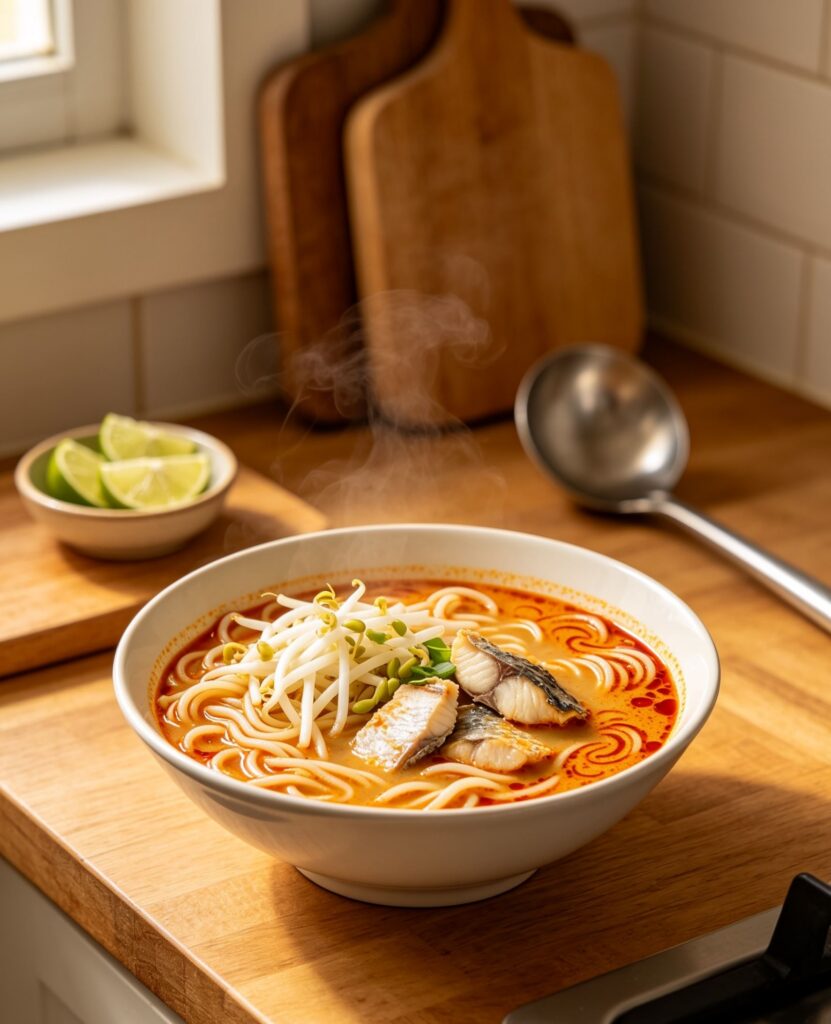
- Ladle the hot laksa broth over the noodles, top with the flaked fish, hard-boiled egg and a wedge of lime.
Introduction: Laksa in Brunei follows the wider Bornean tradition of a rich, coconut-spiced broth built around fresh fish or prawns, ladled over rice vermicelli.
Cultural Background: Laksa in Brunei follows the wider Bornean tradition of a rich, coconut-spiced broth built around fresh fish or prawns, ladled over rice vermicelli. It differs from the tamarind-forward laksas of Peninsular Malaysia by leaning on coconut milk and turmeric for a milder, creamier broth, and is a popular weekend lunch dish served with a squeeze of lime and a spoonful of sambal for those who want extra heat.
Tips: Simmer the coconut broth gently once added; a rolling boil can cause the milk to separate and turn oily. Toast the belacan briefly before blending to remove its raw edge and deepen its aroma. Poach rather than boil the fish so it stays tender and easy to flake.
Variations: Prawns can replace or join the fish for a richer seafood laksa. Add a spoonful of sambal belacan at the table for those who prefer more heat. Some versions include a handful of cockles or clams for extra depth. No authentic vegetarian version exists, as the broth is built on fish stock and belacan.
Storage: Store the broth separately from noodles and toppings in airtight containers in the refrigerator for up to 2 days.
Reheating: Gently reheat the broth over low heat, stirring, to avoid splitting the coconut milk; assemble fresh noodles just before serving.
Nutrition: Per serving: approx. 480 kcal, 26g protein, 38g carbohydrate, 24g fat.
FAQs:
Q: Can I use coconut cream instead of coconut milk?
A: Yes, but dilute it slightly with water or stock, as coconut cream alone will make the broth very thick and rich.
Q: What fish works best?
A: Firm white fish such as mackerel, snapper or threadfin all hold up well to poaching and flaking.
Q: Is this the same as Malaysian curry laksa?
A: It’s related but milder and less tamarind-forward, leaning more on coconut milk and turmeric for its character.
Please log in to leave a comment.