
Desserts
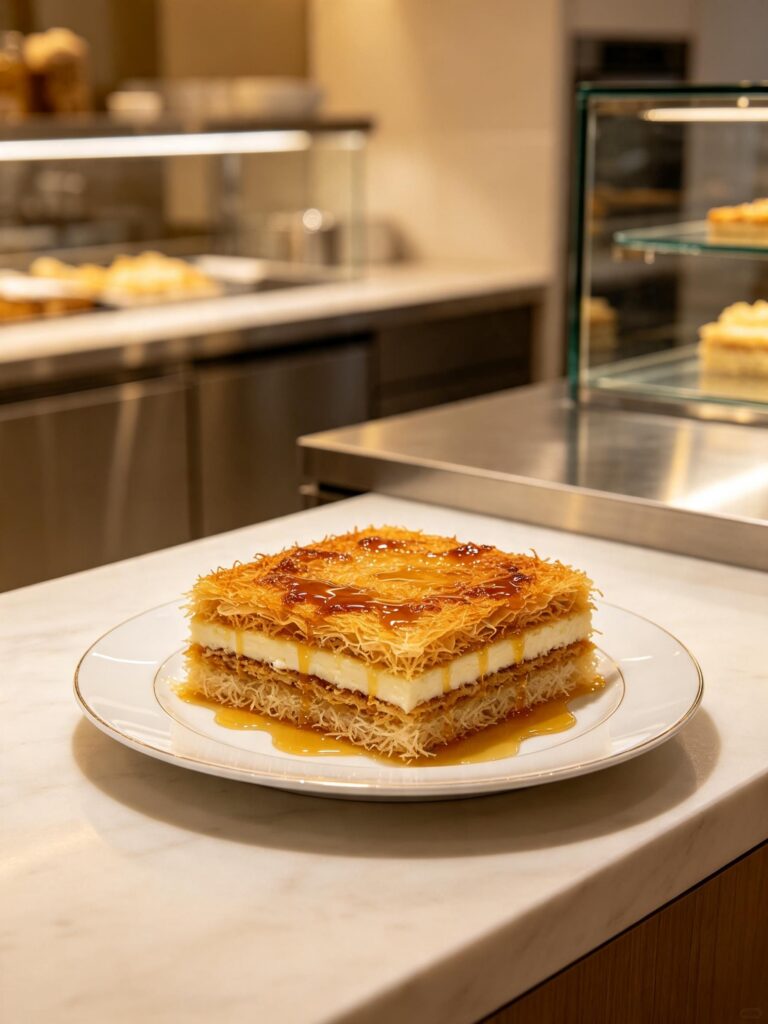
Kunafa
The Quirky Foodster Team
Ingredients
- 400 g (14 oz) kataifi (shredded filo) pastry, thawed if frozen
- 150 g (2/3 cup) unsalted butter, melted
- 500 g (1.1 lb) mild white halal-friendly cheese (such as mozzarella or akkawi), shredded
- 200 g (1 cup) sugar (for syrup)
- 120 ml (1/2 cup) water
- 1 tbsp lemon juice
- 1 tsp orange blossom water
- 50 g (1/3 cup) crushed pistachios, for garnish
Method
- Preheat the oven to 180°C (350°F). Butter a round baking pan generously.
- Roughly chop the kataifi pastry into shorter strands and toss thoroughly with the melted butter until every strand is coated.
- Press half the buttered kataifi firmly into the base of the pan to form an even layer.
- Scatter the shredded cheese evenly over the pastry layer, leaving a small border.
- Top with the remaining kataifi, pressing down firmly and evenly to compact the layers.
- Bake for 30-35 minutes until deep golden brown on top.
- Meanwhile, make the syrup: combine sugar, water and lemon juice in a saucepan, bring to a boil, then simmer for 8-10 minutes. Stir in the orange blossom water and set aside to cool slightly.
- As soon as the kunafa comes out of the oven, pour the syrup evenly over the top. Let it rest for 5 minutes to absorb.
- Invert onto a serving plate so the golden base is on top, scatter with crushed pistachios, and serve warm.
Introduction: Kunafa (also spelled knafeh) is a beloved Middle Eastern dessert made from shredded phyllo dough
(kataifi) layered with sweet cheese or semolina custard, soaked in fragrant sugar syrup. Believed to have
originated in Nablus, Palestine, it is now cherished across the Levant and Gulf, especially during Ramadan
and Eid, when it is served warm, gooey and stretchy straight from the pan at family and community
gatherings.
Cultural Background: Kunafa (also spelled knafeh) is a beloved Middle Eastern dessert made from shredded phyllo dough
(kataifi) layered with sweet cheese or semolina custard, soaked in fragrant sugar syrup. Believed to have
originated in Nablus, Palestine, it is now cherished across the Levant and Gulf, especially during Ramadan
and Eid, when it is served warm, gooey and stretchy straight from the pan at family and community
gatherings.
Tips: Pressing the layers firmly before baking helps the kunafa hold together when sliced and inverted. Use a mild, low-salt cheese with good melting stretch — soaking very salty cheese in water for an hour beforehand can help. Kunafa is best eaten warm, when the cheese layer is still soft and stretchy.
Variations: Make a semolina custard filling instead of cheese for kunafa bil ashta, a creamier version. Use ghee instead of butter for a richer, more traditional flavour. Top with extra syrup and a scoop of halal-friendly ice cream for a modern serving style.
Storage: Best eaten fresh on the day it is made. Leftovers can be refrigerated for up to 2 days.
Reheating: Reheat individual portions in a low oven (150°C/300°F) for 8-10 minutes, or briefly in a dry pan, to restore
the cheese's soft, stretchy texture.
Please log in to leave a comment.