
Breakfast
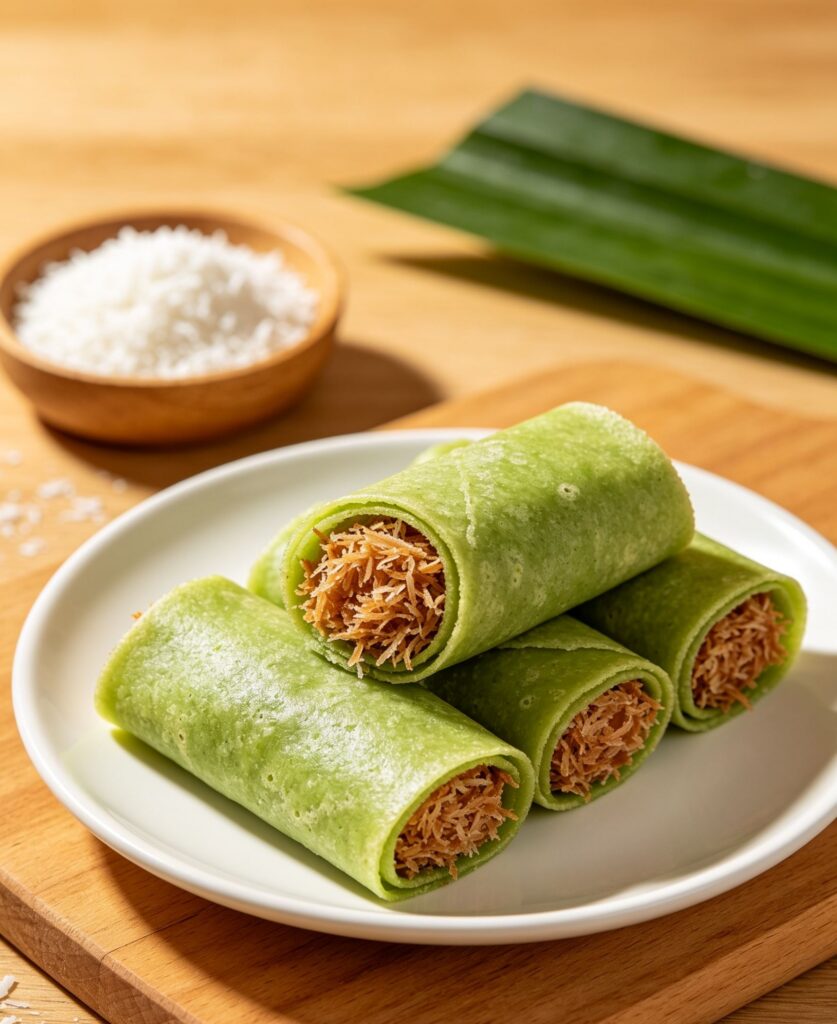
Kueh Lenggang (Bruneian Pandan Crepe Rolls)
The Quirky Foodster Team
Ingredients
- 150 g Plain flour (1 cup)
- 30 g Rice flour (3 tbsp)
- 300 ml Coconut milk (1¼ cups)
- 100 ml Water (1/3 cup plus 1 tbsp)
- 2 Large eggs
- 60 ml Pandan juice (from blended pandan leaves) (¼ cup)
- 2 g Fine salt (¼ tsp)
- 15 ml Neutral oil, for greasing (1 tbsp)
- 150 g Fresh grated coconut (1½ cups)
- 80 g Palm sugar, finely chopped (½ cup)
Method
- Blend pandan leaves with the water and strain to get bright green pandan juice.
- Whisk the plain flour, rice flour and salt together, then whisk in the eggs, coconut milk and pandan juice until you have a smooth, thin batter. Rest for 15 minutes.
- For the filling, warm the grated coconut and palm sugar in a saucepan over low heat for 4–5 minutes, stirring, until the sugar melts and coats the coconut. Set aside to cool slightly.
- Heat a lightly oiled non-stick pan over medium-low heat. Ladle in just enough batter to thinly coat the base, swirling the pan gently.
- Cook for 1–2 minutes until set and no longer wet on top; there is no need to flip.
- Spoon a line of the coconut filling across the crepe and roll it up snugly like a spring roll.
- Repeat with the remaining batter and filling, stacking the rolls on a plate.
- Slice each roll in half on the diagonal to serve.
Introduction: Kueh Lenggang is a thin, fragrant pandan-green crepe rolled around a coconut filling, eaten across Brunei as a light breakfast or morning tea snack.
Cultural Background: Kueh Lenggang is a thin, fragrant pandan-green crepe rolled around a coconut filling, eaten across Brunei as a light breakfast or morning tea snack. The name refers to the gentle swaying motion used to spread the thin batter across the pan. It shares roots with similar rolled pandan snacks found across Borneo and the wider Malay world, but Bruneian versions favour a lightly sweetened grated coconut filling rather than a savoury one.
Tips: Keep the heat low-medium; pandan crepes scorch quickly if the pan is too hot. If pandan leaves aren't available, use 1 tsp pandan extract mixed into the water instead. Let the batter rest so the flour fully hydrates for a tender, tear-resistant crepe.
Variations: Use a savoury filling of sautéed shredded chicken and shallots for a lunchbox version. Add a few drops of pandan extract for a deeper green colour if fresh leaves are pale. Serve drizzled with extra coconut milk for a richer, dessert-style plate. Naturally vegetarian and easily made vegan by using a flax-egg substitute.
Storage: Store filled rolls in an airtight container in the refrigerator for up to 2 days.
Reheating: Best enjoyed fresh or at room temperature; if chilled, bring back to room temperature for 10 minutes rather than microwaving, which toughens the crepe.
Nutrition: Per roll: approx. 140 kcal, 3g protein, 18g carbohydrate, 6g fat.
FAQs:
Q: Can I make the crepes ahead?
A: Yes — stack cooked, unfilled crepes between sheets of baking paper and refrigerate for up to a day, then fill just before serving.
Q: What does pandan taste like?
A: Pandan has a grassy, faintly vanilla-like aroma and is used across Southeast Asia much like vanilla is in Western baking.
Q: Is there a substitute for palm sugar?
A: Dark brown sugar or muscovado sugar makes a reasonable substitute, though the flavour will be slightly less caramel-forward.
Please log in to leave a comment.