
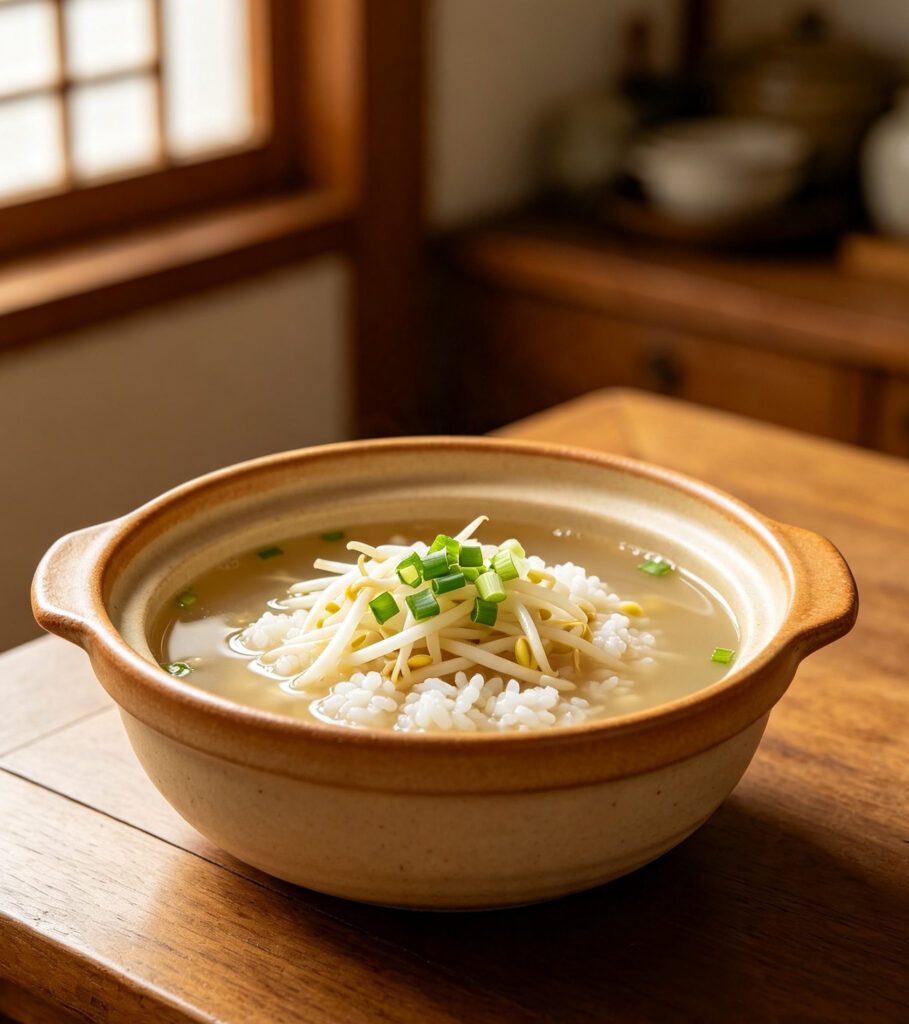
Kongnamul Gukbap (Bean Sprout Soup with Rice)
The Quirky Foodster Team
Ingredients
- Fresh soybean sprouts, rinsed — 200 g (7 oz)
- Anchovy or kelp stock — 500 ml (2 cups)
- Cooked rice bowls (about 400 g / 14 oz cooked short-grain rice) — 2
- Spring onions, sliced — 2
- Garlic cloves, minced — 2
- Korean fish sauce (myeolchi aekjeot) — 1 tbsp (15 ml)
- Salt, or to taste — 1 tsp (5 g)
- Gochugaru (Korean chilli flakes), optional — 1 tsp (2 g)
- Large eggs — 2
- Gim (dried seaweed), crumbled, for garnish — 1 sheet
Method
- Bring the anchovy stock to a boil in a covered saucepan — keeping the lid on while the sprouts cook is traditional, as it stops the sprouts from developing a raw, grassy smell.
- Add the soybean sprouts, re-cover, and boil undisturbed for 5 minutes.
- Stir in the garlic, fish sauce and salt, and simmer uncovered for a further 5 minutes.
- Divide the cooked rice between two bowls (or two small individual pots if serving stone-bowl style) and ladle the hot soup and sprouts over the top.
- Return the soup to a gentle boil, crack an egg into each bowl and let it poach gently in the hot broth for 1–2 minutes.
- Scatter with spring onion, crumbled gim and a pinch of gochugaru, and serve immediately while still bubbling.
Introduction: Kongnamul gukbap is a soybean-sprout soup served over rice, best known as Jeonju's signature morning meal.
Cultural Background: Kongnamul gukbap is a soybean-sprout soup served over rice, best known as Jeonju's signature morning meal. Market vendors and street stalls have served it since dawn for generations, prized as a warming, restorative start to the day and a famous cure for the morning after a night of drinking.
Tips: Keep the pot lid on for the first few minutes of cooking the sprouts — this is the traditional trick for a clean-tasting broth. For the classic street-stall version, cook and serve the soup in individual earthenware ttukbaegi pots so it stays boiling hot at the table.
Variations: Add cooked, shredded pollock or other white fish for a heartier Jeonju-style bowl. For extra heat, stir in 1 tsp gochujang along with the fish sauce. Use a kelp (dashima) and dried shiitake stock instead of anchovy stock, and swap the fish sauce for 1 tbsp soy sauce plus 1/2 tsp salt.
Storage: Best eaten fresh. Leftover broth (without egg) keeps in the fridge for up to 2 days in a sealed container.
Reheating: Reheat gently on the stovetop until just boiling; add a freshly poached egg rather than reheating a previously cooked one.
Nutrition: Calories: 310 kcal | Protein: 16 g | Carbs: 42 g | Fat: 8 g | Fibre: 3 g | Sodium: 980 mg Per serving; estimate only, excludes optional garnishes.
FAQs:
Q: Why keep the lid on while the sprouts cook?
A: Steam trapped under the lid cooks the sprouts evenly and prevents the raw, grassy smell that develops if cold air hits them mid-simmer.
Q: Can I use canned bean sprouts?
A: Fresh soybean sprouts (not mung bean sprouts) give the right crunch and nutty flavour; canned ones turn mushy and lack the same taste.
Q: Is this the same as haejangguk?
A: Kongnamul gukbap belongs to the wider haejangguk (hangover soup) family, but is its own distinct Jeonju specialty with its own history.
- Fresh soybean sprouts, rinsed — 200 g (7 oz)
- Anchovy or kelp stock — 500 ml (2 cups)
- Cooked rice bowls (about 400 g / 14 oz cooked short-grain rice) — 2
- Spring onions, sliced — 2
- Garlic cloves, minced — 2
- Korean fish sauce (myeolchi aekjeot) — 1 tbsp (15 ml)
- Salt, or to taste — 1 tsp (5 g)
- Gochugaru (Korean chilli flakes), optional — 1 tsp (2 g)
- Large eggs — 2
- Gim (dried seaweed), crumbled, for garnish — 1 sheet
Please log in to leave a comment.