
Kokis (Crispy Rosette Cookies)
The Quirky Foodster Team
Ingredients
- Rice flour (1 cup) — 125 g (4.4 oz)
- Tablespoons rice flour, extra, for adjusting batter — 2
- Thick coconut milk (1/2 cup) — 120 ml (1/2 cup)
- Water, plus more as needed (1/4 cup) — 60 ml (1/4 cup)
- Egg — 1
- Salt (1/2 teaspoon) — 3 g
- Turmeric, optional, for colour (1/2 teaspoon) — 1 g
- Oil for deep-frying
Method
- Whisk the rice flour, coconut milk, water, egg, salt and turmeric (if using) together until you have a smooth, thin batter, similar to a pancake batter that easily coats the back of a spoon. Rest for 30 minutes.
- Heat oil to 180C (350F) in a deep pan, deep enough to fully submerge the kokis mould.
- Heat the kokis mould in the hot oil for 1-2 minutes so it's fully hot (this helps the batter release later), then shake off excess oil.
- Dip the hot mould into the batter, making sure it doesn't cover the very top edge of the mould (or the kokis won't release), then immediately submerge it back into the hot oil.
- Hold it in the oil for a few seconds until the kokis begins to loosen, then gently shake or use a skewer to release it into the oil, and fry until golden and crisp, about 1-2 minutes.
- Remove with a slotted spoon, drain on paper towels, and repeat with the remaining batter, reheating the mould in the oil between each one.
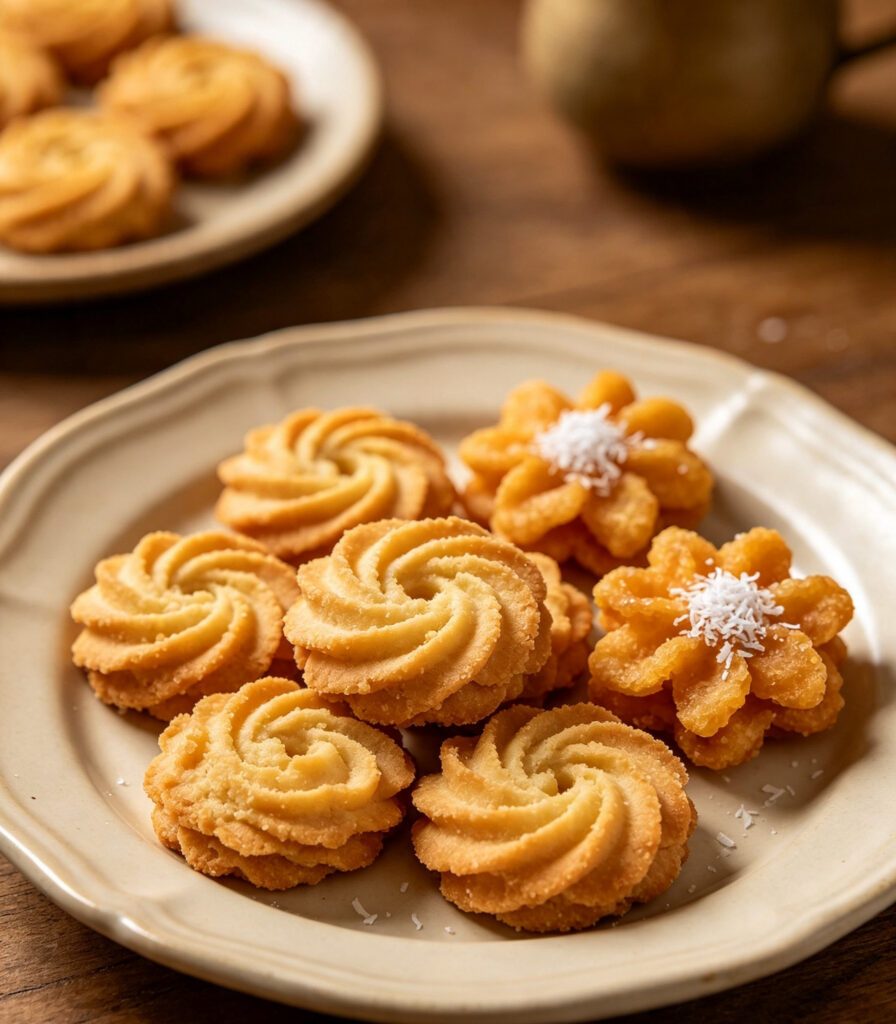
Introduction: Kokis are delicate, lacy, deep-fried rosette-shaped cookies made from a rice flour and coconut milk batter, and are one of the defining sweets of the Sinhala and Tamil New Year table (avurudu), alongside kavum and milk toffee.
Cultural Background: Kokis are delicate, lacy, deep-fried rosette-shaped cookies made from a rice flour and coconut milk batter, and are one of the defining sweets of the Sinhala and Tamil New Year table (avurudu), alongside kavum and milk toffee. Made by dipping a specially shaped brass or iron mould into thin batter and then into hot oil, the technique demands practice – too thick a batter and the mould won't release the pattern, too thin and it won't hold shape – making kokis-making a small yearly ritual passed down through generations of women in the household.
Tips: The mould must be hot before dipping into the batter each time, or the kokis won't release properly into the oil. Adjust the batter thickness with extra water or rice flour as you go – if kokis are hard to release, the batter may be too thick; if they're falling apart, it may be too thin. Fry in small batches to keep the oil temperature steady.
Variations: A pink or red food colouring is sometimes added to the batter for a festive appearance. Coconut kokis, a slightly different sweet variety, adds sugar directly into the batter. Vegetarian as written; not vegan due to the egg, though egg-free versions using extra coconut milk are made by some households.
Storage: Store in an airtight container at room temperature for up to 2 weeks – kokis are designed to keep well, which is part of why they suit festival stockpiling.
Reheating: Not necessary; kokis are eaten at room temperature and stay crisp for weeks if stored properly.
Nutrition: Approx. 90 kcal, 2 g protein, 5 g fat, 9 g carbohydrates, 0.5 g fibre per kokis
FAQs:
Q: Why won't my kokis release from the mould?
A: This is almost always because the batter is too thick, or the mould wasn't hot enough before dipping; thin the batter slightly and reheat the mould fully in the oil each time.
Q: Can I make kokis without a special mould?
A: The rosette shape does require a mould; they are widely sold in Sri Lankan and South Asian grocery stores and are typically made of brass or aluminium.
Q: Why are kokis specifically made for New Year?
A: They are one of the traditional 'kevili' (sweetmeats) prepared for the Sinhala and Tamil New Year table in April, a custom maintained across generations.
- Rice flour (1 cup) — 125 g (4.4 oz)
- Tablespoons rice flour, extra, for adjusting batter — 2
- Thick coconut milk (1/2 cup) — 120 ml (1/2 cup)
- Water, plus more as needed (1/4 cup) — 60 ml (1/4 cup)
- Egg — 1
- Salt (1/2 teaspoon) — 3 g
- Turmeric, optional, for colour (1/2 teaspoon) — 1 g
- Oil for deep-frying
Please log in to leave a comment.