
Mains
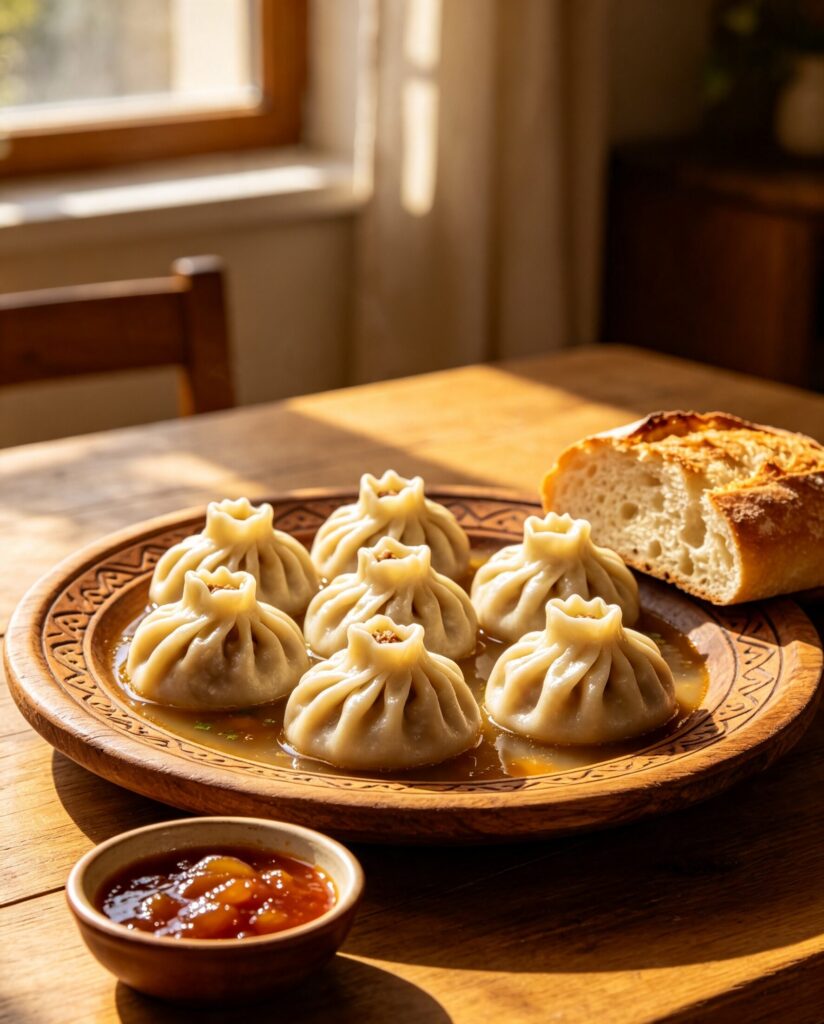
Khinkali (Georgian Soup Dumplings)
The Quirky Foodster Team
Ingredients
- 500 g (4 cups) plain flour
- 250 ml (1 cup) cold water
- 1/2 tsp salt
- 400 g (14 oz) ground beef and pork mix
- 1 large onion, very finely chopped
- 2 garlic cloves, minced
- 100 ml (1/3 cup plus 1 tbsp) cold water or beef stock, for the filling
- 1 tsp ground cumin
- 1/2 tsp ground blue fenugreek (utskho suneli)
- Fresh coriander, chopped, to taste
- Salt and black pepper, to taste
- Coarsely ground black pepper, for serving
Method
- Make the dough by combining flour, water and salt into a smooth, elastic dough. Rest, covered, for 30 minutes.
- Mix the ground meat with onion, garlic, cumin, fenugreek, coriander, salt and pepper. Gradually work in the cold water or stock until the filling is loose and juicy.
- Roll the dough thin and cut into 10cm rounds.
- Place a generous spoonful of filling in the centre of each round.
- Gather the edges up around the filling, pleating as you go, and twist to seal tightly at the top, leaving a small topknot.
- Bring a large pot of salted water to a rolling boil. Drop in the khinkali a few at a time, stirring gently so they don't stick to the bottom.
- Cook for 10-12 minutes until they float and the dough is fully cooked through.
- Lift out with a slotted spoon and serve immediately, dusted generously with coarse black pepper.
Introduction: Khinkali are Georgia's iconic soup dumplings, hailing from the mountainous regions of Pshavi and Khevsureti, hand-pleated into a topknot and filled with juicy spiced meat and broth.
Cultural Background: Khinkali are Georgia's iconic soup dumplings, hailing from the mountainous regions of Pshavi and Khevsureti, hand-pleated into a topknot and filled with juicy spiced meat and broth. Eaten by hand, holding the twisted top, they are a centrepiece of Georgian dining and mountain hospitality.
Tips: Traditionally the thick topknot is not eaten — it's a handle for holding the dumpling while sipping the broth inside through a small bite.
Variations: A mountain-style version fills khinkali with seasoned mashed potato and mushroom instead of meat; a Kazbegi variation uses only beef with a touch of chili.
Storage: Uncooked khinkali freeze well on a floured tray, then bagged, for up to 2 months.
Reheating: Cooked khinkali are best fresh; if needed, steam gently for 5 minutes rather than microwaving, to avoid a rubbery skin.
Nutrition: Approx. 310 kcal, 16 g protein, 12 g fat, 34 g carbohydrate per serving (5 dumplings).
FAQs:
Q: How many pleats should a proper khinkali have?
A: Traditionally at least 19, though home cooks vary; more pleats are a mark of a skilled dumpling-maker.
Q: Do you eat the topknot?
A: Most Georgians leave it on the plate as a way of counting how many dumplings have been eaten, though it is edible.
Please log in to leave a comment.