
Appetizers
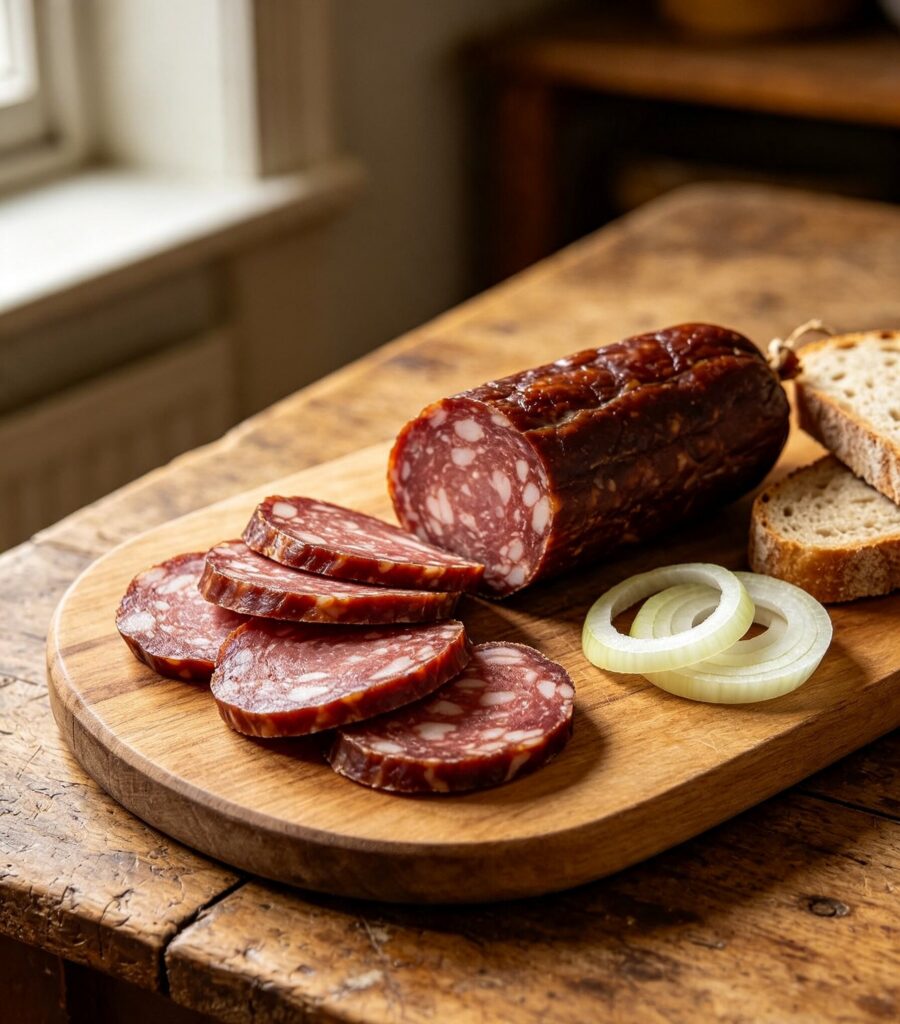
Kazy (Horse Sausage Platter)
Ingredients
- 1 kg (2.2 lb) horse rib meat with fat, cut into long strips
- Natural sausage casing (horse intestine, cleaned)
- 2 tbsp (30 g) coarse salt
- 1 tsp black pepper
- 3 cloves garlic, crushed
- 1 tsp ground cumin
Method
- Rub the meat strips with salt, pepper, garlic and cumin, then leave to cure in the refrigerator for 24 hours.
- Stuff the cured meat strips into the cleaned casing, leaving a little slack for expansion during cooking.
- Tie off both ends securely with kitchen twine.
- Simmer the sausage gently in water for about 2-3 hours until fully cooked through, or smoke over low heat for a traditional smoked version.
- Allow to cool, then slice into thin rounds to serve.
Introduction: Kazy is a cured horse-meat sausage stuffed into natural casing and traditionally prepared in autumn when livestock are slaughtered ahead of winter.
Cultural Background: Kazy is a cured horse-meat sausage stuffed into natural casing and traditionally prepared in autumn when livestock are slaughtered ahead of winter. Rich and deeply savoury, it is sliced thin and served as a centrepiece appetizer at Kazakh feasts, weddings and holiday tables, prized as a marker of hospitality.
Tips: Do not boil kazy at a rolling boil, as this can split the casing; keep the water at a gentle simmer. Kazy improves in flavour after resting a day in the refrigerator before serving.
Variations: A smoked version is common in northern regions with cooler autumn weather. Beef kazy is a widely available modern substitute where horse meat is restricted or unavailable.
Storage: Refrigerate for up to 5 days, or freeze cooked kazy for up to 2 months.
Reheating: Serve cold as sliced appetizer, or warm gently in a dry pan for 2-3 minutes per side if preferred hot.
FAQs:
Q: Is kazy always made from horse meat?
A: Traditionally yes, but modern commercial versions are sometimes made with beef for wider availability and affordability.
Q: How is kazy traditionally served?
A: Thinly sliced and arranged on a platter, often alongside other cold meats as part of the opening course of a Kazakh feast.
Please log in to leave a comment.