
Katong Laksa
The Quirky Foodster Team
Ingredients
- Thick rice vermicelli noodles — 300 g (10.5 oz)
- Dried chillies, soaked — 3
- Shallots — 4
- Garlic cloves — 2
- Dried shrimp, soaked — 1 tbsp
- Belacan (shrimp paste) — 1 tbsp
- Vegetable oil — 2 tbsp
- Coconut milk — 600 ml (2 1/2 cups)
- Chicken or prawn stock — 400 ml (1 3/4 cups)
- Prawns, peeled — 200 g (7 oz)
- Fish cake, sliced — 100 g (3.5 oz)
- Bean sprouts — 100 g (3.5 oz)
- Fresh laksa leaves (daun kesum) or coriander, chopped — 4 tbsp
Method
- Blend the soaked chillies, shallots, garlic, dried shrimp and belacan into a smooth paste.
- Heat the oil in a large saucepan and fry the paste over medium heat for 5-6 minutes until fragrant and darkened.
- Pour in the coconut milk and stock, bring to a gentle simmer, and cook for 15 minutes to let the flavours develop.
- Add the prawns and fish cake, and simmer for a further 4-5 minutes until the prawns are cooked through.
- Meanwhile, cook the rice vermicelli according to packet instructions, drain, and cut into shorter lengths.
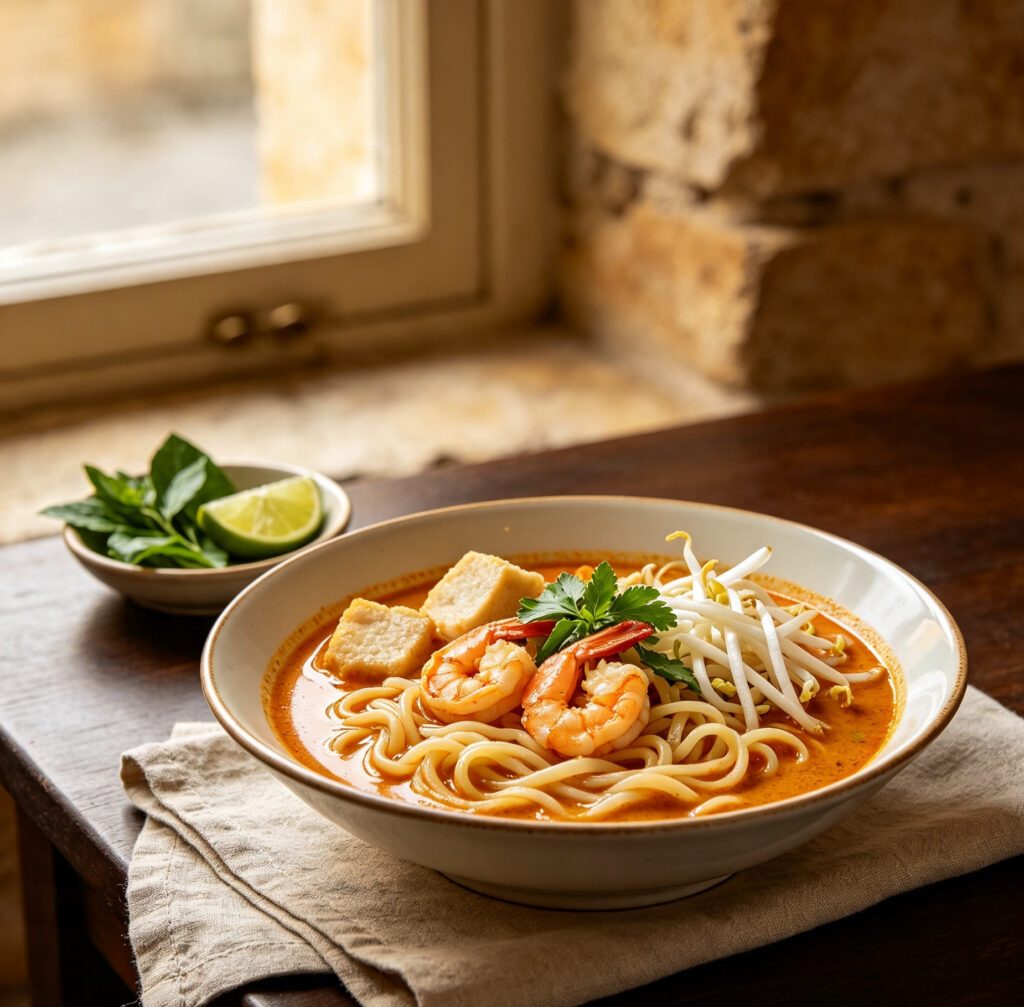
- Divide the noodles and bean sprouts among bowls, ladle over the hot laksa broth with prawns and fish cake, and finish with chopped laksa leaves.
Introduction: Katong laksa takes its name from the Katong district of Singapore, where this rich, spicy coconut noodle soup became famous, distinguished by its noodles cut short so the dish can be eaten with just a spoon.
Cultural Background: Katong laksa takes its name from the Katong district of Singapore, where this rich, spicy coconut noodle soup became famous, distinguished by its noodles cut short so the dish can be eaten with just a spoon. A Peranakan creation blending Chinese and Malay influences, it combines a fragrant rempah paste, coconut milk, prawns and fish cake into one of Singapore's most beloved soups.
Tips: Frying the spice paste thoroughly until fragrant and slightly darkened is key to a deep, well-rounded flavour. Cutting the noodles shorter, as is traditional in Katong, makes the dish easier to eat with just a spoon.
Variations: Add a few cockles for an extra layer of briny flavour, a traditional addition in many stalls. Adjust the number of dried chillies to control the spice level to taste. There is no authentic vegetarian version, as prawns, fish cake and shrimp-based paste are central to this dish's flavour.
Storage: Refrigerate the broth separately from the noodles for up to 2 days.
Reheating: Reheat the broth gently in a saucepan; add fresh or reheated noodles just before serving to avoid sogginess.
Nutrition: Approx. 480 kcal, 22g protein, 42g carbs, 26g fat, 3g fibre per serving.
FAQs:
Q: What is belacan?
A: Belacan is a fermented shrimp paste widely used in Southeast Asian cooking, adding deep savoury flavour to sauces and pastes.
Q: Can I find laksa leaves outside Singapore?
A: Daun kesum, or laksa leaf, can be found fresh or frozen at well-stocked Asian grocers; coriander is a reasonable substitute if unavailable.
- Thick rice vermicelli noodles — 300 g (10.5 oz)
- Dried chillies, soaked — 3
- Shallots — 4
- Garlic cloves — 2
- Dried shrimp, soaked — 1 tbsp
- Belacan (shrimp paste) — 1 tbsp
- Vegetable oil — 2 tbsp
- Coconut milk — 600 ml (2 1/2 cups)
- Chicken or prawn stock — 400 ml (1 3/4 cups)
- Prawns, peeled — 200 g (7 oz)
- Fish cake, sliced — 100 g (3.5 oz)
- Bean sprouts — 100 g (3.5 oz)
- Fresh laksa leaves (daun kesum) or coriander, chopped — 4 tbsp
Please log in to leave a comment.