
Karoo Roast Ostrich Steak
The Quirky Foodster Team
Ingredients
- Ostrich steaks (about 180g / 6oz each) — 4
- Olive oil — 2 tbsp
- Garlic, crushed — 2 cloves
- Juniper berries, crushed — 1 tsp
- Red wine — 125 ml (1/2 cup)
- Onion, thinly sliced — 1
- White wine — 125 ml (1/2 cup)
- Heavy cream — 125 ml (1/2 cup)
- Black peppercorns, crushed — 1 tsp
- Salt, — to taste
- Butter — 1 tbsp
Method
- Marinate the ostrich steaks in red wine, crushed garlic and juniper berries for at least 1 hour, turning once.
- Meanwhile, soften the onion in butter over low heat for 8-10 minutes until sweet and golden.
- Add the white wine to the onions, simmer to reduce by half, then stir in the cream and crushed peppercorns; simmer gently for 5 minutes to make a sauce. Season with salt and keep warm.
- Remove the steaks from the marinade and pat dry; season with salt.
- Heat olive oil in a heavy pan over high heat and sear the steaks for 2-3 minutes per side for medium-rare, as ostrich is very lean and easily overcooked.
- Rest the steaks for 5 minutes under loose foil before slicing.
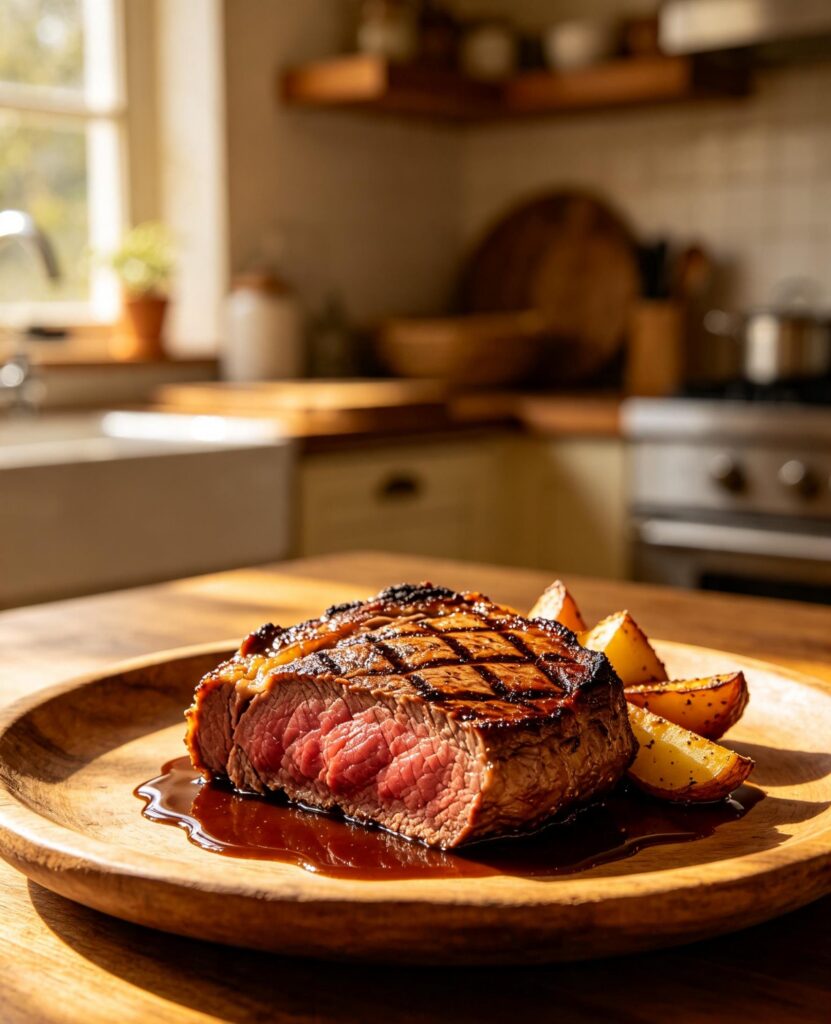
- Serve sliced steak with the warm onion and peppercorn cream sauce spooned over.
Introduction: Ostrich has long been farmed across Southern Africa's drier grasslands, and roast ostrich steak has become recognised as Eswatini's national dish — a lean, deep red meat prized for its tenderness when properly rested.
Cultural Background: Ostrich has long been farmed across Southern Africa's drier grasslands, and roast ostrich steak has become recognised as Eswatini's national dish — a lean, deep red meat prized for its tenderness when properly rested. Served for special occasions and celebratory meals, it reflects the country's ranching traditions and French-influenced cooking techniques introduced through colonial-era trade.
Tips: Ostrich is extremely lean — cook it like a fine beef fillet and never past medium, or it turns tough and dry. Resting the meat is essential; skipping this step loses much of the juiciness.
Variations: A red wine jus can replace the cream sauce for a lighter finish. Steaks can be flame-grilled over coals instead of pan-seared for a smokier flavour.
Storage: Best eaten fresh; leftover cooked steak keeps refrigerated for 1-2 days, though texture is best enjoyed the day it's cooked.
Reheating: Gently warm sliced leftovers in a low oven or briefly in a pan over low heat to avoid overcooking further.
FAQs:
Q: Where can I buy ostrich steak?
A: Specialist butchers and larger supermarkets in regions with game or exotic meat sections often stock ostrich; it can also be ordered online in many countries.
Q: Can beef fillet be substituted?
A: Yes, beef fillet is the closest substitute in texture, though the flavour will be richer and less distinctly gamey.
- Ostrich steaks (about 180g / 6oz each) — 4
- Olive oil — 2 tbsp
- Garlic, crushed — 2 cloves
- Juniper berries, crushed — 1 tsp
- Red wine — 125 ml (1/2 cup)
- Onion, thinly sliced — 1
- White wine — 125 ml (1/2 cup)
- Heavy cream — 125 ml (1/2 cup)
- Black peppercorns, crushed — 1 tsp
- Salt, — to taste
- Butter — 1 tbsp
Please log in to leave a comment.