
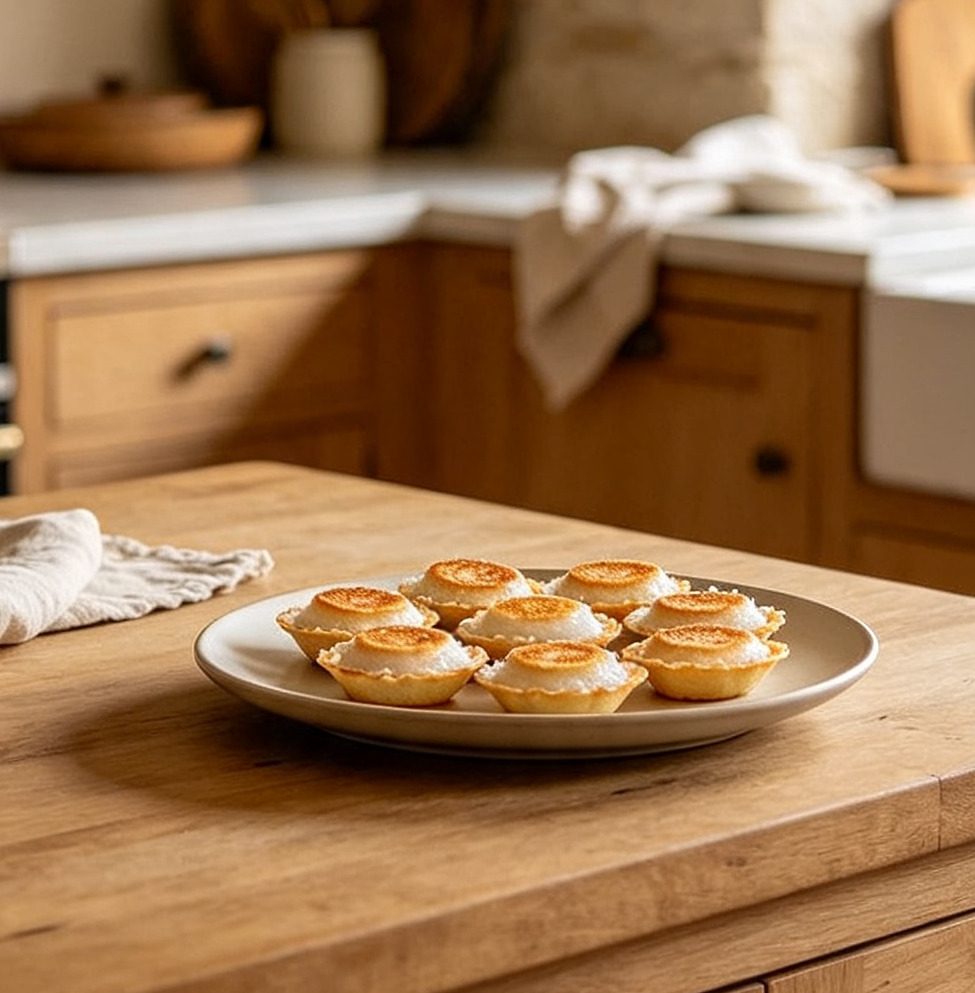
Kanom Krok (Coconut Rice Pancakes)
The Quirky Foodster Team
Ingredients
- Rice flour — 200 g (1 cup)
- Glutinous rice flour — 2 tbsp
- Sugar — 1 tsp
- Salt — 1/4 tsp
- Coconut milk, divided — 300 ml (1 1/4 cups)
- Water — 100 ml (scant 1/2 cup)
- Sugar, for the topping mixture — 100 g (1/2 cup)
- Salt, for the topping mixture — 1/2 tsp
- Thinly sliced spring onion or sweet corn kernels, to serve (optional) — 2 tbsp
- Coconut oil, for greasing the pan
Method
- In a bowl, whisk together the rice flour, glutinous rice flour, 1 tsp sugar, 1/4 tsp salt, 150 ml (2/3 cup) of the coconut milk and the water into a smooth, thin batter. Let rest for at least 1 hour.
- In a separate bowl, mix the remaining 150 ml coconut milk with the 100 g sugar and 1/2 tsp salt for the topping mixture, stirring until the sugar dissolves.
- Heat the kanom krok pan over medium heat and grease each well lightly with coconut oil.
- Spoon the rested batter into each well, filling about two-thirds full, and cook for 3–4 minutes, until the edges turn golden and slightly crisp.
- Spoon a little of the sweet coconut topping mixture into the centre of each pancake, and scatter with spring onion or corn, if using.
- Cover the pan and cook for a further 3–4 minutes, until the tops are set and creamy.
- Carefully pry the pancakes out with a spoon, working in pairs to form a folded 'sandwich' shape, and serve warm.
Introduction: Kanom krok are small, two-toned coconut pancakes with a crisp exterior and soft, creamy centre, cooked
in a distinctive cast-iron pan with small hemispherical wells.
Cultural Background: Kanom krok are small, two-toned coconut pancakes with a crisp exterior and soft, creamy centre, cooked
in a distinctive cast-iron pan with small hemispherical wells. Sold from street carts across Thailand, they're
a beloved snack, traditionally topped with a scattering of spring onion or corn.
Tips: Letting the batter rest is important for the right texture, allowing the rice flour to hydrate fully. A well-seasoned or well-greased pan is essential for the pancakes to release cleanly.
Variations: Omit the spring onion or corn for a purely sweet version. Add a few drops of pandan extract to the batter for colour and fragrance. Naturally vegetarian.
Storage: Best eaten fresh; they lose their crisp edges quickly once cooled.
Reheating: Reheat briefly in the kanom krok pan or a hot dry skillet for a minute or two per side.
FAQs:
Q: What pan do I need for this?
A: A traditional kanom krok pan has small hemispherical wells; an aebleskiver (Danish pancake) pan or a takoyaki pan can work as a substitute.
Q: Why are there sweet and plain layers?
A: The base batter and the sweeter coconut topping create the pancake's characteristic two-toned flavour and texture, crisp outside and creamy in the centre.
Q: What toppings are traditional?
A: Thinly sliced spring onion or sweet corn kernels are classic, adding a savoury contrast to the sweet pancake.
- Rice flour — 200 g (1 cup)
- Glutinous rice flour — 2 tbsp
- Sugar — 1 tsp
- Salt — 1/4 tsp
- Coconut milk, divided — 300 ml (1 1/4 cups)
- Water — 100 ml (scant 1/2 cup)
- Sugar, for the topping mixture — 100 g (1/2 cup)
- Salt, for the topping mixture — 1/2 tsp
- Thinly sliced spring onion or sweet corn kernels, to serve (optional) — 2 tbsp
- Coconut oil, for greasing the pan
Please log in to leave a comment.