
Kalbi-jjim
The Quirky Foodster Team
Ingredients
Method
- Soak the short ribs in cold water for 30 minutes to draw out excess blood, then drain and pat dry.
- Blanch the ribs briefly in boiling water for 5 minutes to remove impurities, then drain and rinse.
- Combine the onion, garlic, ginger, soy sauce, sugar and sesame oil to make the braising sauce.
- Place the ribs in a large pot with the sauce and water, and bring to a boil.
- Cover and simmer over low heat for 1.5 hours, skimming any fat from the surface.
- Add the carrots and potatoes, and continue simmering for a further 30–40 minutes until the meat and vegetables are tender and the sauce has reduced and thickened.
- Garnish with toasted sesame seeds before serving.
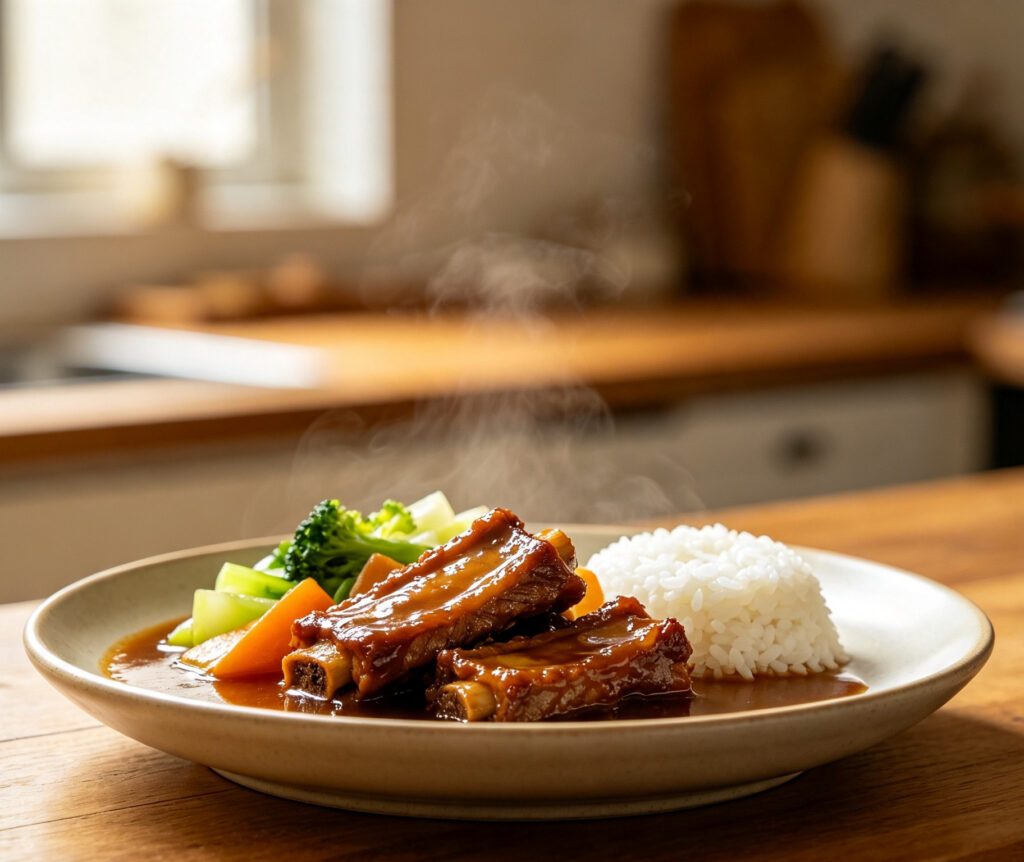
Introduction: Tender braised beef short ribs simmered in a sweet-savoury soy sauce with root vegetables, a comforting and celebratory Korean main.
Cultural Background: Kalbi-jjim is often reserved for special occasions and family gatherings across the Korean peninsula, its slow braise resulting in exceptionally tender meat in a richly flavoured sauce.
Tips: Soaking and blanching the ribs first removes impurities for a cleaner, more refined final dish. Simmer low and slow until the meat is properly tender, as short ribs benefit from extended cooking.
Variations: Add chestnuts or jujubes for a more festive, traditional presentation. Adjust the sugar to taste for a more or less sweet sauce.
Storage: Refrigerate in an airtight container for up to 4 days.
Reheating: Reheat gently on the stovetop over low heat, covered, stirring occasionally, until hot throughout.
FAQs:
Q: Why soak and blanch the ribs first?
A: This removes blood and impurities, resulting in a cleaner-tasting, less cloudy braising sauce.
Q: What occasions is kalbi-jjim typically served for?
A: Celebrations, family gatherings and special meals, given its rich flavour and generous preparation.
- Beef short ribs — 1.2 kg (2.6 lb)
- Onion, chopped — 1
- Garlic, minced — 4 cloves
- Ginger, minced — 1 tbsp
- Soy sauce — 120 ml (4 fl oz)
- Sugar — 3 tbsp
- Sesame oil — 2 tbsp
- Carrots, chunked — 2
- Potatoes, chunked — 2
- Water — 720 ml (24 fl oz)
- Toasted sesame seeds, to garnish — 1 tbsp
Please log in to leave a comment.