
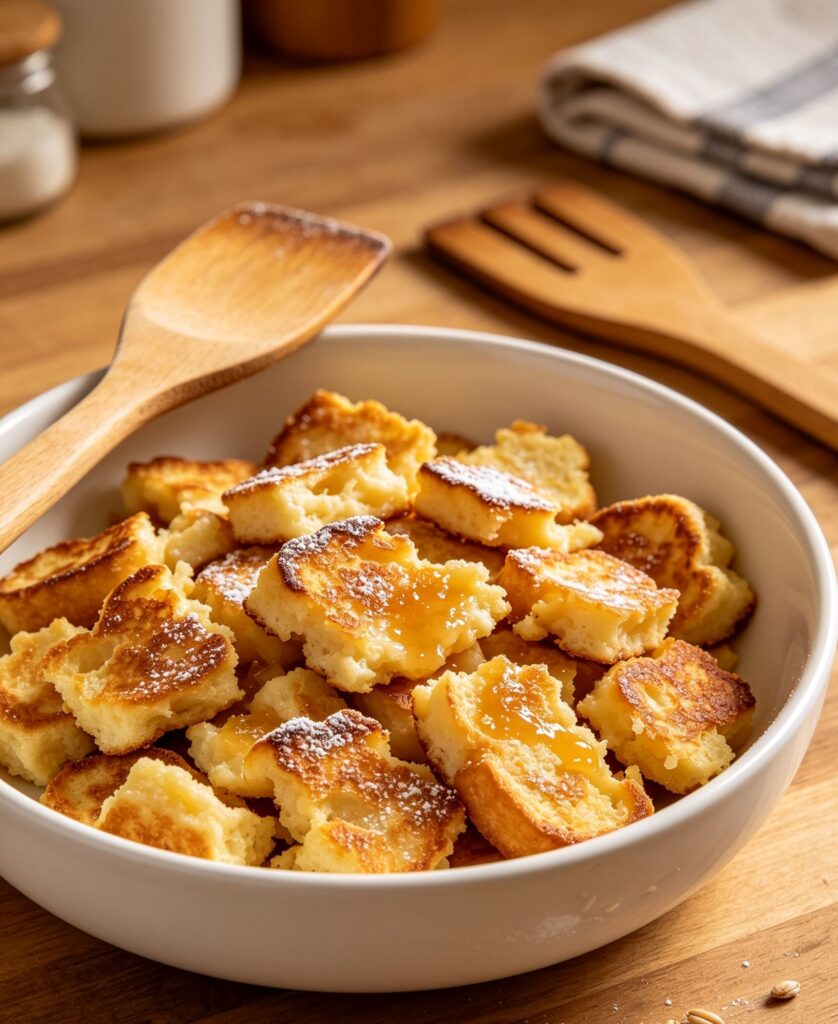
Kaiserschmarrn (Shredded Caramelised Pancake)
The Quirky Foodster Team
Ingredients
- Large eggs, separated — 4
- Milk — 250 ml (1 cup)
- Plain flour — 150 g (1 1/4 cups)
- Sugar, divided — 2 tbsp
- Salt — 1 pinch
- Vanilla extract — 1 tsp
- Raisins — 50 g (1/3 cup)
- Rum (optional, for soaking raisins) — 2 tbsp
- Butter — 40 g (3 tbsp)
- Icing sugar, for dusting — 2 tbsp
- Stewed plum or apple compote, to serve
Method
- If using, soak the raisins in rum for 10 minutes while preparing the batter.
- Preheat the oven to 200°C (400°F).
- Whisk together the egg yolks, milk, flour, half the sugar, salt and vanilla until smooth.
- In a separate clean bowl, whisk the egg whites to soft peaks, then gradually add the remaining sugar and whisk to stiff, glossy peaks.
- Gently fold the egg whites into the batter in two additions, keeping as much air in the mixture as possible.
- Melt half the butter in a large oven-safe frying pan over medium heat. Pour in the batter, scatter over the soaked raisins, and cook for 2-3 minutes until the base is golden.
- Transfer the pan to the oven and bake for 8-10 minutes until puffed and just set in the centre.
- Remove from the oven and, using two forks, tear the pancake into rough bite-sized pieces directly in the pan.
- Add the remaining butter to the pan and toss the torn pieces over medium heat for 1-2 minutes until caramelised at the edges.
- Dust generously with icing sugar and serve immediately with stewed plum or apple compote.
Introduction: Legend holds that Kaiserschmarrn was created for Emperor Franz Joseph I, whose name gives the dish its title, meaning ‘Emperor’s mess.’ This fluffy, torn pancake, dusted with sugar and served with fruit compote, is a favourite dessert across Austria and the Alps, equally at home on a mountain hut menu or a Viennese café table.
Cultural Background: Legend holds that Kaiserschmarrn was created for Emperor Franz Joseph I, whose name gives the dish its title, meaning ‘Emperor’s mess.’ This fluffy, torn pancake, dusted with sugar and served with fruit compote, is a favourite dessert across Austria and the Alps, equally at home on a mountain hut menu or a Viennese café table.
Tips: Fold the egg whites in gently and in stages — the airy texture is what gives Kaiserschmarrn its signature fluffiness. Tear rather than cut the pancake into pieces; ragged edges caramelise better in the pan.
Variations: Omit the rum-soaked raisins for a plain version, or substitute with dried cranberries. Serve with fresh berries in summer instead of stewed fruit.
Vegetarian/Vegan: Naturally vegetarian as written.
Storage: Best eaten immediately; leftovers can be stored covered in the refrigerator for up to 1 day.
Reheating: Reheat in a frying pan over low-medium heat with a little butter until warmed through; a microwave will make it rubbery.
Nutrition: Approx. per serving: 340 kcal, 11g protein, 42g carbohydrate, 14g fat
FAQs:
Q: Why is it called Kaiserschmarrn?
A: It translates roughly to ‘Emperor’s mess,’ referencing a legend that it was created for Emperor Franz Joseph I and named for its deliberately torn, rustic appearance.
Q: What is it traditionally served with?
A: Stewed plums (Zwetschkenröster) or apple compote are the most traditional accompaniments.
- Large eggs, separated — 4
- Milk — 250 ml (1 cup)
- Plain flour — 150 g (1 1/4 cups)
- Sugar, divided — 2 tbsp
- Salt — 1 pinch
- Vanilla extract — 1 tsp
- Raisins — 50 g (1/3 cup)
- Rum (optional, for soaking raisins) — 2 tbsp
- Butter — 40 g (3 tbsp)
- Icing sugar, for dusting — 2 tbsp
- Stewed plum or apple compote, to serve
Please log in to leave a comment.