
Street Food
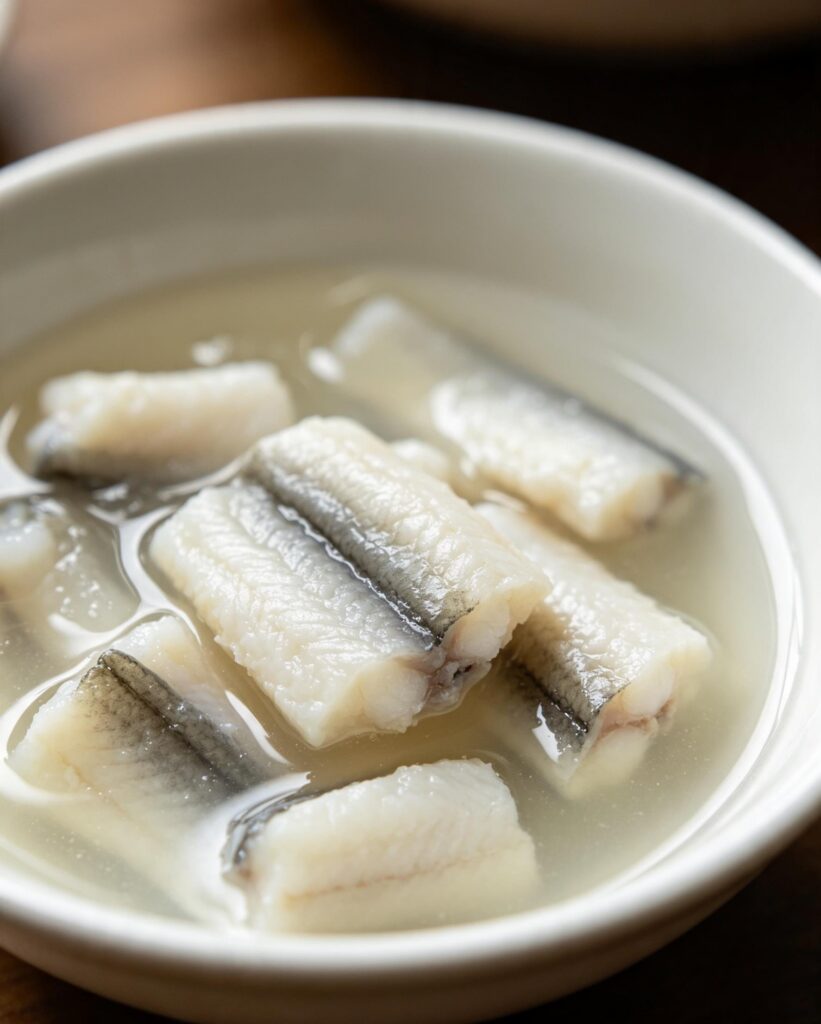
Jellied Eels
The Quirky Foodster Team
Ingredients
- 800 g (1.75 lb) Fresh eel, cleaned and cut into chunks
- 600 ml (2 1/2 cups) Water
- 3 tbsp White wine vinegar
- 2 Bay leaves
- 1 small Onion, sliced
- 8 Whole black peppercorns
- 1 blade or 1/4 tsp Mace blade or ground mace
- 1 tsp Salt
Method
- Rinse the eel chunks thoroughly under cold water.
- Place the water, vinegar, bay leaves, onion, peppercorns, mace and salt in a large saucepan and bring to a simmer.
- Add the eel pieces to the pan, ensuring they are mostly submerged in the liquid.
- Cover and simmer gently for 20 to 25 minutes until the eel is tender and cooked through.
- Remove the eel pieces with a slotted spoon and arrange them in a shallow dish or individual serving pots.
- Strain the cooking liquid through a sieve, discarding the solids, and pour it over the eel pieces.
- Cool to room temperature, then refrigerate for at least 4 hours, or until fully set into a jelly.
- Serve chilled, traditionally with a splash of extra vinegar and bread on the side.
Introduction: A traditional East End London delicacy, jellied eels are freshwater eels cooked in a spiced stock that sets into a savoury jelly once cooled, historically sold from street stalls and pie and mash shops in working-class London neighbourhoods since the 18th century.
Cultural Background: A traditional East End London delicacy, jellied eels are freshwater eels cooked in a spiced stock that sets into a savoury jelly once cooled, historically sold from street stalls and pie and mash shops in working-class London neighbourhoods since the 18th century.
Storage: Store covered in the refrigerator for up to 2 days.
Reheating: This dish is traditionally served cold and is not reheated.
Tips: Simmer the eel gently rather than boiling vigorously, to keep the flesh tender rather than tough. Chill thoroughly, as the natural gelatine from the eel and its skin needs time to set properly into a firm jelly.
Variations: Chilli flakes are sometimes added to the cooking liquid for a spicier version. Some versions include a little chopped parsley stirred into the jelly for colour. A vegetarian dish sharing the format, such as a savoury vegetable aspic, is sometimes offered as an alternative at some stalls, though it is not a direct substitute. This dish is defined by eel and its natural gelatine and has no traditional vegetarian version; those seeking a plant-based alternative are better served by a different vegetable-based savoury jelly rather than attempting to recreate this specific dish.
Nutrition: Calories: 220 kcal | Protein: 24 g | Carbs: 2 g | Fat: 13 g
FAQs:
Q: Where did jellied eels originate?
A: They developed in London’s East End, particularly around the docks where eels were historically abundant and inexpensive, and became a fixture of London street food and pie and mash shops.
Q: Why do jellied eels set into a jelly without added gelatine?
A: Eel skin and bones are naturally rich in collagen, which dissolves into the cooking liquid and sets naturally on chilling, just as with other traditional jellied meat dishes.
Please log in to leave a comment.